Blog

  • DJI Mini 5 Pro Takes Flight – The Sub‑250g Drone with a Game‑Changing 1‑Inch Sensor

    DJI Mini 5 Pro Takes Flight – The Sub‑250g Drone with a Game‑Changing 1‑Inch Sensor

    Key Facts at a Glance

    • World’s First 1-Inch Sensor in a Mini Drone: The new DJI Mini 5 Pro is the first ultralight (<250g) drone to feature a 1-inch CMOS camera sensor, enabling 50MP still photos and vastly improved low-light performance prnewswire.com dronedj.com. This large sensor lets it capture 4K video up to 60fps HDR (14 stops dynamic range) and even 4K/120fps slow-motion, delivering cinema-quality footage from a palm-sized aircraft prnewswire.com dronedj.com.
    • Pro Features in a Mini Package: Despite its tiny 249.9g frame, the Mini 5 Pro packs pro-grade capabilities. It offers 10-bit color video (HLG and D-Log M profiles) for better grading, a new 48mm “Med-Tele” 2× zoom mode for added subject focus, and a 225° rotating gimbal for true vertical shooting (ideal for social media content) prnewswire.com dronedj.com.
    • Next-Level Obstacle Sensing: DJI equipped the Mini 5 Pro with Nightscape Omnidirectional Obstacle Sensing, adding a forward-facing LiDAR sensor alongside vision sensors. This allows reliable obstacle avoidance and Return-to-Home even in the dark (down to ~1 lux, akin to streetlight conditions) – a first for mini drones digitalcameraworld.com dronedj.com. Upgraded ActiveTrack 360° can intelligently track subjects (e.g. a cyclist or runner) at speeds up to 15 m/s while avoiding obstacles dronexl.co dronedj.com.
    • Extended Flight Time: The standard Intelligent Flight Battery yields up to 36 minutes of flight per charge prnewswire.com. For those needing more endurance, an optional high-capacity Battery Plus boosts flight time to ~52 minutes (though using it may push weight above 250g and is not permitted in some regions) t3.com.
    • Pricing & Availability: The Mini 5 Pro launches at £689 / €799 for the base package (drone + RC-N3 controller) – the same price as its predecessor – and up to £979 / €1,129 for the full Fly More Combo with the screen-equipped RC 2 controller tomsguide.com. It’s on sale in the UK and EU as of mid-September 2025, but no official U.S. release yet (Americans will likely have to buy via third-party importers) tomsguide.com.

    Overview: A Mini Drone with Massive Upgrades

    DJI’s Mini series has always been about packing travel-friendly portability under the 250g threshold, but the DJI Mini 5 Pro takes it to new heights. Announced on September 17, 2025, this flagship mini drone “raises the bar for beginner drones” by squeezing professional-grade imaging and safety features into a featherlight frame techradar.com techradar.com. The headline feature is undoubtedly its 1-inch camera sensor – a “world’s first” for a drone this small prnewswire.com. This large sensor (previous Mini models maxed out at 1/1.3-inch) allows the Mini 5 Pro to capture 50 MP photos and high dynamic range 4K video that rivals larger drones in detail and low-light clarity prnewswire.com dronedj.com.

    Beyond the camera, DJI has turbocharged almost every aspect of the Mini 5 Pro. It inherits and improves upon the omnidirectional obstacle sensing of the Mini 4 Pro, adding a front-mounted LiDAR scanner that lets it “see” obstacles in the dark for safer night flying digitalcameraworld.com. Its gimbal now offers an impressive 225° of roll rotation, enabling smooth vertical shots without cropping techradar.com. In essence, DJI has blurred the line between a travel-friendly quadcopter and a professional aerial rig t3.com t3.com. The result is a sub-250g drone that can shoot clean sunset timelapses, track fast-moving subjects, avoid obstacles day or night, and even film TikTok-ready vertical videos – truly an “all-in-one solution” for pilots who don’t want to compromise digitalcameraworld.com t3.com.

    The Game-Changing 1‑Inch Sensor: Why It Matters

    The Mini 5 Pro’s 1-inch CMOS sensor is being hailed as a game-changer for image quality in the ultralight drone category. Compared to the 1/1.3″ sensor (about 0.8″) in the Mini 4 Pro, the new 1″ sensor has nearly double the surface area, meaning it can gather much more light. In practical terms, this yields better low-light performance, higher dynamic range, and reduced image noise tomsguide.com dronedj.com. DJI claims up to 14 stops of dynamic range in 4K HDR video mode, preserving detail in high-contrast scenes like sunrises and sunsets prnewswire.com. Photographers can shoot 50 MP stills bursting with detail, and the larger pixels on the sensor translate to cleaner night shots and richer colors even in dim conditions t3.com dronedj.com.

    Early impressions from experts underscore the impact of this upgrade. “The 1-inch sensor takes the Mini series out of beginner territory into serious content creator territory,” notes one reviewer, who points out that even some larger drones in DJI’s lineup (like the Air 3S) only now match this sensor size tomsguide.com. Another drone reviewer who tested the Mini 5 Pro remarked that “this is a very, very, very good drone”, praising how it “delivers unmatched performance in a compact body.” tomsguide.com tomsguide.com With cleaner 4K footage and 10-bit color depth available, videographers get much more flexibility for editing and grading, while still traveling light. In short, the Mini 5 Pro’s camera can “rival bigger rigs for detail” and image quality, redefining what a mini drone can do t3.com t3.com.

    Advanced Features: Pro Shooting and Safety in a Mini

    Despite its size, the Mini 5 Pro doesn’t skimp on pro-level features. Its camera is mounted on a 3-axis gimbal with 225° of roll range, allowing unique creative angles. You can seamlessly switch to True Vertical Shooting mode – rotating the camera 90° for portrait orientation – without losing resolution or cropping prnewswire.com dronedj.com. This is perfect for content creators who want ready-to-post vertical videos for Instagram Reels, TikTok, or YouTube Shorts. DJI has also introduced a new “48 mm Med-Tele” two-times zoom mode, which provides a tighter field of view with higher quality than the previous digital zoom. This mode helps subjects stand out with added depth and texture, effectively giving a portrait-like look from the sky prnewswire.com dronexl.co. Additionally, a portrait optimization algorithm automatically enhances brightness, contrast and skin tones for more flattering shots of people prnewswire.com dronexl.co.

    On the video front, the Mini 5 Pro offers Cinematic 4K video as standard. It can record 4K at 60fps with HDR enabled, capturing finely gradated highlights and shadows in high-contrast scenes prnewswire.com. For slow-motion enthusiasts, it supports 4K at 120fps, as well as up to 240fps in 1080p, enabling dramatic slow-mo clips in full quality tomsguide.com. Crucially, DJI catered to professionals by enabling 10-bit H.265 video recording (including D-Log M and HLG profiles) even in this mini drone prnewswire.com t3.com. This means footage from the Mini 5 Pro can be color-graded extensively in post-production, matching the workflow of higher-end drones. The maximum ISO has also been raised significantly (up to 12,800 in normal mode, or 3,200 in D-Log/HLG) to improve night footage prnewswire.com. In sum, the Mini 5 Pro is equipped to capture everything from sweeping cinematic landscapes to fast action sports, with the fidelity and flexibility expected by professional creators.

    On the safety and flight technology side, DJI has given the Mini 5 Pro some standout upgrades. The drone features omnidirectional obstacle sensing, using a network of front, rear, and downward vision sensors – similar to the Mini 4 Pro – augmented by a forward-facing LiDAR module prnewswire.com. Branded “Nightscape Omnidirectional Obstacle Sensing,” this system lets the Mini 5 Pro fly and auto-return safely even in low-light environments that previously confounded drones digitalcameraworld.com. The LiDAR can detect obstacles like thin branches or glass in near darkness (down to ~1 lux) and helps the drone plot safe paths home at night digitalcameraworld.com. In fact, the Mini 5 Pro’s Smart Return-to-Home can work even without GPS in some cases – the drone can memorize its flight route using vision if launched with enough light, so it can return on the same path if GPS signal is lost (for example, when flying from a balcony or indoors) prnewswire.com dronedj.com.

    DJI’s subject tracking has also evolved. The ActiveTrack 360° system on the Mini 5 Pro is improved with AI-powered scene recognition. It can automatically adjust its tracking strategy depending on whether you’re, say, walking, cycling, or driving, to keep the subject centered and avoid sudden movements prnewswire.com dronedj.com. This drone can track subjects at up to 15 m/s (about 33 mph) in open areas dronexl.co, while deftly dodging obstacles along the way. For creators, that means you can get dynamic follow-shots – like a drone chasing you down a winding mountain bike trail – with minimal worry. Rounding out the feature set, the Mini 5 Pro also supports the usual DJI intelligent flight modes (MasterShots, QuickShots, Panorama, Waypoint flight, Timelapse, etc.), effectively bringing the full suite of DJI’s creative tools to a mini drone prnewswire.com.

    How the Mini 5 Pro Stacks Up Against Other Drones

    DJI Mini 5 Pro vs. Mini 4 Pro (and Earlier Minis)

    The Mini 5 Pro is a direct successor to 2023’s Mini 4 Pro, and it represents a significant leap over that model. Both drones stay under the magic 250 g limit (categorized as C0 class in Europe, meaning minimal regulatory hassle) digitalcameraworld.com techradar.com. However, the Mini 5 Pro’s new 1-inch sensor dwarfs the Mini 4 Pro’s 1/1.3″ sensor – giving it the edge in image quality, especially for low-light shots tomsguide.com. The resolution jumps to 50 MP (versus 48 MP before), and video capabilities expand from 4K/60 (Mini 4 Pro) up to 4K/120 on the Mini 5 Pro tomsguide.com. Both models introduced omnidirectional obstacle avoidance, but the Mini 5 Pro goes further with LiDAR for true night vision and smarter RTH. Even flight time sees an uptick: the Mini 4 Pro could fly ~34 minutes (standard battery) or 45 min with Plus battery, whereas the Mini 5 Pro manages 36 min standard and ~52 min with its Plus battery t3.com tomsguide.com. Impressively, DJI managed to add all these upgrades without raising the base price – the Mini 5 Pro launches at the same price point the Mini 4 Pro had, making it a “formidable (and accessible) upgrade” for existing Mini owners tomsguide.com. DJI even discounted the Mini 4 Pro heavily leading up to this launch digitalcameraworld.com, signaling that the Mini 5 Pro is the new go-to choice for sub-250g enthusiasts.

    Comparisons with DJI Air and Mavic Series

    In many ways, the Mini 5 Pro blurs the line between DJI’s entry-level Mini series and the higher-tier Air and Mavic drones. For instance, DJI’s Air 3 (2023) introduced dual cameras but stuck with smaller 1/1.3″ sensors, while the newer Air 3S now sports a 1-inch main camera – putting it on par with the Mini 5 Pro’s sensor size tomsguide.com. The Air series drones are larger (around 720–800 g) and offer longer range and more power, but the Mini 5 Pro narrows the performance gap significantly. In fact, some observers note that with the Mini 5’s image quality and features, DJI has little room left to improve in the sub-250g category without defying physics techradar.com. The Mini 5 Pro even adopts technology from the flagship Mavic line: its forward LiDAR and 360° obstacle sensing echo the systems on the much heavier DJI Mavic 4 Pro digitalcameraworld.com engadget.com. Of course, the Mavic 4 Pro (released earlier in 2025) still outguns a Mini in sheer capability – it carries a Micro Four Thirds Hasselblad camera and multiple telephoto lenses for unmatched image quality and zoom, plus an infinity gimbal that can rotate 360° dji.com. But it also weighs ~1 kilogram and costs nearly $2,000. The Mini 5 Pro, by contrast, offers “big camera power in a palm-sized body” that you can literally take anywhere dronedj.com. As one expert put it, “it’s hard to see where DJI can further improve [the Mini series] while keeping it under 250g.” techradar.com

    In short, the Mini 5 Pro now covers many use cases that previously required a larger drone. It won’t replace a Mavic 3/4 Pro for high-end cinematography or an Air 3 for dual-lens versatility, but it bridges the gap. It can be seen as the ultimate “beginner” or travel drone that still satisfies seasoned pilots. TechRadar’s editor went so far as to call it “the best beginner drone available” and “surprisingly affordable” given its capabilities techradar.com. The Mini 5 Pro proves that the gap between a sub-250g hobby drone and a professional rig has never been smaller.

    Facing the Competition: Autel, Skydio, and Others

    DJI has long dominated the consumer drone market, and the Mini 5 Pro may extend that lead – especially as some competitors have stumbled or exited. Autel Robotics challenged DJI’s Mini series in 2022 with the EVO Nano+, a sub-250g drone featuring a 1/1.28″ (≈0.8″) sensor and 50 MP camera. While the Nano+ was praised for its image quality, it now finds itself outclassed by the Mini 5 Pro’s true 1-inch sensor and more polished feature set. Complicating matters, Autel appears to be pulling back from the consumer drone space – recent reports suggest Autel has quit making consumer drones, focusing elsewhere techradar.com. If true, the Nano+ may be the last of its line, leaving DJI’s Mini virtually unchallenged in new developments.

    Another notable rival was Skydio, famed for its autonomous tracking drones. Skydio’s AI-powered obstacle avoidance (seen in the Skydio 2/2+) set industry benchmarks, arguably ahead of DJI in some respects. However, Skydio ceased consumer drone sales in 2023, pivoting to enterprise markets uavcoach.com. With Skydio out and Autel fading, DJI’s main competition in the sub-250g segment now comes from smaller brands or niche offerings. For example, Insta360’s Antigravity A1 (a recently launched drone) takes a very different approach – using a dual-lens 360° camera to capture unique immersive video techradar.com. It’s innovative, but not directly aimed at the same high-quality aerial imaging as the Mini 5 Pro. Likewise, startups like HoverAir have introduced specialty drones (one that can land on water, etc.), but these serve specific niches techradar.com. In the mainstream consumer arena, DJI currently stands virtually unopposed. The Mini 5 Pro’s combination of a large sensor, long flight time, and advanced automation “looks like the complete package,” making it the drone to beat in 2025 techradar.com.

    Early Reviews and Expert Opinions

    The DJI Mini 5 Pro has only just hit the market, but early reviews from drone experts are overwhelmingly positive. Seasoned pilots who got a first look describe it as a breakthrough for its size category. “Put simply, it’s a safe bet that the Mini 5 Pro will be regarded as the best beginner drone available,” writes TechRadar’s drone editor, who was impressed that DJI managed to include so many upgrades while keeping the drone under 250g techradar.com. Reviewers consistently highlight the 1-inch sensor as the star of the show. Digital Camera World notes that this sensor “beats a lot of high-end compact cameras” for resolution, despite being in a flying device digitalcameraworld.com digitalcameraworld.com. Tom’s Guide’s reviewer, after some hands-on flight testing, teased that “spoiler alert: this is a very, very, very good drone”, emphasizing that the Mini 5 Pro “packs a punch” in terms of performance tomsguide.com tomsguide.com.

    Critics have also praised the Mini 5 Pro’s broadened feature set. The Verge and DroneDJ both lauded how DJI brought pro features down to the Mini line, from the LiDAR-assisted obstacle avoidance to the long 52-minute max flight time (with the Plus battery) dronedj.com dronedj.com. There’s an appreciation that DJI is offering more for the same price as before – one review noted it “costs the same as the Mini 4 Pro – nice.” tomsguide.com Early test footage and photos circulating online back up the claims: reviewers report noticeably cleaner low-light shots, very smooth vertical videos, and reliable subject tracking even in tricky environments. Many are already calling the Mini 5 Pro a “game-changer” for travelers and content creators who want pro-quality shots without lugging a heavy drone. As DroneDJ’s launch article put it, “Think big camera power in a palm-sized body” – the kind of drone that inspires you to “pack your bags, find a scenic overlook, and start filming like a pro.” dronedj.com

    Of course, reviewers also temper their excitement with a few caveats. The main concern raised is the limited U.S. availability (more on that below), which has frustrated American drone enthusiasts. Additionally, some note that while the Mini 5 Pro is excellent for its class, larger drones like the Air or Mavic series will still outperform it in extreme scenarios (e.g. very high winds, ultra-long-range signal, or the absolute best image quality). But within its weight category, the consensus is that DJI has set a new gold standard. As one expert concluded, the Mini 5 Pro is “the most advanced ‘mini’ drone we’ve ever seen” – a statement few would have expected a couple of years ago for a drone so small dronedj.com.

    Latest News and Updates

    The Mini 5 Pro’s launch has been widely covered in tech and drone media, not just for its features but also for the circumstances of its release. One of the biggest news angles is DJI’s decision not to immediately launch the Mini 5 Pro in the United States. In DJI’s official words, “The DJI Mini 5 Pro will not be available officially in the United States upon its global launch on September 17. DJI remains dedicated to the U.S. market and is optimizing our strategy to best serve our customers amidst evolving local conditions.” techradar.com tomsguide.com This mirrors what happened with the Mavic 4 Pro earlier in the year – DJI opted to skip direct US sales, likely due to ongoing geopolitical and trade issues (DJI is facing U.S. government trade restrictions and tariff uncertainties) techradar.com dronedj.com. As a result, no US pricing was announced; American buyers will have to purchase through third-party resellers or import the drone techradar.com dronedj.com. Experts note that units will probably show up on Amazon via resellers (as happened with Mavic 4 Pro), but possibly at marked-up prices and without official warranty support in the US dronedj.com dronedj.com. This situation is a hot topic in the drone community, as many US enthusiasts are disappointed at being left out of the initial launch. Some are nonetheless planning to import the Mini 5 Pro despite the hassle – testament to how desirable this drone is.

    Elsewhere in the world, the Mini 5 Pro is rolling out normally. Europe and the UK got the drone first (shipping immediately around mid-September 2025), and Asia is expected to have broad availability as well. In China (DJI’s home market), rumors before launch pegged the starting price around ¥6,699 (about $930) technode.com, though official local pricing was not widely publicized in global press releases. In any case, early adopters across Europe have begun posting unboxings and test footage, confirming features like the included accessories and the exact weight of the drone (some reports note slight variations, ~249–254g with standard battery, depending on production tolerance) techradar.com. There was even an early unboxing leak from India that went viral just before launch, indicating how much buzz the Mini 5 Pro has generated among drone fans dronexl.co.

    On the industry news front, the Mini 5 Pro arrives at a time when DJI’s competitors are in flux (as noted above). In the weeks surrounding DJI’s announcement, Autel Robotics announced an exit from consumer drones techradar.com and Skydio confirmed its consumer shutdown uavcoach.com. This context has been mentioned in news coverage, highlighting that DJI is essentially tightening its grip on the market with the Mini 5 Pro launch. Meanwhile, drone regulations remain a key backdrop: by keeping the weight under 250g, DJI ensures the Mini 5 Pro stays in the least restrictive category for hobbyist flight in many regions (no registration needed in some countries, and it qualifies as EU CE Class C0) digitalcameraworld.com techradar.com. This strategic choice is frequently noted in reviews and news articles, as it means the Mini 5 Pro is accessible to a broad audience without legal hurdles.

    Pricing and Availability by Region

    The DJI Mini 5 Pro is being sold in several configurations, and pricing varies slightly by region (partly due to taxes and DJI’s marketing strategy). In the United Kingdom, the base package (drone with the standard RC-N3 controller, one battery, and basic accessories) is priced at £689 t3.com. In the European Union, the same base kit costs around €799 t3.com. These prices are virtually identical to what the Mini 4 Pro launched at, showing that DJI did not add a premium for the new features.

    For those wanting extra batteries and the premium controller, DJI offers two “Fly More Combo” bundles. The Fly More Combo with the RC-N3 (no built-in screen) is about £869 / €1,019, and it typically includes the drone, 3 batteries, a multi-battery charging hub, spare propellers, a carry bag, and sometimes ND filters digitalcameraworld.com. The top-tier Fly More Combo with the DJI RC 2 controller (which has an integrated display) runs about £979 / €1,129 tomsguide.com. The RC 2 is the latest smart controller also seen with the Air 3, offering a bright screen for flying without a phone. Many professionals prefer this for convenience. It’s worth noting that all versions of the Mini 5 Pro sold in Europe ship by default with the standard “Intelligent Flight Battery” (to comply with sub-250g regulations). The higher-capacity Battery Plus might be available as a separate add-on in some markets (in the US, DJI historically allows the larger battery since weight regulations differ). The Battery Plus was priced around $99 in leaks dronexl.co and extends flight time to 52 minutes, though using it will classify the drone in a higher weight category (C1 in Europe, requiring registration).

    In North America, as discussed, DJI has not released the Mini 5 Pro through official channels initially. No MSRP in USD or CAD was provided at launch tomsguide.com. However, if we use the UK/EU pricing as a guide, the base Mini 5 Pro would likely be in the ~$800–900 range (before sales tax) if it were sold in the U.S. – roughly equivalent to the Mini 4 Pro’s $759 base price last year. Third-party retailers or importers may list the Mini 5 Pro for around $899–$999 for the base package (some early leaks suggested $899 as a target price) thenewcamera.com. American buyers should beware that importing the drone could mean limited warranty support; DJI ties warranties to the region of purchase dronedj.com. If buying via gray-market, it’s wise to check the seller’s policy or wait for potential official availability later. Canada is in a similar boat; DJI’s Canada store mirrors the US stance, so Canadian pilots must also seek out import options for now.

    In Asia and other regions, DJI typically prices the Mini series competitively. For example, in Australia, TechRadar reported the Mini 5 Pro at AU$1,119 for the base kit techradar.com. In China, if the expected ¥6,699 holds true, that is actually a bit lower in USD equivalent (likely due to absence of certain import costs). India’s pricing hasn’t been confirmed, but if available, it could be somewhat higher due to customs (the Mini 3 Pro was around ₹90,000 there). Overall, availability is strongest in Europe and Asia at launch, with global rollout except the U.S. being the theme. As the situation evolves, DJI might adjust its U.S. strategy – possibly releasing it later if trade conditions allow, or relying on partner dealers to satisfy demand.

    Who Should Buy the Mini 5 Pro? (Use Cases and Target Audience)

    The DJI Mini 5 Pro is positioned as an ideal drone for a wide range of users – from casual beginners to seasoned content creators – thanks to its blend of ease-of-use, high-end features, and travel-friendly form factor. Here are the key groups who would benefit from this drone:

    • Travel and Adventure Photographers: If you’re a traveler, hiker, or vlogger who loves capturing aerial perspectives on the go, the Mini 5 Pro is almost purpose-built for you. It’s under 250 grams, meaning you can likely fly it in many countries with minimal paperwork (no registration in places like the US for hobby use under 250g, and it falls in the EU’s safest C0 category) digitalcameraworld.com. You can throw this drone in a backpack and not worry about added weight or significant restrictions. Despite its small size, you’ll be getting postcard-worthy 50 MP images and cinematic video of your journeys. With the improved battery life (36–52 minutes), it’s feasible to take it on a long hike and capture multiple flights without needing to recharge in the field. The robust obstacle sensing and return-to-home features also provide peace of mind when flying in unfamiliar scenic spots.
    • Content Creators and Social Media Influencers: For YouTubers, Instagrammers, TikTokers, and independent filmmakers, the Mini 5 Pro offers a powerful creative tool. The true vertical shooting mode is a huge plus for social media, allowing you to shoot vertical videos natively for Reels or TikTok without losing quality t3.com. The 10-bit color and D-Log M profile mean you can keep a consistent look with footage from bigger cameras – great for travel vloggers integrating drone shots with other B-roll. Thanks to its high-quality camera, the Mini 5 Pro can even serve as a B-cam or scouting drone on professional shoots. A wedding videographer, for instance, could legally use this tiny drone to grab aerial clips of a venue (in many cases without needing special permits due to the <250g class) yet still deliver gorgeous footage to clients. As DJI itself markets it, the Mini 5 Pro is for those looking for an “all-in-one solution” in the lowest weight category digitalcameraworld.com – meaning creators who want pro results without stepping up to larger, more complex drones.
    • Beginner Drone Pilots: DJI hasn’t left out newcomers. In fact, even with its “Pro” moniker, the Mini 5 Pro remains very user-friendly. It comes with the DJI Fly app’s wealth of tutorials and automated modes, and the controls are forgiving. Beginners will appreciate features like automated QuickShots (pre-programmed flight paths for cinematic shots) and the improved ActiveTrack, which can effortlessly keep the subject in frame. Safety nets like obstacle avoidance in every direction and precise hovering make it less likely to crash, which is comforting for those still learning the ropes. One of the Mini 5 Pro’s key selling points is that a novice can start on it and not outgrow it quickly; it’s a drone you can learn on, and as your skills improve, you can tap into its more advanced manual camera controls and flight modes. DJI explicitly suggests it will appeal to beginners who “don’t want to have to keep upgrading” as they progress digitalcameraworld.com. The only caveat is cost – at ~$900, it’s not a “toy” price. There are cheaper entry-level drones, but none in this weight class offer the same performance. For anyone serious about getting into drones (and potentially monetizing their aerial footage down the line), the Mini 5 Pro is a solid investment that won’t need replacement for a long time.
    • Professional Drone Users (as a secondary drone): Even for certified drone pilots and professionals who own larger UAVs, the Mini 5 Pro can be a valuable addition. Its ultra-compact size and lack of regulatory burdens make it perfect for quick jobs or as a backup. For example, a real estate photographer might primarily use a Phantom or Mavic for top-notch shots, but could keep a Mini 5 Pro in the bag to capture angles indoors or in tight spaces (the small drone is safer to fly close to objects). Its non-intrusive profile also makes it suitable for events or urban shoots where a big drone might draw unwanted attention. Moreover, some countries and cities have strict drone rules, but sub-250g drones are often exempt or allowed with fewer restrictions – having the Mini 5 Pro could enable pros to shoot in locations otherwise off-limits to heavier drones. With the camera quality now approaching 1-inch sensor drones of the past (like the older Phantom 4 Pro or Mavic 2 Pro which also had 1-inch sensors), many pros will find the Mini 5’s footage usable in professional productions when properly exposed.

    In summary, the DJI Mini 5 Pro’s target audience is broad: it caters to hobbyists who want the best tech in a tiny drone, travelers and content creators who demand quality without bulk, and even professionals who need a capable ultralight tool. DJI has managed to build a drone that is easy enough for a novice yet powerful enough for a veteran. As one reviewer observed, it’s essentially DJI’s most ambitious Mini to date – a drone that “pleases both seasoned pilots and first-timers who just want their city break footage to look incredible.” t3.com

    Final Thoughts

    With the Mini 5 Pro, DJI has truly redefined what a “mini” drone can be. It represents a culmination of years of incremental improvements, now delivered in one breakthrough product. For the first time, an ultralight drone boasts a camera sensor on par with high-end ground cameras, without compromising on flight performance or safety. Early reactions call it a “complete package” that sets a new standard for beginner and travel drones techradar.com techradar.com. From its 1-inch imaging system and LiDAR-assisted navigation to its extended flight time, nearly every aspect pushes the envelope of sub-250g drone technology.

    There are, of course, challenges ahead – especially for fans in the U.S. who face hurdles obtaining this drone. But globally, the Mini 5 Pro is poised to be a bestseller and a creative game-changer. It lowers the barrier to capturing professional-grade aerial imagery, all while skirting many regulations due to its size. Whether you’re an aspiring aerial photographer, a YouTuber wanting dramatic drone shots, or a hobbyist upgrading from an older model, the DJI Mini 5 Pro offers a compelling mix of portability and power that’s hard to resist. As the dust settles on its launch, one thing is clear: the Mini 5 Pro has taken flight, and it’s carrying the hopes of many that big things can indeed come in small packages.

    Sources: DJI press release and specifications prnewswire.com dronexl.co; Hands-on reports by TechRadar techradar.com techradar.com, DigitalCameraWorld digitalcameraworld.com digitalcameraworld.com, Tom’s Guide tomsguide.com tomsguide.com; Drone industry news from DroneDJ and others dronedj.com dronedj.com; Expert commentary from early reviews tomsguide.com techradar.com.

  • Fortress Skies: Inside Russia’s All-Out Anti-Drone Arsenal (2025 Update)

    Fortress Skies: Inside Russia’s All-Out Anti-Drone Arsenal (2025 Update)

    Key Facts

    • Full Spectrum of Counter-Drone Tech: Russia has deployed a wide array of anti-drone systems – from powerful electronic jammers and radar complexes to rapid-fire guns, missiles, and even laser beams – to counter the surge of UAV threats theguardian.com reuters.com. This includes truck-mounted electronic warfare (EW) units, rooftop missile launchers in Moscow, portable “drone guns,” and experimental high-energy lasers.
    • Electronic Warfare Lead Role: Specialized EW systems like Repellent-1 and Silok automatically detect drone control signals and jam them, disrupting UAVs mid-flight en.wikipedia.org ukrainetoday.org. Newer systems are significantly more effective – for example, the networked CRAB complex reportedly neutralizes 70–80% of targeted drones (vs. ~30% for older Silok jammers) by combining multi-band jamming and drone signal interception bulgarianmilitary.com bulgarianmilitary.com.
    • Air Defenses Adapted for Drones: Russia’s point-defense missile systems like Pantsir-S1 and Tor have been positioned around critical sites (even on downtown Moscow rooftops) to shoot down drones theguardian.com militaeraktuell.at. An upgraded Pantsir variant can carry up to 48 mini-missiles specifically optimized to engage drone swarms defense.info defense.info. Older anti-aircraft guns (e.g. rapid 30mm cannons) are also used to blast low-flying UAVs when within range.
    • Frontline Force Protection: In response to Ukrainian first-person-view (FPV) kamikaze drones, Russia is fielding personal anti-drone devices. Surikat-O/P, a 2.75 kg wearable jammer, lets soldiers detect drones ~1 km out and jam them ~300 m away, functioning like an “electronic flak jacket” on the battlefield rostec.ru rostec.ru. Tanks and armored vehicles are being fitted with Volnorez jamming modules – a lightweight 13 kg system that can sever a drone’s control link and force it to fail or land before striking armyrecognition.com armyrecognition.com.
    • New Tech & Hybrid Systems: Several state-of-the-art counter-UAV systems have emerged in 2024–2025. The SERP-VS6D combines a 360° RF detector with automatic jamming on six channels, proven effective against swarm attacks rostec.ru rostec.ru. The Lesochek EW system (briefcase-sized) now not only blocks radio-triggered bombs but also jams satellite navigation on commercial drones rostec.ru rostec.ru. Russia is even testing laser weapons – in mid-2025 it conducted large-scale trials of new anti-drone lasers, aiming to integrate them into a “unified air defense” after they successfully destroyed test UAVs reuters.com reuters.com.
    • Civilian & Domestic Use: Anti-drone defenses are no longer just military – by 2025, an estimated 60–80% of major civilian industrial enterprises in Russia have installed UAV protection equipment tadviser.com. This ranges from radio-frequency jammers guarding power plants and oil refineries to special interceptor drones like the net-tossing Volk-18 “Wolf-18” (developed by Almaz-Antey) intended to snare rogue drones around airports and public events en.topwar.ru en.topwar.ru. Police and security services regularly deploy man-portable jammers at sensitive sites, and mass GPS spoofing around the Kremlin has long been used to keep hobby drones at bay.
    • Defending Moscow’s Skies: After a spate of Ukrainian drone strikes on Russian soil, Moscow’s air defense has been massively reinforced. The capital is now encircled by over 50 new air-defense positions as of 2025 militaeraktuell.at. These include layered rings of S-400 and S-300 long-range SAMs, newer S-350 and S-500 systems, and numerous Pantsir-S1 short-range air defense units forming a “drone dome” around the city militaeraktuell.at militaeraktuell.at. Many Pantsirs are elevated on high towers or building tops to improve low-altitude radar coverage against low-flying drones militaeraktuell.at militaeraktuell.at. Electronic countermeasures like the Pole-21 system are also dispersed on cell towers to jam GPS signals and confuse incoming drones defense.info defense.info.
    • Battlefield Results Mixed: Russia’s frantic counter-drone efforts have yielded better protection against some threats – for instance, by late 2024 Russian electronic defenses were reportedly intercepting 85–90% of small UAVs on certain fronts defense.info defense.info. However, performance varies. Ukrainian operators adapted tactics (frequency-hopping signals, autonomous modes, etc.) that exploited weaknesses in older jammers like the Silok, leading to several being destroyed by the very drones they failed to stop ukrainetoday.org ukrainetoday.org. Analysts noted the Silok “lacks the sensitivity to detect a drone and the power to jam it… it’s just not very good,” especially under combat conditions ukrainetoday.org. This cat-and-mouse dynamic has pushed Russia to accelerate new counter-drone innovations even as Ukrainian strikes continue.

    The Rising Drone Threat and Russia’s Response

    Unmanned aerial vehicles – from tiny quadcopters to long-range suicide drones – have exploded onto the battlefield in the Russia-Ukraine war, and Russia itself is now under sustained attack from the sky. Ukrainian forces have made drones a cornerstone of their operations, using them for everything from frontline reconnaissance and guided artillery strikes to audacious long-range attacks on airbases, oil depots, and even downtown Moscow. The past two years have seen Ukrainian drones repeatedly penetrate Russian defenses and strike high-value targets deep inside Russia reuters.com. This relentless threat has spurred an urgent, all-fronts effort by Russia to deploy countermeasures – essentially a crash program to shield troops and cities from prying eyes and bomb drops overhead.

    Moscow’s strategy has been to throw every imaginable technology at the problem, building a multi-layered “anti-drone shield.” In President Putin’s words, Russia is now working to create a “universal air defence system” to counter modern air threats (namely drones) across the board reuters.com. In practice, this means reinforcing traditional air defenses and adding new capabilities: short-range air defense units have been beefed up around key sites, electronic warfare units have proliferated at all levels, and R&D on futuristic anti-drone weapons (from laser guns to interceptor drones) has kicked into high gear. “It’s good to begin planning in advance instead of after the first strikes,” a pro-Kremlin military blogger noted, as domestic drone attacks went from improbable to inevitable in 2023 theguardian.com theguardian.com. Below, we delve into the full spectrum of Russia’s counter-drone arsenal – its components, deployments, and how well they’re actually working.

    Electronic Warfare Systems: Jamming and Taking Over Drones

    Electronic warfare has emerged as Russia’s first line of defense against drones. By scrambling the radio links and GPS signals that UAVs depend on, EW systems can disable drones without firing a shot – an attractive proposition given the sheer volume of hostile drones and the cost of intercepting each with missiles. Over the past decade, Russia had invested heavily in EW, fielding what was (on paper) one of the world’s most formidable arrays of jammers. However, Ukraine’s innovative use of cheap commercial drones in 2022 initially exposed gaps in Russia’s EW coverage and coordination defense.info defense.info. Since then, Moscow has rapidly adapted, deploying new anti-UAV electronic warfare platforms and pushing EW units down to the tactical level to counter “drones everywhere” on the modern battlefield defense.info defense.info.

    Heavy Truck-Mounted Jamming Complexes: One class of Russian EW systems is designed for long-range drone detection and jamming from heavy vehicles. A prime example is Repellent-1, a 20-ton truck-based complex introduced in 2016 for counter-UAV missions en.wikipedia.org en.wikipedia.org. Repellent-1’s mast-mounted sensors can pick up the control signals of miniature drones over 35 km away, after which it attempts to jam the drone’s communications and navigation at distances up to ~2.5 km en.wikipedia.org. It essentially acts as an electronic “force field”: detecting incoming UAVs at long standoff ranges, then frying their data links as they come closer. The system’s big antennas and dish emitters are typically mounted on an 8×8 truck (MAZ or KAMAZ chassis) with an armored, NBC-protected cabin en.wikipedia.org en.wikipedia.org. Russia deployed Repellent-1 to conflict zones like Donbas and Syria in the late 2010s, but its effectiveness proved limited by range – it could monitor vast airspace, yet only actually stop drones in a small radius around the vehicle. Newer models or successors (sometimes dubbed “Repellent-Patrol” in media) are rumored to be in development to extend the jamming range.

    Another notable heavy system is the 1L269 Krasukha family – not originally designed for small drones, but very relevant. The Krasukha-2 and -4 are powerful multifunction EW stations on 4-axle trucks, mainly intended to blind radar surveillance platforms (like AWACS planes or spy satellites) en.wikipedia.org en.wikipedia.org. However, Krasukha units have reportedly been used to jam the GPS and radio links of larger drones as well. In Syria, U.S. sources noted Krasukha and related systems were blocking small American surveillance drones’ GPS receivers, and even caused a Turkish Bayraktar TB2 to crash by severing its control link en.wikipedia.org en.wikipedia.org. In the Ukraine war, a Krasukha-4 was deployed near Kyiv early on – only to be abandoned and captured by Ukrainians in 2022, providing Western analysts a treasure trove of intel on this high-end jammer en.wikipedia.org bulgarianmilitary.com. With a range measured in hundreds of kilometers for radar jamming, Krasukha is overkill for a quadcopter, but it exemplifies Russia’s philosophy: deny the enemy any use of the electromagnetic spectrum above your troops. It has even been speculated Krasukha can disrupt low-orbit satellites and cause permanent damage to electronics with its powerful emissions en.wikipedia.org. As of 2023, Russia was exporting Krasukha and a related “Sapphire” EW system to allies, and even supplying some to Iran en.wikipedia.org en.wikipedia.org – indicating confidence in these systems’ capabilities.

    Tactical and Mid-Range Jammers: To actually cover the front lines and near rear, Russia relies on lighter, more numerous EW units. One workhorse is the R-330Zh “Zhitel” jammer (and the newer R-330M1P Diabazol), which target UAV control frequencies and GPS bands out to a few kilometers; these were seen in Ukraine as early as 2014. More specialized is the Silok series – Silok-01 appeared around 2018 as a dedicated anti-UAV jammer for ground troops ukrainetoday.org. A Silok system comprises directional antennas (on a tripod or vehicle) plus a control module that automatically scans for UAV radio links. According to Russian exercises, a single Silok can detect and jam up to 10 drones at once, creating a protected bubble roughly 4 km (2.5 mi) in radius ukrainetoday.org ukrainetoday.org. In theory, it’s a “set and forget” device: once turned on, it listens for the telltale signals of common drone controllers (Wi-Fi bands, RC frequencies, etc.) and when it finds a match, blasts noise on that channel to sever the connection. Silok units saw heavy use in Ukraine – and heavy losses. Ukrainian forces hunted them down with loitering munitions and even small quadcopters dropping grenades, often outmaneuvering the Silok’s jamming by switching frequencies or using autonomous drone modes. As Ukraine’s military dryly put it, “as it turns out, such [Russian EW] equipment is effective only at Russian training grounds” – implying that on the chaotic real battlefield, Siloks often couldn’t cope ukrainetoday.org ukrainetoday.org. Several Silok-01s were destroyed or even captured intact (one was overrun by Ukraine’s 128th Mountain Brigade in late 2022 ukrainetoday.org), giving Kyiv valuable insight into its workings. This may be one reason Russia developed Silok-02, an improved model that now forms part of larger systems like the CRAB (more on that shortly) bulgarianmilitary.com bulgarianmilitary.com.

    A major element of Russia’s drone countermeasures – especially against GPS-guided drones or munitions – is the Pole-21 electronic countermeasures network. Unlike a single device, Pole-21 is a distributed jamming system: dozens of small jammer modules are mounted on cell towers, radio masts, and rooftops to blanket wide areas with GPS interference defense.info wesodonnell.com. Rather than one big transmitter, Pole-21 creates a constellation of emitters that can cover an entire city or base. In essence, it creates a “GPS denial dome” so that incoming drones cannot navigate accurately. Pole-21 nodes reportedly output 20–30 W each and can disrupt GPS, GLONASS, Galileo, and BeiDou signals in a 25 km radius per node defense.info. Russia ringed critical bases in Syria with Pole-21 and has since deployed it around Moscow and other strategic sites (often noticeable when civilian GPS apps start acting wonky in those areas). In one instance, Russian forces set up a Pole-21 array in occupied southern Ukraine – only for Ukraine to precisely blow it up with a GPS-guided HIMARS strike forbes.com. The irony was not lost: the Russian jammer meant to thwart GPS-guided weapons was itself targeted by GPS, suggesting it either wasn’t active or wasn’t effective enough forbes.com. Still, Pole-21 remains a core part of Russia’s defensive toolkit, forcing hostile drones to switch to less-precise guidance or be jammed into losing their way odin.tradoc.army.mil.

    Next-Generation Systems (2024–25): Experiencing both the strengths and limitations of its EW gear in Ukraine, Russia has fast-tracked new anti-drone electronic systems recently. One headline-grabber is the aforementioned “CRAB” system – a state-of-the-art integrated EW complex that was so new, Ukrainians didn’t even know it existed until they captured one in a daring raid in spring 2025 bulgarianmilitary.com bulgarianmilitary.com. CRAB (likely a codename or acronym) was deployed with Russia’s 49th Army in Kherson to combat Ukraine’s dense FPV drone attacks bulgarianmilitary.com. Unlike earlier standalone jammers, CRAB is built as a networked, multi-layer system: it links several components – long-range detectors, high-precision receivers, powerful jammers (including Silok-02 units) – and even coordinates with other assets like reconnaissance drones bulgarianmilitary.com bulgarianmilitary.com. According to internal documents (leaked via Intelligence Online), CRAB can locate over 95% of drones entering its sector and neutralize their signals about 70–80% of the time, a huge jump from prior systems bulgarianmilitary.com bulgarianmilitary.com. It employs directional antennas and software-defined radios (HackRF modules) to actually catch the video feeds of FPV drones, essentially eavesdropping on what enemy drone pilots see bulgarianmilitary.com bulgarianmilitary.com. Russian operators can use this to back-trace the drone’s location or even hijack its feed. CRAB’s jammers cover all common frequencies used by modified commercial drones, and can detect a drone’s control signals 25+ km away, giving early warning and countermeasures activation bulgarianmilitary.com bulgarianmilitary.com. Notably, CRAB is integrated with Russia’s own UAVs (Orlan-10/30, etc.) and comms networks, creating a real-time sensor grid – friendly drones scan for intruders and feed data to CRAB, which in turn guides friendly forces or cueing air defenses bulgarianmilitary.com bulgarianmilitary.com. This aligns with Russia’s push towards network-centric warfare, where systems share targeting data and jam only when needed to reduce interference rostec.ru rostec.ru. The capture of a CRAB unit by Ukraine was a coup; analysts noted it was one of Russia’s most “sophisticated leaps” in EW technology to date, essentially an answer to the swarm of small FPV drones plaguing Russian trenches bulgarianmilitary.com bulgarianmilitary.com.

    At the smaller scale, Russian industry has rolled out man-portable and even wearable jammers to protect individual soldiers and vehicles. The Lesochek EW system, unveiled in 2024, is about the size of a briefcase and can be vehicle-mounted or carried in a backpack rostec.ru rostec.ru. It was originally a counter-IED jammer (to defeat radio-triggered roadside bombs), but has been upgraded to suppress drone navigation and control channels as well rostec.ru rostec.ru. Lesochek can output broadband white noise across HF/VHF/UHF bands, effectively blinding both drones and detonation signals in a convoy’s vicinity rostec.ru rostec.ru. Even more novel is Surikat-O/P, a truly wearable anti-drone system that Russian engineers began testing in 2024. Weighing under 3 kg, Surikat consists of two small modules (a detector and a jammer) plus a battery pack that a soldier can strap to his tactical vest rostec.ru rostec.ru. It alerts the soldier if a hostile drone is very close (within 1 km) and then allows him to trigger a focused jamming burst to knock it out at ~300 m distance rostec.ru rostec.ru. The idea is to give every squad a last line of defense against those deadly quadcopters that appear suddenly overhead. “Personnel protection is the essential task on the front line,” said Natalia Kotlyar, a developer at the Vector Institute, adding that such gear “shall become a binding item in an active combat zone along with helmets and bulletproof vests.” rostec.ru. Indeed, Russia envisions mass-producing Surikat devices so that every platoon could have a drone early-warning and jamming capability on the move rostec.ru. The battery life (12 hours sensing, 1.5 hours jamming) and light weight make it feasible for infantry to carry without much burden rostec.ru rostec.ru.

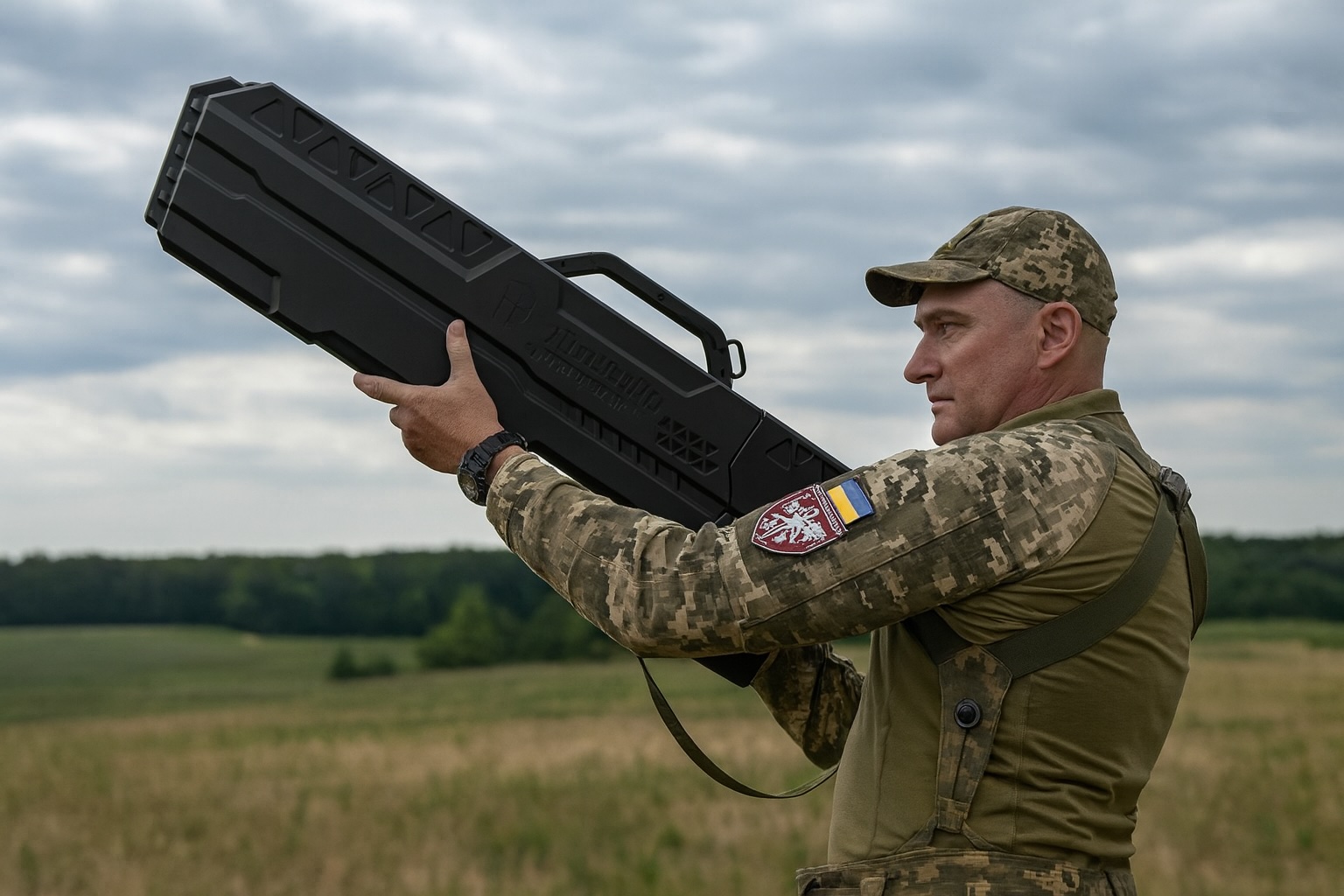
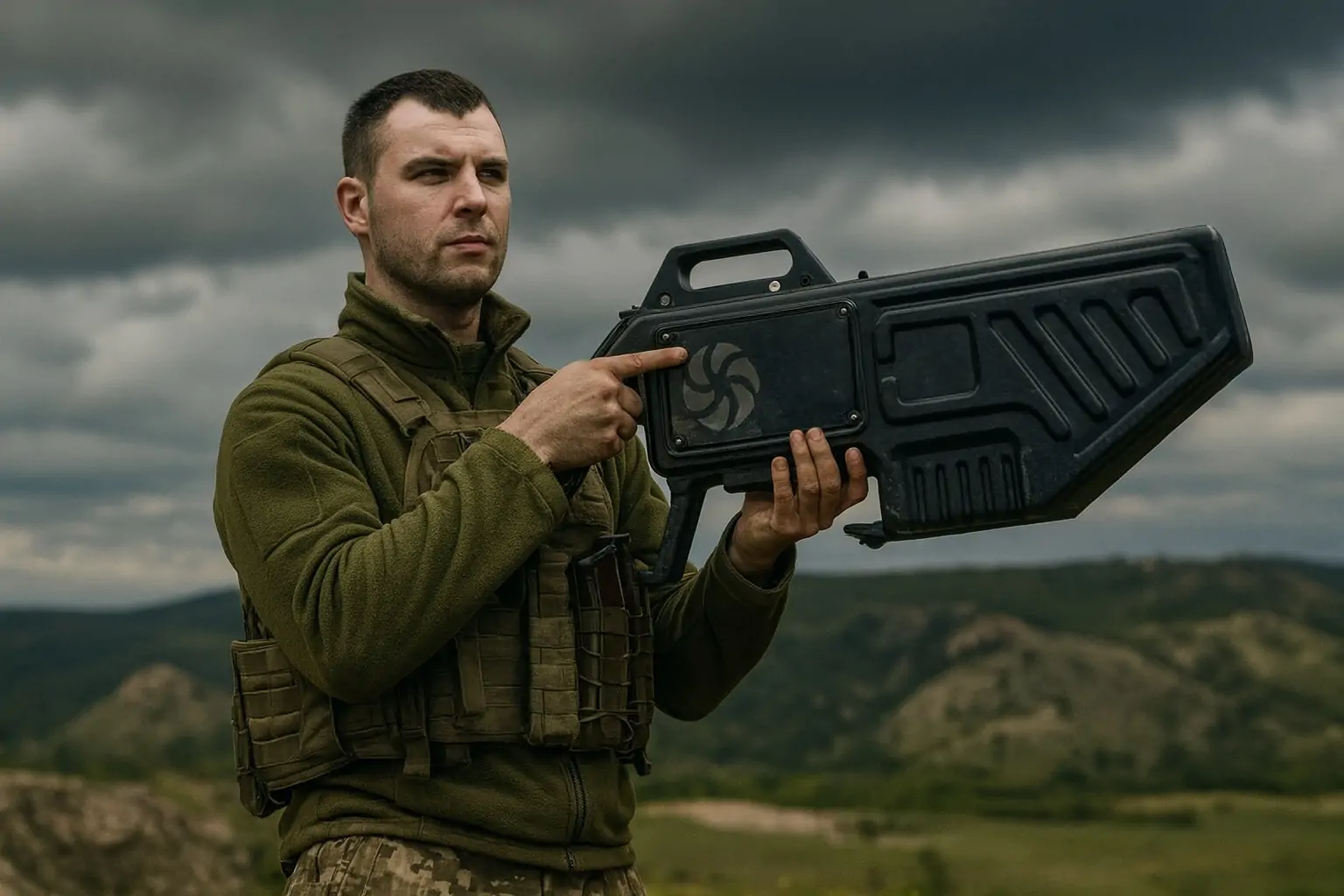
    Finally, Russia’s EW lineup wouldn’t be complete without the handheld “anti-drone guns” that have proliferated globally. Several Russian companies produce rifle-like jamming devices that a soldier or police officer can point at a drone to disrupt its radio control, video, and GPS. One of the earliest was REX-1, designed by ZALA Aero (a Kalashnikov subsidiary), which looks like a sci-fi rifle with multiple antennas. Weighing ~4 kg, the REX-1 can jam satellite navigation within a 5 km radius and cut a drone’s connection up to 1 km away, forcing many small drones to either land or lose control armyrecognition.com armyrecognition.com. Its battery runs about 3 hours armyrecognition.com. A more recent model, REX-2, is a compact version for easier carry. Rostec’s Avtomatika Concern (specializing in communications) came out with Pishchal-PRO, billed as “the lightest handheld anti-drone gun on the market” – shaped somewhat like a futuristic crossbow, it weighs under 3 kg. Pishchal (meaning “flintlock”) can jam 11 frequency bands and was demonstrated at Abu Dhabi’s IDEX-2023 expo, where its makers claimed it “is the best portable anti-drone system” in terms of power and range for its size defensemirror.com vpk.name. Another entrant, showcased to President Putin in 2019, is the Garpun-2M portable jammer. Garpun (meaning “harpoon”) is actually worn as a backpack with a shoulder-mounted directional antenna, and it boasts some finesse: it operates on 8 frequency bands and has a tighter beam to avoid interference, with up to 60 minutes of continuous jamming per battery armyrecognition.com armyrecognition.com. Only 500 m range, but it can integrate into a multi-layer defense network by relaying target info to others armyrecognition.com. And not to be forgotten: the “Stupor” electromagnetic rifle – a chunky, square-barreled anti-drone gun unveiled by the Russian Ministry of Defense, first fielded around 2017–2019 armyrecognition.com. Stupor (the name implies “to numb”) uses directed RF pulses to knock out drone controls. Russian forces in Ukraine have been photographed with these various devices, reinforcing that jamming is a core tactic from top to bottom of Russia’s anti-UAV strategy.

    Kinetic Interceptors: Guns, Missiles and More

    While soft-kill measures (jamming, spoofing) are preferred to gracefully disable drones, sometimes you just have to shoot them down – especially if a drone is already autonomously en route to a target or if it’s too large to jam easily. Russia has therefore repurposed and modified many of its air defense weapons to serve as drone interceptors. The challenge, however, is cost and quantity: using a pricey long-range missile to kill a $5,000 drone is not a winning trade, especially if dozens of drones come at once. Thus, Russia’s kinetic approach has focused on rapid-fire, short-range systems and cheaper interceptors to complement the EW umbrella.

    Anti-Aircraft Missiles and Artillery: The staple of point air defense in Russia is the Pantsir-S1 system – a truck-mounted air-defense module that pairs twin 30mm autocannons with 12 ready-to-fire missiles. Originally designed to protect high-value sites from fast aircraft and cruise missiles, Pantsir turned out to be one of Russia’s go-to drone killers as well. It has an on-board radar and electro-optical trackers capable of picking up small UAVs, and its 30mm cannons can spew hundreds of rounds to shred low-flying objects (though actually hitting a tiny drone with gunfire is difficult). In early 2023, images emerged of Pantsir-S1 units being hoisted onto Moscow rooftops – including atop the MoD headquarters and other central buildings – as a last line of defense for the capital theguardian.com theguardian.com. The military acknowledged these short-range AD placements were not only for missiles and aircraft, but also “could be used against smaller targets, such as drones” now that UAVs “have become ubiquitous on the battlefield” theguardian.com theguardian.com. Essentially, Moscow turned its city center into a “fortress” with Pantsir batteries ready to fire at any incoming drone swarm. Outside of Moscow, Pantsirs are deployed widely around strategic bases (e.g. protecting long-range S-400 SAM sites and airports) and in combat zones to guard field headquarters and rear depots. They have had some success – Russian reports claim dozens of Ukrainian drones shot down by Pantsirs – but also notable failures (a few Pantsir units themselves have been destroyed by Ukrainian strikes or loitering munitions when they were caught reloading or looking the wrong way centcomcitadel.com).

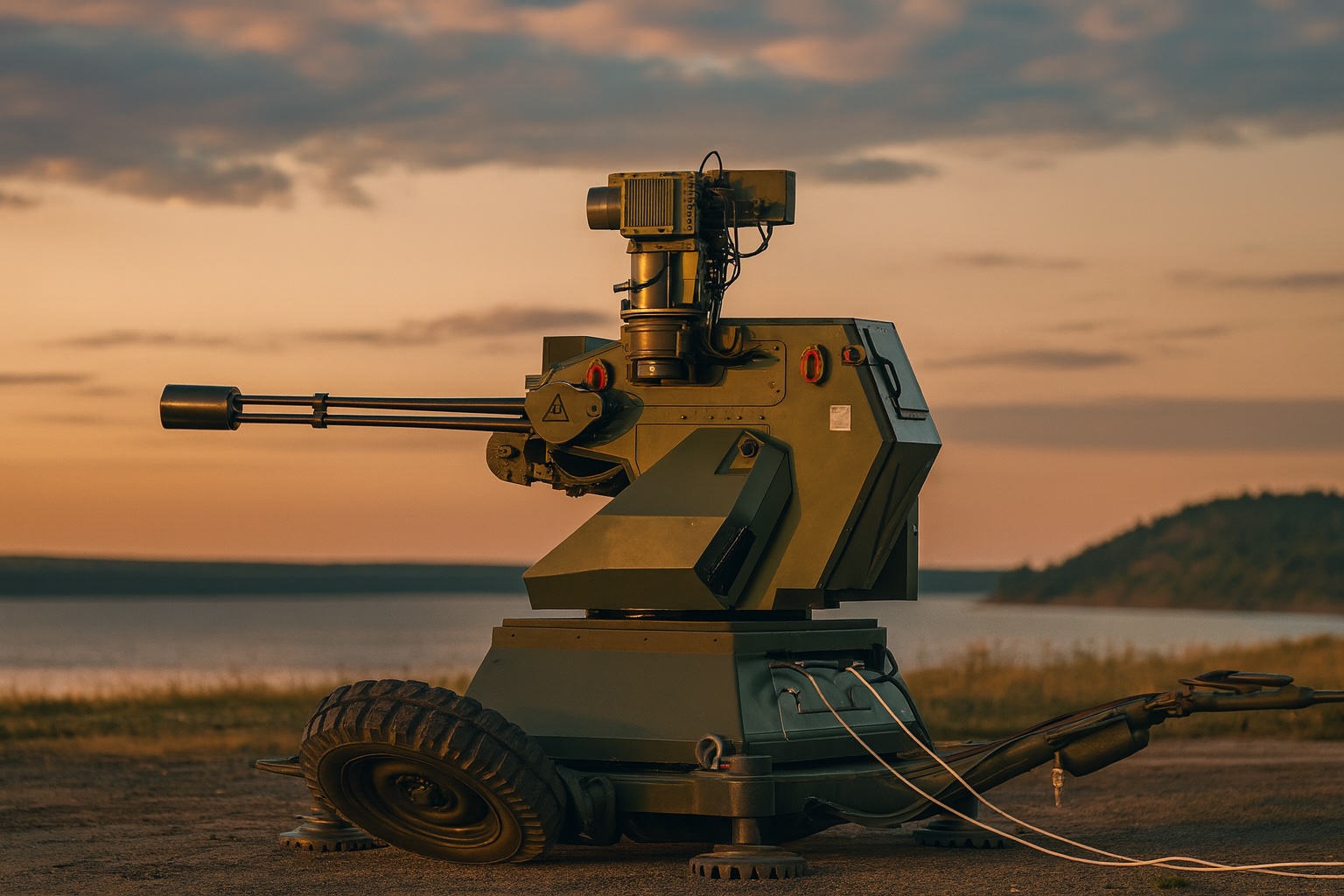
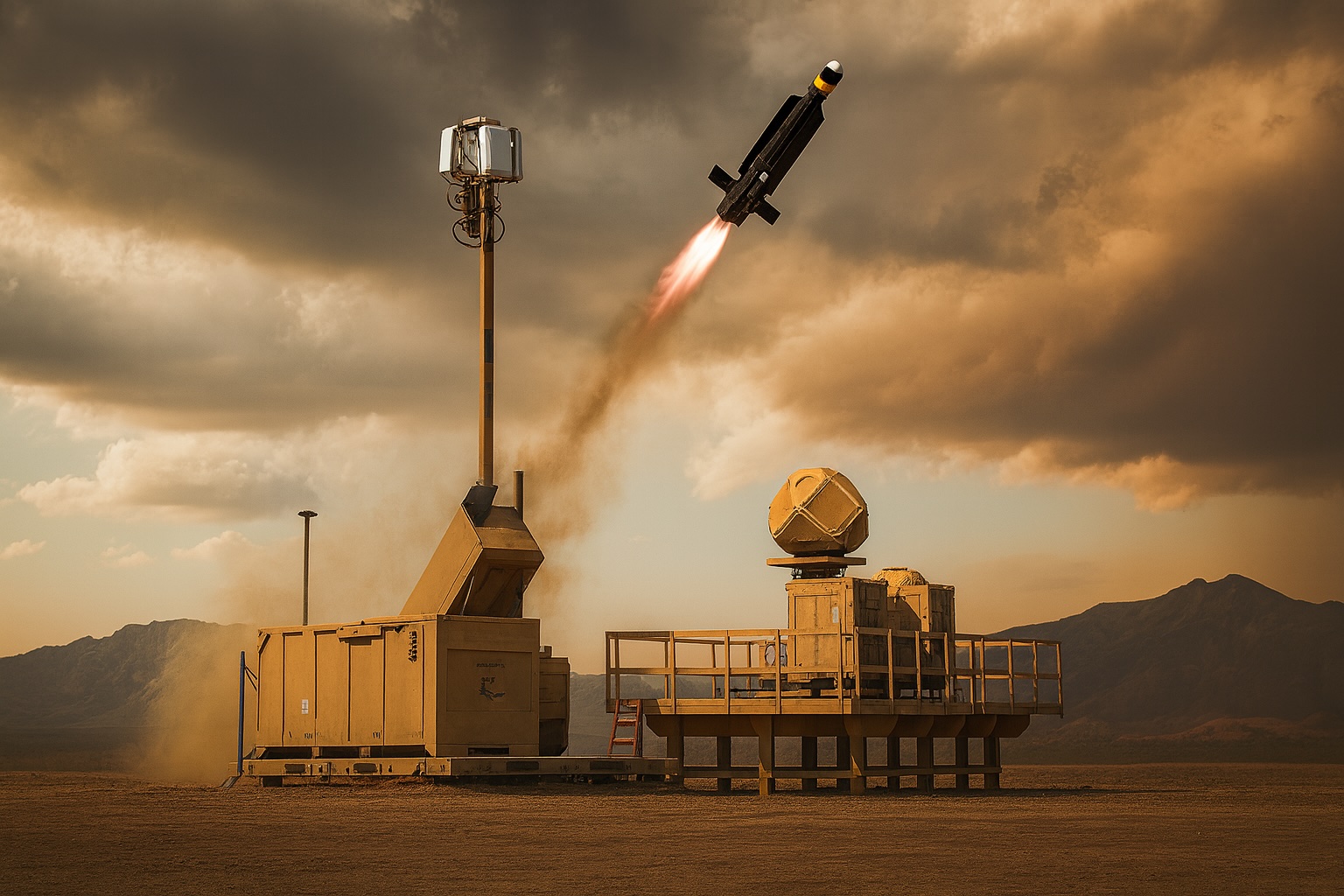
    To handle smaller drones more efficiently, Russia has developed new missiles and ammo. A modernized Pantsir variant (often called Pantsir-SM or S1M) was showcased with quad-pack launcher tubes for mini-missiles defense.info. Instead of 12 large missiles, it can carry 48 small drone-interceptor missiles, each presumably with just enough range and explosive to take out a UAV cheaply defense.info defense.info. This mirrors approaches by other countries (like the US NASAMS’s proposed AIM-132 dart and others) to avoid “using a cannon to shoot a mosquito.” The exact specs of these mini-missiles are not public, but their presence was noted by defense watchers: “With… up to 48 short-range missiles, the Pantsir air defense system is heavily optimised to neutralise large swarms of hostile drones.” militaeraktuell.at. In the field, even old Soviet guns have been dusted off for drone defense. The ZU-23-2 twin 23mm cannon, a towed anti-aircraft gun from the 1960s, is often seen on trucks or planted around bases as a cheap point-defense against low, slow drones. Its high rate of fire gives a chance to hit low-tech drones (essentially flak). Similarly, Shilka self-propelled AA vehicles (4× 23mm cannons on a tracked chassis) have been spotted near the front, trying to shoot down UAVs that get within 2–2.5 km. These are very short range solutions and mostly a last resort if jammers or missiles fail to stop a drone coming in.

    For larger “one-way” attack drones (like the Iranian-made Shahed-136 delta-wing drones that Russia itself uses against Ukraine), Russia can employ its medium-range SAMs such as Tor-M2 or Buk-M2/3. In fact, Ukrainian officials have noted that Russian air defenses down a considerable fraction of Ukrainian long-range drones and missiles – although statistics vary widely, Russia often claims high interception rates. One analysis by a defense think tank suggested that by 2024, Russia’s layered defenses (particularly electronic warfare combined with SAMs) were preventing 85–90% of small and mid-size drones from causing damage, essentially blunting many Ukrainian aerial attacks defense.info defense.info. This likely refers to drones like the UJ-22 or other UAVs Ukraine has sent toward Russian cities, many of which have been intercepted or foiled (though certainly not all, as recurring strikes on airbases and infrastructure show).

    Interceptor Drones (“Drone-on-Drone” Defense): A novel and somewhat sci-fi approach is to send drones to catch drones. Russia and Ukraine are both racing to deploy such interceptor UAVs that can autonomously hunt down intruders forbes.com unmannedairspace.info. One Russian project at the forefront is the Volk-18 “Wolf-18” interceptor drone developed by Almaz-Antey (traditionally a missile maker). The Wolf-18 is a small quadcopter drone equipped with an optical sight and an unusual weapon: it carries a set of net-carrying projectiles that can be fired to entangle another drone’s rotors en.topwar.ru en.topwar.ru. In testing, the Wolf-18 proved it could detect and chase down a target drone, launch a net to physically capture or foul it, and if that failed, even ram the target as a last resort en.topwar.ru en.topwar.ru. The net concept is attractive for civilian areas – unlike shooting a drone (and sending debris and bullets flying), a net can neutralize it more safely. Wolf-18 prototypes passed flight trials and “combat” tests by 2021 and were slated for state trials, with developers hinting the first deployments would be to protect civilian airports from intruding drones uasvision.com uasvision.com. In fact, Russian media reported that the net-drone would be used at airports and critical facilities as an anti-UAV guard uasvision.com. The drone is quite small (about 60 cm width, 6 kg weight) with ~30 minutes endurance en.topwar.ru en.topwar.ru. It can work autonomously in a defined patrol zone and only needs an operator’s go-ahead to attack, thanks to an AI-guidance system en.topwar.ru en.topwar.ru. As of 2023–24, Almaz-Antey upgraded Wolf-18 with better sensors and had it successfully intercepting test drones; they indicated series production could begin once government evaluations were complete en.topwar.ru en.topwar.ru. This suggests Wolf-18 or similar intercept drones might already be in limited use, guarding high-profile events or sites where shooting down a drone could be too risky (for example, imagine a rogue drone near an airport runway – a net drone could bring it down without gunfire).

    There are reports of other exotic concepts as well. Russian firms have showcased everything from anti-drone UAVs with shotgun shells to drones carrying electronic warfare payloads that can fly toward an enemy drone and jam it at close range. In 2023, one Russian center even claimed to be testing a “24-barrel anti-drone turret” combining a laser dazzler and electronic jammer – essentially a stationary robot that could engage multiple drones (though this sounds largely experimental) facebook.com. Additionally, Russia has signaled interest in loitering munitions as interceptor drones – using a small kamikaze drone to ram into enemy UAVs. It’s a bit like hitting a bullet with a bullet, but against slower drones it might work. On the Ukraine front, some Russian units have tried using their own Lancet strike drones to chase Ukrainian UAVs. This field is evolving fast on both sides.

    Directed Energy (Lasers): Finally, Russia has publicly hinted and boasted about directed-energy weapons to counter drones. In May 2022, then Deputy PM Yuri Borisov claimed Russia deployed a new laser called “Zadira” in Ukraine that “incinerated” a drone 5 km away in seconds defensenews.com defensenews.com. This claim was met with skepticism, as no evidence was provided and lasers effective at 5 km are not easy to deploy on a mobile platform. Nevertheless, by 2023–24 Russia did demonstrate some laser-based air defense progress. In mid-2025, the government announced it had conducted large-scale tests of new laser systems against various drones in different weather conditions reuters.com reuters.com. Footage showed a drone being burned up, and officials called the tech “promising,” saying it would move to serial production and be incorporated into Russia’s broader air defense network reuters.com reuters.com. President Putin himself urged accelerated development of these “directed-energy” defenses. One specific system rumored to be in testing is “Posokh” – reported as a laser air-defense prototype used in exercises understandingwar.org. Intriguingly, there are also indications Russia might be leveraging foreign tech: in 2025 a video surfaced (via Telegram channels) suggesting a Chinese-made Silent Hunter 30kW laser had been acquired and deployed by Russian forces laserwars.net laserwars.net. The Silent Hunter is a known Chinese anti-drone laser capable of disabling UAVs at up to 4 km by burning through their airframes or sensors. If Russia has indeed imported one, it underscores how critical counter-drone warfare has become – to the point of quietly sourcing advanced systems abroad despite sanctions. That said, lasers in Russia’s arsenal are likely still auxiliary and experimental. Weather (fog, rain, snow) can degrade them, and their effective range is typically short (1–2 km reliably). But as drone swarms get larger, high-energy lasers offer the allure of limitless “ammunition” (just power) and speed-of-light engagement. We can expect Russia to continue investing in this area, aiming for a future where cheap drones can be zapped out of the sky en masse without expending costly missiles.

    Protecting the Homeland: From the Front Lines to Moscow

    Russia’s anti-drone strategy isn’t just about military hardware; it’s also about deployment – where and how these systems are used. Broadly, there are three zones of concern: the active warfront in Ukraine, the border regions and strategic facilities (oil depots, airfields, power plants), and major cities like Moscow. Each presents different challenges and has seen a tailored defensive rollout.

    Front Line and Battlefield Use: On the front in Ukraine, Russian troops face hundreds of reconnaissance and attack drones daily. Small quadcopters hover to drop grenades into trenches; FPV drones scream toward tanks to explode on impact; larger UAVs spot for artillery. In response, Russia has embedded counter-UAV tactics at every echelon of its forces defense.info defense.info. At the platoon/company level, soldiers now often have drone alert procedures and use portable jammers (like Stupor or newer Surikat) when a threat is near. Camouflage has been adapted – many Russian armored vehicles have been covered with makeshift “birdcage” wire screens and anti-drone netting to detonate or ensnare incoming drones (the so-called “cope cages” or “turtle tanks” approach) defense.info defense.info. Electronic warfare units that used to be kept at brigade or division level are now pushed forward as “trench-level” EW teams, operating those Silok and Lesochek jammers near frontline positions defense.info defense.info. This decentralized approach came after painful lessons in 2022 when centralized EW assets couldn’t react quickly to swarm attacks defense.info defense.info. Now, each combined-arms battalion might have its own anti-drone section. Russia’s military doctrine has “undergone radical transformation under drone pressure,” notes one analysis – moving from top-down, static defenses to distributed, layered defenses that mix kinetic and electronic countermeasures on the ground defense.info defense.info. For instance, a Russian motorized rifle battalion in 2025 might be accompanied by: a couple of Tor-M2 SAM vehicles for shooting down UAVs, a EW truck (like Borisoglebsk-2 or Lever-AV) to jam communications in the area, several Silok or Volnorez units attached to tank companies for immediate drone interference, and snipers or machine-gunners trained to shoot at drones if all else fails. Drones have essentially become the new incoming mortar fire – omnipresent, requiring constant vigilance and quick reactive fire or jamming.

    Protecting Bases and Infrastructure: After some embarrassing strikes (like the August 2022 blasts at Saky airbase in Crimea and the Dec 2022 drone attack on Engels bomber base), Russia recognized that rear-area facilities were highly vulnerable to long-range drones. In late 2022 and 2023, they started hardening these sites. Take airbases deep in Russia: Ukraine demonstrated the ability to hit them with improvised long-range UAVs. In response, Russia installed more SAM batteries around key bases and deployed Pantsir-S1 units directly on the tarmac to cover low-altitude approaches. At Engels airbase (500 km from Ukraine), satellite images showed Pantsirs guarding the bomber parking areas after one drone damaged strategic bombers. Oil refineries and fuel depots in border regions now often sport perimeter anti-drone systems – either a Pantsir/Tor for high-speed response or EW systems to jam GPS and control signals. One notable initiative is the widespread installation of counter-UAV gear at civilian industrial sites. By April 2025, an estimated “60% to 80% of civilian industrial enterprises in Russia have already equipped their territories with protection against UAV attacks” szru.gov.ua. This statistic, cited by a Russian tech industry report, shows how seriously even civilian sectors are taking the drone threat. These defenses include things like radar+jammer combos mounted on facility rooftops (for example, a power plant might have a 360° surveillance radar and a directional jammer turret to stop a rogue drone). The Russian government has urged companies in sectors like energy, chemicals, and transportation to invest in such systems, fearing sabotage or terror attacks from drones. Even critical agriculture facilities (like large grain storage or food processing plants) are being outfitted with anti-drone systems in some regions en.iz.ru – indicating that Russia is concerned not just about military drones but also about any UAV that could threaten economic targets or public safety.

    A high-profile example of domestic drone defense is Russia’s effort to shield the Crimea Bridge (Kerch Bridge) – a strategic and symbolic asset that Ukraine has targeted with drones and explosives. Russia reportedly deployed boat-detecting radars, EW systems, and layers of SAMs specifically around the bridge. Similarly, in border oblasts like Belgorod, Bryansk, and Kursk (which have seen numerous Ukrainian drone incursions), local authorities have set up improvised “anti-drone squads” and surveillance posts. In Belgorod city, police cars have been spotted carrying anti-drone guns to quickly respond if a quadcopter is reported overhead. Kursk region experienced drones attacking an airfield and an oil terminal; since then, the area bristles with additional short-range AD units and EW interference is frequently observed (GPS disruptions, etc.). The discovery of the Volnorez vehicle-mounted jammer in Kursk (before it was even uncrated) by a Ukrainian commando team shows how Russia was forward-staging advanced countermeasures in high-threat border zones armyrecognition.com armyrecognition.com. Volnorez’s deployment on T-80 tanks in Ukraine – complete with tanks sporting cage armor and this 13 kg jammer – underscores how integral drone defense is to unit survival now armyrecognition.com armyrecognition.com. By emitting interference that breaks any FPV drone’s control link in the final 100–200 m of its approach, Volnorez effectively creates an electronic shield around the tank, causing attacking drones to either crash or harmlessly fizzle out before hitting armyrecognition.com armyrecognition.com. This kind of point-defense jamming is likely being rolled out to more frontline vehicles (reports suggest new T-72B3 and T-90M tanks also are getting drone jammers installed) bulgarianmilitary.com.

    The “Drone Dome” Over Moscow: Nowhere has Russia been more determined to prevent drone strikes than its capital city. After a shocking incident in May 2023 – when drones struck several buildings in Moscow – the Kremlin accelerated plans to encircle the metropolis with layered air defenses. By August 2025, over 50 anti-aircraft sites had been established in and around Moscow in an expanded defensive ring militaeraktuell.at. This essentially resurrects the concept of the Soviet-era Moscow Air Defense Zone, but updated for modern threats. According to analysis by Militär Aktuell, new Pantsir-S1 and SAM positions have been sited roughly every 5–7 km in a wide radius 15–50 km from the city center militaeraktuell.at militaeraktuell.at. Lacking hills around flat Moscow, the military resorted to erecting 20-meter tall metal towers and elevated platforms to mount Pantsir systems – giving their surveillance radars a better angle to detect low-flying drones that hug terrain militaeraktuell.at militaeraktuell.at. Some positions are on repurposed high structures (like old landfills or mounds) and even on specially built ramps militaeraktuell.at militaeraktuell.at.

    Within the city, as noted, at least three Pantsir-S1 units are permanently stationed on rooftops near the Kremlin: one atop the MoD building by the Moscow River, one on an Interior Ministry building north of Red Square, and one on an education ministry building east of the center militaeraktuell.at militaeraktuell.at. These are highly visible – Muscovites have shared photos of the missile launchers silhouetted on buildings, a jarring sign of the times militaeraktuell.at. The medium- and long-range SAMs form outer layers: open-source counts as of early 2023 suggested at least 24 S-300/S-400 launchers around Moscow, plus newer S-350 Vityaz systems and even the ultra-long-range S-500 Prometheus in limited numbers militaeraktuell.at. Each layer is meant to catch a different category of threat (ballistic missiles, cruise missiles, jets, and drones). However, Moscow’s defense focuses particularly on low, small drones lately – the kind that might slip past big S-400 radars. That’s where the dense Pantsir network and jamming come in.

    Electronic defenses have been bolstered in the capital, too. Since 2016, GPS spoofing around the Kremlin has been known to confuse drone navigation (tourists noticed their map apps acting funny near Red Square – likely a peacetime anti-drone measure). After 2023’s incidents, Russian telecom regulators reportedly installed more Pole-21 nodes around Moscow to create a wide GPS jamming umbrella defense.info defense.info. Devices to detect drone radio frequencies have been given to police units; the city even considered enlisting civilian drone hobbyists as volunteer “drone spotters.” Although specifics are secret, one can infer that multiple Ruselectronics EW systems (the maker of SERP, Lesochek, etc.) are deployed to protect Moscow’s airspace electronically. Indeed, Russian officials revealed that by mid-2025 about 80% of key enterprises in Moscow had some anti-drone protection, and all critical government buildings were covered by layered defenses tadviser.com militaeraktuell.at.

    Despite these efforts, Ukrainian drones have still sometimes gotten through – highlighting that no system is foolproof. Drones have struck Moscow’s business district in 2023 and 2024, hitting high-rise building facades (with minimal damage but huge symbolic impact). This suggests some low-level gaps remained, or that drones flew in autonomously on waypoints (less susceptible to jamming). It keeps Moscow on edge; as a CEPA analysis put it, “even with new technologies, 100% protection will not be achieved” and Russia’s capital remains not entirely drone-proof cepa.org. The Russian military acknowledges this, but aims for maximum coverage to reduce successful strikes to a minimum. The rapid expansion of Moscow’s defenses – essentially building a modern flak curtain around a 12-million population city in a matter of months – is unprecedented in recent history, and underscores how seriously Russia now treats the drone threat on its own soil.

    Effectiveness and Evolving Challenges

    How effective are Russia’s anti-drone systems overall? The picture is mixed and constantly changing as “adaptation and counter-adaptation” play out defense.info defense.info. Early in the invasion, Russia was caught off guard by Ukraine’s drone tactics, suffering numerous losses. Since then, it has undoubtedly improved its drone defenses – many Ukrainian drone strikes are now intercepted or fail to hit vital targets. Russian sources often cite high interception rates (for example, claiming nearly all Ukrainian UAVs attacking Crimea in a given week were shot down or jammed). Western analysts have also observed Russia’s interception rate against certain drones has climbed dramatically thanks to layered EW and air defenses defense.info defense.info. The introduction of new systems like CRAB, SERP, and wearable jammers has likely saved lives on the front, making Ukrainian drone attacks less financially sustainable (Ukraine cannot afford to lose dozens of expensive FPV drones for only a few getting through). As one 2025 study noted, Russian forces showed “remarkable tactical learning,” going from “drone warfare laggards in early 2022 to sophisticated practitioners by 2025.” defense.info defense.info Every few months, they’ve fielded a new gadget or revised tactics to counter the latest drone threat – yet, importantly, Russia remains one adaptation cycle behind Ukraine’s innovations defense.info defense.info. Ukraine finds a weak point (say, fiber-optic guided drones immune to jamming, or drones attacking EW units themselves), exploits it, and Russia scrambles to plug that gap with something new. For instance, when Ukraine began using drones with no RF emissions (pre-programmed routes or tethered control), Russian EW was flummoxed, leading Russia to explore fiber-optic drones of its own and more emphasis on kinetic interception defense.info defense.info.

    There have been embarrassing episodes for Russia: As described, Silok jammers intended to ground drones instead got hunted by drones. The Ukrainian military gleefully documented cases of tiny quadcopters dropping grenades precisely onto high-tech jammers, taking them out of action ukrainetoday.org ukrainetoday.org. Each time that happened, it was both a tactical success for Ukraine and a propaganda coup (showing a $1000 drone defeating a million-ruble system). The captures of advanced systems like Krasukha-4 and CRAB handed Ukraine (and NATO) insight to develop counter-countermeasures. It’s a vivid demonstration that anti-drone warfare is now as important as drone warfare itself – a see-saw where each side tries to gain a temporary edge.

    Russia’s broad approach – combining electronic and kinetic defenses – is considered the correct strategy by military experts. A recent CNAS report noted that counter-drone missions “entail much more than simply air defense” and cannot be left to traditional air defense units alone cnas.org understandingwar.org. Russia’s experience echoes that: they needed the concerted efforts of EW specialists, air defenders, infantry with new gear, and even engineers to fortify positions (with drone nets and cages) to meaningfully reduce the drone threat. The scale of Russia’s response is telling. By mid-2025, they were training up large numbers of “drone hunters” – both human and technological. Factories under Rostec are reportedly running overtime to churn out anti-drone guns, EW devices, and to integrate new counter-UAV features into existing platforms (for example, newer T-90M tanks rolling off the line might come pre-fitted with a small UAV radar and jammer). Rostec officials have been openly talking about the booming demand: “The portfolio of Rostec’s products for countering UAVs” keeps growing, one executive said, emphasizing versatility for both “civilian and military UAVs” and offering systems that can be tailored per customer needs (e.g. a civilian security firm might only want detection and not full jamming) rostec.ru rostec.ru. “One of the main advantages of the Sapsan-Bekas is its versatility… easy to adapt to the needs of customers,” noted Oleg Evtushenko, Rostec’s Executive Director rostec.ru rostec.ru. Indeed, the Sapsan-Bekas mobile system was designed with modular components so it could be sold to energy companies just for drone detection, or to the military with the jamming and radar all included rostec.ru rostec.ru. This highlights how counter-drone tech is now a major industry in Russia.

    Ultimately, Russia’s anti-drone arsenal is extensive and growing more sophisticated by the month. It ranges from 8-wheeled electronic “buzzers” that scramble the skies for miles, to shoulder-fired missiles and cannons ready to blast drones out of the air, to ingenious solutions like electronic backpacks and net-casting drones for the most personal layer of defense. The scale and urgency of these deployments cannot be overstated – Russia’s military has effectively had to treat small drones as a new class of menace on par with rockets and artillery, rewriting their manuals and redesigning hardware accordingly. And as they do so, Ukrainian forces adapt again, in a continual cycle. As a result, the battle between drones and anti-drones has become one of the defining contests of the Ukraine war.

    One Russian commentator quipped that the conflict is a “drone war” as much as anything, with “the most intensive proving ground for drone warfare” in history prompting an equally intense proving ground for countermeasures defense.info defense.info. Each Russian innovation – be it a new jammer, a new missile, or a laser – is quickly noted and studied by Ukraine, and vice versa. Going forward, we can expect Russia to double down on integration (networking all these systems for better efficiency), automation (using AI to rapidly identify and prioritize drone targets), and cost-swap favorability (developing ever-cheaper interceptors so shooting down a drone is less costly than launching one). The Kremlin’s goal is to make drone attacks futile or at least highly ineffective. As of late 2025, they haven’t achieved an impenetrable shield – drones still occasionally slip through and grab headlines – but they have constructed a formidable multi-layer defense that is undoubtedly saving many assets and lives from the hovering threats above. In the cat-and-mouse game of drone vs. anti-drone, Russia has turned much of its territory into a high-tech defensive web, a “fortress in the sky,” even as the game is far from over.


    Sources: Russian Ministry of Defense and state media reports; Rostec and Ruselectronics press releases rostec.ru rostec.ru; independent military analyses and eyewitness accounts ukrainetoday.org defense.info; reporting by Reuters and international outlets reuters.com theguardian.com; expert commentary from Forbes, CSIS, and defense think-tanks ukrainetoday.org defense.info. These sources provide detailed insights into the capabilities and deployments of Russia’s counter-drone systems, as well as real-world performance data from the ongoing conflict.

  • Sky Wars: Inside Poland and Europe’s High-Tech Anti-Drone Arsenal

    Sky Wars: Inside Poland and Europe’s High-Tech Anti-Drone Arsenal

    Key Facts

    • Poland’s Homegrown “Monster”: Poland has unveiled a state-of-the-art anti-drone system nicknamed the “Monster,” developed by local industry poland-24.com armadainternational.com. This turret-based system uses a four-barrel 12.7 mm Gatling gun integrated with sensors to automatically track and shoot down drones at up to 2 km range, offering a low-cost “hard-kill” solution against small UAVs armadainternational.com armadainternational.com. It reflects Poland’s push to strengthen NATO’s eastern flank with indigenous technology.
    • Layered Defenses Across Europe: European nations are deploying multi-layered counter-drone systems combining radar detection, radio-frequency (RF) jamming, lasers, and even drone-vs-drone tactics. For example, Germany’s ASUL system integrates active and passive radars, electro-optical sensors, and jammers to detect and defeat drones in real time hensoldt.net hensoldt.net, while France tested high-energy laser weapons like HELMA-P (effective to ~1 km) to guard the Paris 2024 Olympics unmannedairspace.info unmannedairspace.info.
    • Foreign Tech and Joint Ventures: EU countries source counter-UAS tech both domestically and abroad. Germany partnered with Swiss firm Securiton to acquire advanced anti-drone equipment (likely including Israel’s D-Fend EnforceAir RF takeover system) to protect military sites dronexl.co dronexl.co. Italy has bought Skynex 35 mm gun systems from Germany’s Rheinmetall to counter drones and missiles, being the first NATO member to adopt this canon-based air defense for close-range drone protection dronesworldmag.com dronesworldmag.com. European defense giants like MBDA and Thales are also fielding solutions (e.g. Sky Warden system, E-Trap microwave weapon) in collaboration with local startups unmannedairspace.info breakingdefense.com.
    • Civilian Security Applications: Beyond the battlefield, anti-drone tech is now crucial for civilian security – guarding airports, borders, and public events. Airport Protection: After drone incursions halted flights at Frankfurt Airport on 10 separate days in 2023 flightglobal.com, airports across the EU have installed drone detection networks (RF sensors, cameras) and emergency response protocols. Event Security: France deployed dozens of portable jammers and detection teams for the 2024 Olympics, detecting 355 unauthorized drones (mostly clueless hobbyists) and enabling 81 arrests during the Games breakingdefense.com. Italy’s security forces used handheld “drone gun” jammers to shield 250,000 attendees (and VIPs) at Pope Francis’s funeral in 2025 cuashub.com cuashub.com, with Air Force teams on standby using radar, electro-optic trackers, and electromagnetic pulse rifles to down any intruding drone cuashub.com cuashub.com.
    • Rising Investments (2022–2025): European defense budgets have ramped up spending on counter-UAS. Poland – NATO’s top defense spender per GDP – embedded anti-drone efforts in its PLN 186.6 billion defense modernization, including new Patriot batteries and local C-UAS projects euronews.com euronews.com. Germany ordered 19 Rheinmetall Skyranger mobile anti-drone cannon vehicles in 2024 (at ~$36 million each) to protect its brigades forbes.com. France’s 2024–30 military plan earmarks €5 billion for ground-based air defense including C-UAS breakingdefense.com, and Italy in 2025 inked a €73 million deal for a pilot Skynex system (with options totaling €280 million for three more) dronesworldmag.com dronesworldmag.com. The European Commission, meanwhile, launched an EU-wide counter-drone strategy in Oct 2023 to harmonize laws, fund R&D, and coordinate purchases among member states debuglies.com home-affairs.ec.europa.eu.
    • Notable Incidents Driving Action: Russia’s war in Ukraine has repeatedly spilled into EU airspace with drones, spurring urgent countermeasures. In Sept 2025, 19 armed drones violated Poland’s airspace; Polish and NATO jets shot down four of them euronews.com euronews.com, prompting Poland to activate NATO consultations and seek Ukrainian assistance in drone-combat training euronews.com euronews.com. Earlier, small drone incursions caused airport shutdowns (e.g. Warsaw, Riga) and even mysterious drone flights over French nuclear plants. Such incidents underscore the drone threat to both national security and public safety, accelerating Europe’s deployment of counter-drone systems.

    Introduction: The New Battles Above – Why Anti-Drone Systems Matter

    Unmanned aerial vehicles – from tiny quadcopters to weaponized drones – have exploded onto the scene in recent years, bringing new dangers to battlefields and city skies alike. Europe has witnessed everything from hobby drones disrupting major airports to armed drones menacing borders and critical infrastructure. This has catalyzed a rapid “drone defense” revolution: governments are investing heavily in technologies to detect and disable rogue drones before they can spy, smuggle, or strike.

    Poland and its EU partners are at the forefront of this effort, assembling layered anti-drone arsenals that would have seemed like sci-fi just a decade ago. These range from radar- and AI-powered detection networks to jamming guns, interceptor drones, net launchers, high-powered lasers, and even anti-drone “shotguns” and cannons. Military and civilian authorities alike are deploying such tools – protecting everything from military bases and borders to airports, power plants, and stadiums. The goal is to level the playing field against a threat where a $1,000 off-the-shelf drone can threaten a $3 million fighter jet or shut down an airport unmannedairspace.info unmannedairspace.info.

    In this report, we compare the full spectrum of anti-drone systems now in use or development across Poland and major EU countries. We’ll see how each country is bolstering its defenses, whether with homegrown innovations or imported tech, and for what purposes. We’ll also examine how effective these systems have been, the legal frameworks evolving around them, and some real-world deployments – from wartime engagements to high-profile events like the Olympics. The race is on between drones and the countermeasures designed to stop them. As one French general put it: “The life of impunity of small, simple drones… is a snapshot in time. The shield is going to grow.” unmannedairspace.info

    Types of Anti-Drone Systems: Tools of the Trade

    Before diving country-by-country, it’s important to understand the varieties of counter-drone systems Europe is using. Modern C-UAS (“counter–unmanned aerial system”) solutions typically combine detection and neutralization methods:

    • Radar and Sensor Networks: Almost every anti-drone setup begins with detection. Specialized radars (often 3D AESA types) can spot small drones at surprisingly long ranges (20–50 km for larger military radars) unmannedairspace.info unmannedairspace.info. For instance, Germany’s Hensoldt builds Spexer radars for drone detection (including a naval version scanning out to 250 km) unmannedairspace.info. Passive RF sensors like France’s Cerbair HYDRA system “sniff” the airwaves for drone control signals and even locate the pilot, all without emitting a signal navalnews.com navalnews.com. Electro-optical cameras and thermal imagers then zoom in to confirm the drone’s identity. Some systems (like Italy’s ADRIAN or Spain’s AUDS) even use acoustic sensors, listening for the buzz of drone rotors army-technology.com.
    • RF Jamming and Takeover: To neutralize a rogue drone, one common method is blasting it with radio-frequency interference. Jammer guns – such as the French-made NEROD F5 rifle or Poland’s SkyCtrl jammer – emit powerful electromagnetic pulses on the drone’s control/GPS frequencies, severing the link to its pilot theaviationist.com theaviationist.com. The drone typically is forced into fail-safe mode, landing or returning to home, as described by Italian Air Force C-UAS units theaviationist.com theaviationist.com. Some advanced systems (e.g. EnforceAir by D-Fend) go further: they hack the drone via its RF link and commandeer it – a “soft kill” that lands the intruder safely under the defender’s control dronexl.co dronexl.co. These methods are popular for civilian scenarios (crowded events, airports) since they avoid stray bullets. However, their effective range is typically a few hundred meters to a couple of kilometers, and some drones use autonomy or frequency-hopping to resist jamming unmannedairspace.info unmannedairspace.info.
    • Kinetic “Hard Kill” Systems: When a dangerous drone must be destroyed outright, more kinetic options come into play. Traditional air defense guns and missiles can be used – Poland even integrated American Patriot SAM batteries into a unit tasked with countering “cruise missiles, drones, and piloted aircraft” euronews.com euronews.com. But firing a $3 million Patriot missile at a $500 drone is a “shooting a cannon at a fly” scenario, as critics note euronews.com. Instead, Europe is fielding cheaper gun systems: Germany and Italy are buying Rheinmetall’s Skyranger and Skynex vehicles – these mount 30–35 mm auto-cannons (1,000+ rpm) firing smart airburst rounds that can shred drones out to 3–4 km en.wikipedia.org en.wikipedia.org. Poland’s aforementioned 12.7 mm Gatling “Monster” also fits here, trading some range for a much lower cost-per-shot dronesworldmag.com dronesworldmag.com. Even standard artillery is being repurposed: France found that naval 76 mm deck guns can fire special munitions to blast drone swarms from the sky breakingdefense.com breakingdefense.com.
    • Directed-Energy Weapons: High-tech directed energy is making its way into C-UAS as well. High-power lasers can silently burn through a drone’s frame or optics; French firm Cilas tested a laser called HELMA-P (High-Energy Laser for Multiple Applications – Power) that can “detect, track and neutralize drones up to 1 km away” unmannedairspace.info. Lasers offer literally light-speed engagement and an “infinite magazine” (limited only by power supply), but can be affected by weather and typically require a steady aim on the target for a second or two. Another approach is high-power microwave (HPM) beams. In 2024, Thales unveiled E-Trap, a 360° microwave emitter that in a split-second emits a powerful pulse to fry drone electronics within a short radius breakingdefense.com breakingdefense.com. This was covertly deployed around Olympic venues in Paris to instantly zap any threatening mini-drones (essentially an EMP gun) breakingdefense.com. HPM devices can neutralize swarms simultaneously, though they tend to be bulky and power-hungry.
    • Nets, Birds, and Interceptor Drones: In close quarters or sensitive environments, physical capture is another tactic. Police units in several countries have used net launchers (e.g. the handheld SkyWall bazooka) to shoot a net that entangles a drone’s rotors. The captured drone can then be brought down with minimal collateral damage. The Netherlands even famously trained eagles to snatch small drones out of the air a few years ago – a program that demonstrated success but was later paused due to the eagles’ unpredictable behavior. More promising are interceptor drones: small agile UAVs that chase and collide with the rogue drone or fire a net at it mid-air. Germany’s Bundeswehr University is developing a drone interceptor under Project FALKE dronexl.co, and French startup Hologarde offers an autonomous rammer drone as part of its solutions. Such “drone-on-drone” defenses can be highly effective for low, slow targets, though they require sophisticated autonomy and are vulnerable to the weather and drone swarms.

    Most comprehensive anti-drone systems today combine multiple of the above – a strategy often called “hybrid” or layered defense. For example, a military base might have long-range radar and RF sensors cued to identify threats, an EW jammer to try first, and a gun or laser as a backup to shoot down anything that doesn’t respond. Europe’s approach is increasingly to automate this kill-chain: “spotting the threat, classifying it, then passing that information along – in near-real time – to other systems that can do something about it,” as Thales experts describe breakingdefense.com breakingdefense.com. Now, let’s see how this is playing out in Poland and across the EU.

    Poland: Fortress Sky – Layered Defenses on NATO’s Frontline

    Poland has emerged as a leader in counter-drone deployment, driven by its proximity to the Russia-Ukraine war and a determination to modernize its military. In 2022, just months after drones and missiles began terrorizing Ukraine, Poland passed a Homeland Defence Act injecting massive funds (4.48% of GDP in 2023, Europe’s highest) into upgrading its arsenal euronews.com euronews.com. This included significant investments in air defense and C-UAS capabilities. As Prime Minister Donald Tusk said after Russian drones violated Polish airspace in Sept 2025, Poland’s drone defenses had been “preparing for such a threat for years.”

    Multi-Layer Air Defense: Poland is constructing a layered air and missile defense shield that doubles for anti-drone protection. At the high end, Poland has acquired Patriot PAC-3 batteries from the U.S. (part of the WISŁA program) to counter cruise missiles and larger drones euronews.com euronews.com. These Patriots, paired with new U.S. LTAMDS 360° radars, form the top tier designed to intercept anything from ballistic missiles to UAVs – though firing a Patriot missile at a mini-drone is a last resort. For closer range, Poland is deploying Narew medium-range SAMs (40 km+) and Piorun MANPADS (infrared-guided missiles effective ~6 km) which can also engage drones euronews.com. This mirrors NATO’s doctrine of layered Integrated Air and Missile Defense, now explicitly including “uncooperative drones” as targets.

    Indigenous “Hard-Kill” Systems: Not content to rely solely on imports, Polish industry has developed its own counter-drone weapons. A standout is the Turreted 12.7 mm Gatling Gun System (formal name: System Zwalczania Dronów, or “Drone Countermeasure System”), which the Polish Mechanical Works Tarnów co-developed with the Military University of Technology armadainternational.com armadainternational.com. Nicknamed “Monster” in Polish media armadainternational.com, this system was publicly unveiled at the MSPO 2024 defense fair. The Monster comprises a four-barrel .50-caliber machine gun on a remote-controlled mount, tied into a high-resolution day/night optic and laser rangefinder armadainternational.com. It can even plug into a separate 15 km-range search radar for early warning armadainternational.com. In tests, the Monster proved it can autonomously track and shoot drones – once an operator gives permission, the AI aiming handles the rest, pumping out up to 200 rounds per minute of heavy machine-gun fire until the drone is destroyed armadainternational.com armadainternational.com. With effective fire out to ~2 km, cheap ammo, and ability to mount on vehicles or tow, it offers Poland a cost-effective “hard kill” option for swarms or small UAVs that slip past higher-altitude missiles armadainternational.com armadainternational.com. As of early 2025, Polish officials indicated the Monster was being prepared for production due to high interest armadainternational.com armadainternational.com.

    Another Polish firm, Advanced Protection Systems (APS), has focused on smart detection. Their SKYctrl system uses AI-driven sensors to automatically distinguish drones from birds, minimizing false alarms – a critical feature when flocks of birds could otherwise trigger alerts euronews.com. APS’s systems (and similar ones by Warsaw’s Hertz New Technologies) have been trialed around Polish airports and power plants, tying into command centers that cue jamming or gunners when a real drone threat is confirmed euronews.com.

    Electronic Warfare and Jammers: Poland’s military and security services also employ an array of electronic countermeasures. While details are classified, reports indicate Poland has procured sets of man-portable RF jammers – akin to the US-made DroneDefender or Australian DroneGun – to equip its police and border guards. In fact, during the 2025 Russian drone incursions, Polish forces did not immediately resort to shooting; they first relied on detection and EW to monitor and try to divert the drones debuglies.com debuglies.com. Polish officials noted the intruders were “recorded, monitored, and managed by national units without necessitating kinetic action” in one incident debuglies.com, implying that jamming or geofencing tactics may have been used to nudge the drones away (though ultimately some were shot down by NATO fighters in a later incident when the threat escalated euronews.com euronews.com).

    On the civilian side, Poland has enforced no-fly zones and geofencing around sensitive sites. Under EU rules adopted via Poland’s aviation authority (ULC), all drones must obey published UAS geographic zones; Poland in 2025 mandated a national database of restricted areas (near borders, airports, military bases) that drones’ navigation systems will automatically avoid debuglies.com debuglies.com. This digital fence approach doesn’t stop a malicious drone built to ignore it, but it helps curb clueless hobbyists. And for those who violate airspace, Poland’s 2022 defense law explicitly authorizes the military to neutralize aerial intruders as needed debuglies.com debuglies.com – giving a clear legal basis for shooting down or jamming threatening drones.

    Real-World Use: Poland’s robust stance isn’t theoretical. It has scrambled jets and helicopters to intercept unknown drones on multiple occasions in 2023–25, amid the war next door debuglies.com debuglies.com. Notably, when a likely Russian camouflaged drone crashed in eastern Poland in Aug 2025, Polish crews and prosecutors treated it as a serious provocation, noting it evaded radar until impact debuglies.com debuglies.com. The incident exposed gaps in low-altitude detection, prompting fast-tracked improvements in sensors on the border debuglies.com debuglies.com. By September 2025, when 19 drones swarmed toward Poland, the country’s response – NATO AWACS surveilling from above, fighters on standby, air defense on high alert – showed how far its counter-drone readiness had come cuashub.com euronews.com. Poland even invoked NATO’s Article 4 consultations after that event euronews.com, underscoring that a drone incursion is viewed as an act of aggression. In the aftermath, Ukraine, battle-hardened in drone combat, sent specialists to train Polish crews in detecting and downing the Iranian-made Shahed kamikaze drones used by Russia euronews.com euronews.com.

    From battlefield to airport, Poland is integrating its anti-drone tools. Airports like Warsaw Chopin have installed drone detection systems after rogue drone sightings caused temporary flight suspensions in recent years. Polish police have not hesitated to jam or physically disable drones flying illegally over public gatherings (for example, during high-security events like state visits or the 2023 EURO soccer finals hosted in Poland). In short, Poland has treated the drone threat as urgent and real, combining the latest tech with new laws, NATO coordination, and home-grown ingenuity like the Monster system.

    Germany: High-Tech Shields and Industry Powerhouse

    Germany, Europe’s economic giant, has taken a comprehensive approach to counter-UAS – leveraging its strong defense industry to develop indigenous systems while also adapting to emerging threats (like unauthorized drone flights over Bundestag or military bases). With drones increasingly seen as a security issue, Germany’s strategy couples new tech deployments with legal reforms and international cooperation sentrycs.com hoganlovells.com.

    Integrated C-UAS Platforms: The German Armed Forces (Bundeswehr) have invested in a modular, multi-sensor system known as ASUL (an acronym roughly translating to “Anti-small UAS System”). Developed by the Bavarian electronics firm ESG (now a subsidiary of Hensoldt), ASUL was delivered in 2022 and has since been continually upgraded hensoldt.net hensoldt.net. ASUL acts as a “system of systems”: it knits together a scalable mix of sensors (3D radars, RF analyzers, infrared cameras) with effectors (jamming modules, drone catchers, etc.) hensoldt.net hensoldt.net. Thanks to an AI-enabled C2 software called Elysion Mission Core, ASUL can fuse data from all sensors in real time and even suggest optimal countermeasures to operators hensoldt.net. This system proved its mettle securing events like the 2015 G7 Summit in Elmau, Germany, where it protected world leaders from potential drone incursions hensoldt.net. In May 2025, the Bundeswehr contracted Hensoldt to further enhance ASUL’s capabilities based on field feedback hensoldt.net hensoldt.net – a recognition that the drone threat has grown more complex (e.g., faster drones, swarm tactics) since the system’s inception.

    To give its ground forces more punch against drones, Germany is acquiring the Skyranger 30 mobile air-defense gun. In early 2024 the Bundeswehr ordered 19 Skyranger units mounted on Boxer 8×8 vehicles forbes.com, with deliveries expected by 2025–2027. The Skyranger, made by Rheinmetall (German-Swiss), packs a dual approach: a 30 mm automatic cannon (firing programmable airburst rounds that create a flak cloud to down drones up to 3 km away en.wikipedia.org) plus optional missiles or even a laser effector in the same turret en.wikipedia.org. Each vehicle carries its own search radar and electro-optic tracker, making it a self-contained “drone hunter” unit that can move with army columns en.wikipedia.org en.wikipedia.org. The Skyranger rounds are vastly cheaper than missiles – crucial for cost-effective defense breakingdefense.com breakingdefense.com. Indeed, Berlin plans to eventually field hundreds of these systems to cover its brigades and key sites, closing a gap left when old Cold-War Gepard flak tanks were retired militaeraktuell.at. The first Boxer Skyranger was delivered as a prototype in Jan 2025 rheinmetall.com, and full-rate production is ramping up given heightened demand (Rheinmetall even announced doubling output to 200 units/year due to interest from Germany, Ukraine, and others) en.defence-ua.com en.defence-ua.com.

    Partnerships and Foreign Tech: Germany hasn’t shied from partnering abroad for niche capabilities. In September 2024, it emerged the Bundeswehr signed a deal with Swiss security company Securiton to bolster drone defenses at sensitive sites dronexl.co dronexl.co. Securiton in turn works with Israel’s D-Fend Solutions, suggesting the purchase likely includes the EnforceAir system – a highly regarded RF takeover/jammer that can discreetly seize control of rogue drones and guide them to safe landing dronexl.co dronexl.co. Such tech would complement Germany’s own jammers by providing a “surgical” countermeasure (often called a “cyber scalpel”) that causes minimal disruption. This move came as Germany faced increasing incidents of unknown drones over military training areas and even the Chancellor’s office, fueling public concern. By bringing in Securiton and D-Fend, Germany signaled it wanted the best available tools quickly – even if not domestically made dronexl.co. It’s also a sign of close European cooperation, since Switzerland (though non-EU) is a trusted partner, and Israel is a leading drone-defense innovator.

    German research institutes are also active. The Bundeswehr University’s Project FALKE is testing an interceptor drone that could physically crash into or disable intruding UAVs mid-air dronexl.co. And companies like Dedrone (a German-founded firm now operating globally) supply passive RF sensors and drone “early warning” networks – in fact, a Dedrone RF-300 sensor was recently fitted on a German Puma infantry fighting vehicle to alert troops of observation drones overhead unmannedairspace.info unmannedairspace.info. This shows how Germany is integrating C-UAS at the unit level: in the near future, every tank platoon may have a drone detector and some countermeasure on hand, rather than relying solely on air defenses in the rear.

    Legal and Policy Framework: Recognizing that technology alone isn’t enough, Germany has been updating its laws to empower counter-drone action. Traditionally, German law tightly restricted jamming or shooting down aircraft (including drones) except in extreme cases, partly due to privacy and safety concerns. But after high-profile drone incursions – like a drone carrying a banner that disrupted a 2020 Bundesliga soccer match, or several near-misses at Frankfurt Airport – German authorities pressed for clearer rules. In 2021–2022, the government amended its aviation and police laws to explicitly permit police and federal security agencies to disable drones that pose a danger, using means ranging from electronic disruption to forcible interception sentrycs.com hoganlovells.com. The country also played a leading role in EU discussions for a unified counter-drone legal framework. A 2023 German initiative advocated for “integrating legislative reforms, military capabilities, and civil measures” into a comprehensive approach to unauthorized drones sentrycs.com. This helped pave the way for the EU’s October 2023 Counter-UAS Communication, which explores regulatory measures like harmonizing jammer equipment certifications and improving cross-border cooperation debuglies.com debuglies.com.

    Protecting Airports and Events: Germany’s busiest airport, Frankfurt, has been an involuntary testing ground for drone defenses. In 2023, drone sightings caused 10 days of disruptions at Frankfurt – the worst year on record flightglobal.com. Each time, flights were suspended as police scrambled helicopters and used detection gear to locate the operator (in some cases successfully arresting reckless hobbyists). This prompted Fraport (the airport operator) to invest in a dedicated drone detection and interdiction system. While details are confidential, it reportedly includes multiple Dedrone RF sensors ringed around the perimeter, infrared cameras, and a direct hotline to police jamming teams. Trials of an automated drone interference system at Munich Airport are also ongoing. Moreover, Germany has formed specialized police units for “fliegende Infanterie” (flying infantry) equipped with drone guns and net launchers to guard VIP events. For example, during the 2017 G20 in Hamburg and 2022 G7 in Bavaria, teams armed with hand-held jammers (like HP 47 “DroneKill” rifles) patrolled the skies – a practice now standard at major gatherings.

    It’s worth noting a somewhat creative approach: drone nets. Inspired by incidents like drones dropping contraband into prisons, some German prisons installed anti-drone netting over exercise yards. DroneXL reports even Russia started covering certain sites with anti-drone nets after Ukrainian strikes dronexl.co. While impractical for large areas, nets (physical or electromagnetic) are one more tool in Germany’s kit for fixed-site protection.

    Overall, Germany’s counter-drone posture is about integration – integrating sensors and effectors (as with ASUL and Skyranger), integrating new foreign tech with domestic systems, and integrating legal authority with operational need. As one German officer observed, the key is to “enhance counter-drone capabilities by acquiring state-of-the-art equipment and also by ensuring we have the legal mandate to use it when needed.” With defense giant Hensoldt calling itself a C-UAS “pioneer” and the government priming industry with funding, Germany is set to significantly expand its drone defenses in coming years hensoldt.net.

    France: From Laser “Zappers” to Eagle-Eyed Teams – A Counter-Drone Pioneer

    France has been grappling with illicit drones for over a decade – from mystery drones over nuclear plants in 2014, to a drone crashing near the Eiffel Tower, to a tiny UAV flying over President Macron’s residence. In response, France has built one of Europe’s most diverse anti-drone toolkits, addressing military and civil needs alike. As Paris prepared to host the 2024 Summer Olympics (a massive security challenge), the country pulled out all the stops to field cutting-edge counter-drone measures.

    Military Programs – PARADE and Sky Warden: The French Armed Forces launched a comprehensive program called PARADE (“Plan d’actions pour la protection face aux drones”) to equip the military with C-UAS. A parliamentary report in late 2023 identified gaps in PARADE’s rollout, just as the urgency grew ahead of the Olympics sldinfo.com. Nevertheless, France’s DGA procurement agency has funded multiple projects. One highlight is MBDA’s Sky Warden system – a modular architecture that links various sensors and effectors under one command-and-control roof unmannedairspace.info unmannedairspace.info. Sky Warden can plug in radar like Thales’ GM200, RF detectors like Cerbair, and effectors from jammers to the HELMA-P laser. In demos, Sky Warden was able to neutralize everything from mini-drones to larger tactical UAVs, and France is now marketing it to allies as well.

    Another home-grown solution is ARLAD (Adaptive Radar for Low Altitude Drones), a 3D radar Thales developed to spot small drones up to several kilometers out, even those flying low to the ground. Mounted on armored vehicles (like the Griffon VOA), this radar proved it could detect mini-drones 24 km away unmannedairspace.info. Such detection range, coupled with automated target recognition, gives French units precious time to react.

    Directed Energy and High-Tech Jamming: Perhaps the most notable French advances are in directed energy. Cilas HELMA-P laser: France became one of the first in Europe to deploy a laser weapon for drone defense. The HELMA-P is a truck-mounted laser that during tests shot down target drones at 1 km distance unmannedairspace.info. It was slated for use at the Paris Olympics – stationing lasers around stadiums to quietly disable any unauthorized drone that might threaten crowds unmannedairspace.info. Integrating it into MBDA’s Sky Warden means the laser can be cued automatically once a drone is tracked.

    Thales E-Trap HPM: As mentioned, Thales unveiled the E-Trap microwave device in 2024 breakingdefense.com breakingdefense.com. It essentially emits an electromagnetic cone that fries drone circuit boards in microseconds. Being a 360° system, it can take down swarms (multiple drones at once) – a scenario of increasing concern after reports of swarm drone attacks in conflicts. France tested E-Trap during the Olympics on a pilot basis, given its ability to instantly neutralize threats with minimal risk of collateral damage.

    GNSS Spoofing – Safran/Hologarde Skyjacker: French firms Safran and Hologarde collaborated on Skyjacker, a novel “navigation hijacking” system breakingdefense.com breakingdefense.com. Instead of jamming, Skyjacker broadcasts fake GPS (and Galileo/GLONASS) signals to overpower the drone’s satnav. Essentially, it spoofs the drone into thinking it’s off-course, forcing it to divert or land. Skyjacker claims effectiveness up to 6 miles (≈10 km) away breakingdefense.com. During Paris 2024, Skyjacker was covertly used to protect venues, and it worked so well that the Navy decided to install it on at least three FREMM frigates to counter maritime drone threats breakingdefense.com. Spoofing is a clever technique: it only affects the hostile drone’s navigation, not others in the area, and leaves the drone intact for forensic recovery.

    Portable Jammers and Rifles: France has several local manufacturers of handheld jammers. One is MC2 Technologies, which makes the NEROD F5 jammer rifle (the big brown gun seen in many photos) breakingdefense.com breakingdefense.com. Weighing around 5 kg, it can disrupt remote-control and GPS signals of a drone at a few hundred meters. French police and Gendarmerie units have been using NEROD rifles since around 2017, including during Bastille Day parades and football tournaments. Another device is the CERBAIR Chimera 200, a backpack-sized system (≈16 kg) combining detection and jamming, unveiled at Eurosatory 2022 unmannedairspace.info. It allows one operator to carry a full C-UAS suite on the move – useful for Special Forces or patrols. For close-range captures, French police also have net guns and trained eagles (yes, really: the French Air Force’s “Project Eagles” trained golden eagles to intercept drones in 2017, though the program was quietly shelved by 2020 after mixed success).

    Olympic Games – a Testbed: The Paris 2024 Olympics were a major catalyst for France. Security forces anticipated over 20,000 hours of drone surveillance duty during the Games, “10 times more than for the 2023 Rugby World Cup,” noted Air & Space Force Commander Gen. Stéphane Mille breakingdefense.com. In preparation, dozens of anti-drone teams were formed. During the Olympics and Paralympics, France layered its defenses: Army trucks with MELCHIOR 2 radars scanned the skies; police vans carried Jammer and Skyjacker gear; rooftop spotters with binoculars and sniper rifles were ready as last resort. The results: 355 drones detected in restricted zones over the weeks of the Games, leading to 81 arrests breakingdefense.com breakingdefense.com. Thankfully, most were clueless amateurs or media attempts – no hostile attacks occurred. But the event validated systems like E-Trap and Skyjacker in a dense urban environment, giving France valuable real-world data. It also exposed any weaknesses to be addressed before the 2024 EUROS football tournament and future large events.

    Protecting Critical Sites: France has permanently deployed anti-drone measures at critical infrastructure. The French Navy, for example, is equipping its new offshore patrol vessels with CERBAIR’s HYDRA RF detection system navalnews.com navalnews.com to guard against drone snooping or explosive UAVs at sea. Nuclear power plants are ringed by electronic monitoring that alerts the Air Force if a drone enters the forbidden zone, at which point fast Helicoptère units can launch to intercept. Paris’s Charles de Gaulle Airport has trialed an Israeli-made IRON DOME radar variant tuned for small drones, alongside passive sensors, to decide on a long-term anti-drone solution for airports by 2025.

    Strategically, French defense officials speak of not falling behind in the “race” against drones. “Attacks using swarms of armed UAS are no longer science fiction,” warned DGA Director Emmanuel Chiva in late 2024 breakingdefense.com. France’s answer is clearly multi-faceted: invest big (€5 billion dedicated to ground-based air defense and C-UAS breakingdefense.com), leverage high-tech like lasers and HPM, and integrate those lessons from conflicts (be it Ukraine’s drone swarms or Houthi rebel drones shot down over the Red Sea by French systems unmannedairspace.info unmannedairspace.info). By combining heavy military systems with agile police tools, France has positioned itself as a European leader in anti-drone innovation.

    Italy: Safeguarding Skies from Vatican City to the Alps

    Italy’s approach to anti-drone defense has been shaped by both high-profile civil security needs (Rome’s no-fly zones, Vatican events) and its military’s modernization efforts. Italian forces have encountered drones in peacekeeping missions abroad and watched the drone warfare in Ukraine closely, prompting new acquisitions and tactics.

    Protecting VIPs and Events – The Vatican Example: One of the most public demonstrations of Italy’s counter-drone capability came, sadly, with the funeral of Pope Francis I in April 2025. With a week of mourning and a funeral drawing 250,000 people – including dozens of heads of state – Italian authorities enforced the strictest aerial security Rome had ever seen cuashub.com cuashub.com. A 6.5 NM-radius absolute no-fly zone was declared over central Rome theaviationist.com theaviationist.com, policed by Italian Air Force F-35s and Typhoons overhead theaviationist.com theaviationist.com and even a destroyer offshore ready to launch anti-air missiles if needed theaviationist.com. But closer to the ground, the 16th Air Force Wing “Fucilieri dell’Aria” (Air Riflemen) teamed with Army specialists to deploy counter-drone squads throughout the city cuashub.com theaviationist.com. These teams set up radars, electro-optical trackers, and portable jammers on rooftops and vantage points, creating an overlapping network of drone detection in the urban environment cuashub.com theaviationist.com.

    Notably, soldiers were photographed carrying handheld C-UAS rifles that resembled models made by Italian firm CPM Elettronica – specifically the CPM DJI-120 and WATSON jammer guns cuashub.com. These guns emit directional RF interference to sever control of a drone in seconds theaviationist.com theaviationist.com. The Italian Air Force confirms these are “portable electromagnetic deterrent systems” that overload the drone’s radio link and trigger its emergency landing mode theaviationist.com theaviationist.com. The Swiss Guard (Papal security) and Italian police were trained to use them, making a striking image of medieval halberds alongside futuristic anti-drone guns. The operation was a success – no drone disruptions occurred during the Pope’s funeral, demonstrating Italy’s ability to secure even the most sensitive events from aerial threats cuashub.com cuashub.com. Italian officials described it as “structured three-dimensional security”, coordinating ground, air, and electronic layers cuashub.com.

    Italy has since deployed similar measures for events like the 2026 Milan Winter Olympics and routine protection of the Vatican (which, as a tiny state in Rome’s heart, is covered by Italian anti-drone enforcement). NATO E-3 AWACS planes have periodically patrolled above Rome during major events, equipped with long-range radar and some counter-drone capability to provide early warning cuashub.com.

    Military Upgrades – From ADRIAN to Skynex: The Italian military’s flagship counter-drone project was ADRIAN (Anti-Drone Interception Acquisition Neutralization) developed by Leonardo. ADRIAN is a system combining a lightweight radar, an acoustic array to hear drone motors, a day/night camera, and a jammer – all integrated to protect forward bases or key installations army-technology.com. It can detect drones by sound or RF at a few kilometers and then jam them. The Italian Army tested ADRIAN in 2018–2019 and reportedly fielded it in overseas bases where small drones were a threat (e.g. in Iraq, where ISIS used hobby drones for attacks).

    However, Italy’s biggest recent move is buying the Rheinmetall Skynex system – a sign it is serious about high-end drone defense. In Feb 2025, Italy ordered its first Skynex C-RAM/C-UAS battery for €73 million dronesworldmag.com, with options for three more units (€204 million) in coming years dronesworldmag.com dronesworldmag.com. Skynex is a next-gen gun-based air defense system: each battery has a central multi-sensor unit (radar + EO) and four Oerlikon Revolver Gun Mk3 turrets firing 35 mm programmable ammunition dronesworldmag.com. These AHEAD rounds release a cloud of tungsten pellets at a set distance, which is devastating to drones and even cruise missiles dronesworldmag.com dronesworldmag.com. Skynex can engage targets out to 4 km and its x-band XTAR radar monitors a 50 km radius for incoming threats dronesworldmag.com dronesworldmag.com. Italy is notably the first NATO country to opt for Skynex, beating even Germany to the punch dronesworldmag.com. The decision was influenced by seeing the system’s success: Ukrainian forces have been using Skynex components to shoot down Russian Shahed drones with great effect dronesworldmag.com dronesworldmag.com. By choosing Skynex, Italy gains a fast-reacting “drone flak” system that can also double as counter-rocket/artillery (C-RAM). The first unit arrives in 2026, and Italy may deploy it to guard cities or expeditionary bases. It’s a major jump in capability, and it aligns with Italy’s larger military revamp (which includes new tanks and air defenses with German collaboration dronesworldmag.com).

    For mobile forces, Italy also has the SIDAM 25 quad-25 mm gun and Stinger missile vehicles (older assets being modernized) and is rumored to be interested in anti-drone lasers (Leonardo has a “drone-killer” laser prototype in works) – though these are not yet fielded.

    Civilian Infrastructure: Italy’s geography, with a long coastline and many tourist sites, poses unique challenges. To protect airports, ENAC (the civil aviation authority) launched a program in 2020 to deploy drone detection systems at major airports like Rome Fiumicino and Milan Malpensa. After incidents of drone sightings causing delays, these airports integrated radar and RF scanners. In one case at Rome Ciampino, a persistent drone in 2019 led to a 30-minute shutdown – after which a permanent anti-drone unit was stationed there. Italian law strictly forbids drones near airports (5 km exclusion), and enforcement has increased with fines and confiscations.

    Border Security: Italy’s northern Alpine border hasn’t seen the migration of drones like Eastern Europe, but on the southern side, Italian naval units face drones used by smugglers at sea. In response, Italy’s coast guard tested Israeli DRONE DOME jammers to protect its ships, and Italian engineers have looked into using 70 mm guided rockets (from helicopter stockpiles) for anti-drone use on patrol boats.

    Legal Aspect: Italy updated its laws to empower police and military to counter unauthorized drones, especially after 2015 when a drone crashed during a ski competition and 2018 when one nearly hit a skiing champion on live TV. By 2020, Italy gave specific authority to the Air Force to enforce no-fly zones over events and to “neutralize remotely piloted aircraft posing a threat.” Coordination between civil aviation and defense is handled by an inter-agency committee. Moreover, after a spate of drone incidents (like a drone carrying drugs into a Calabria prison), Italy’s parliament discussed giving prison guards jamming equipment. The balance is tricky due to EU rules on interference, but Italy has leaned toward security in this balance, often working with EU partners on common guidelines.

    One noteworthy detail: Italy received drone jammer donations from its allies to help Ukraine. In 2022, Lithuania (an EU ally) sent Ukrainian forces some EDM4S “Sky Wiper” anti-drone guns – which are actually made by Lithuanian and Italian companies jointly ensun.io. This indicates Italy’s defense industry cooperates internationally in C-UAS production.

    In summary, Italy combines local ingenuity (CPM jammers, Leonardo sensors) with imported firepower (Skynex) to cover the drone threat. Italy’s experience protecting Rome – with layers of modern and ancient defenses – exemplifies how even historic cities now need cutting-edge anti-drone shields. As drone usage by terrorists or criminals is a growing worry (imagine a drone over the Coliseum or a packed soccer stadium), Italy’s proactive stance is increasingly a model in the EU for integrating anti-drone plans into every major security operation.

    Other EU Players and Joint Efforts

    While Poland, Germany, France, and Italy are the largest actors, many other European countries have bolstered their drone defenses too, often in coordination through EU or NATO frameworks:

    • Spain: Spain has deployed counter-drone units at key events like the Running of the Bulls festival and around royal palaces. The Spanish Army is trialing indigenous tech such as the ONTI (Optex Systems) radar and net guns from startup Hispasat seguridad. Spain also incorporated Israeli systems – e.g., some airports use Rafael’s Drone Dome for 360° radar coverage and jamming. After drones were spotted near Madrid Barajas Airport in 2020, Spanish authorities rushed to implement a comprehensive detection network in its approach corridors eurocockpit.eu.
    • Netherlands & Belgium: The Dutch were early experimenters (eagles, net drones). Today, the Netherlands fields advanced multi-sensor trailers from company Robin Radar (which makes “drone radars” like ELVIRA). Dutch police also use DroneShield pistols (Australian-made) and have a rapid response team if, say, a drone threatens Amsterdam’s Schiphol Airport. Belgium, meanwhile, invested in SkyWall net capture systems to protect VIPs at EU headquarters in Brussels, and has procured the R&S ARDRONIS RF drone detection system from Germany’s Rohde & Schwarz to secure airspace over major events (like the Antwerp port anniversary).
    • Nordics (Finland, Baltic States): Facing Russian drone probing on their borders, countries like Finland, Estonia, Lithuania have been on high alert. Lithuania provided Ukraine with its homegrown EDM4S jammers, which had been stockpiled for its own defense. Estonia and Latvia integrated into a Baltic counter-UAS network using the US FAAD C2 system that shares a real-time air picture among NATO allies unmannedairspace.info. Finland has an interesting tactic: along with tech systems, it’s training snipers specifically to shoot down small drones (they found that a well-aimed rifle shot can take out a quadcopter at a few hundred meters – not ideal, but a last resort).
    • European Union Initiatives: Recognizing the transnational threat, the EU has pushed for collective action. In October 2023, the European Commission adopted a Counter-Drone Strategy to support member states home-affairs.ec.europa.eu home-affairs.ec.europa.eu. This strategy calls for “community building & information sharing” (so countries share incident reports, tactics), exploring regulatory measures (e.g. standardizing when police can jam a drone), and funding R&D for new technologies home-affairs.ec.europa.eu home-affairs.ec.europa.eu. The Commission’s Joint Research Centre even published handbooks on protecting critical infrastructure from drones home-affairs.ec.europa.eu home-affairs.ec.europa.eu. Funding-wise, the EU’s Horizon and EDF (European Defence Fund) programs have poured millions into projects like CURSOR (drone detection via AI) and JEY-CUAS (developing a European jammer). Under PESCO (EU defense cooperation), several countries joined to create a “European anti-drone mobile system” aimed at having a common deployable unit for EU battlegroups by 2027.
    • NATO: NATO as a whole adopted its first ever Counter-UAS doctrine in 2023 defensenews.com. The alliance regularly conducts exercises such as “Project Flytrap” (held in Germany and Poland in mid-2025) to train forces on counter-drone tactics army.mil. NATO is also looking at interoperability – ensuring a Spanish jammer can work under a Polish radar picture, etc. Moreover, NATO integrated counter-drone drills into its air policing; e.g., Dutch F-35s in Poland practiced intercepting drones intruding from Ukraine war zones in 2025 debuglies.com debuglies.com.

    The clear trend in Europe is convergence: Countries are learning from each other’s experiences (France sharing Olympic lessons, Ukraine teaching Poland how to handle Shaheds euronews.com), and often purchasing or co-developing systems together. There’s also a healthy public-private partnership, with European startups innovating (like France’s MC2, Latvia’s Atlas Aerospace making interceptor drones, Denmark’s MyDefence making wearable drone detectors, etc.) and big defense primes integrating those innovations into full systems (like MBDA’s Sky Warden assembling many components).

    Regulatory alignment is another key part: EU-wide rules now mandate drone registration, remote ID beacons on larger drones, and allow law enforcement to act decisively against rogue drones. For instance, EU Regulation 2019/947 standardizes drone usage categories and implicitly makes a malicious drone incursion an illegal act across all member states debuglies.com debuglies.com. And in 2023, the EU’s Counter-UAS package recommended “harmonised certification of jamming systems” so that a jammer approved in one country can legally be used in another debuglies.com debuglies.com. This is important for joint missions or cross-border events.

    Effectiveness, Challenges, and Outlook

    All these efforts beg the question – are they working? So far, yes, but the threat is evolving. European defense officials acknowledge that as of 2023, “the sword (drones) is still more powerful than the shield” unmannedairspace.info, especially on active battlefields. Low-cost drones can still exploit gaps or come in swarms to overwhelm defenses. However, the rapid deployment of multi-layered systems is tilting the balance. We’ve seen Patriot and NASAMS missiles shooting down one-way attack drones in Ukraine, and on the other extreme, we’ve seen a $1,000 hobby drone ground half of Europe’s air traffic when Gatwick Airport shut down in panic in 2018. The aim now is to counter drones early, affordably, and at scale.

    Key challenges remain:

    • Cost Asymmetry: Firing a €1 million SAM at a €1 k drone is not sustainable breakingdefense.com breakingdefense.com. Europe is mitigating this by fielding cheaper interceptors (bullets, lasers, microwave bursts), but those systems have their own costs and developmental hurdles. The focus is on driving down the “cost per kill” – hence interest in electronic and reusable effectors.
    • Swarm Attacks: Many current systems can handle one drone or maybe a few. Swarms of 10, 50, 100 drones acting in concert are a nightmare scenario. High-power microwave and certain guns/fragmentation warheads are promising against swarms. Software that uses AI to prioritize and target drones quickly is also critical. European drills are starting to include swarm simulations to pressure test defenses.
    • Small Size & Low Altitude: The smaller the drone, the harder to detect. Micro-drones (under 250 g) can slip under radar and even acoustic detection. They also don’t give off much RF if pre-programmed. This is pushing research into new detection like laser sensors, or even training K9 units to smell drone batteries! European security teams often rely on visual observers as a backstop, which is not foolproof. Continued R&D in multi-static radar and advanced thermal imagery is needed to spot tiny quadcopters among ground clutter.
    • Legal and Ethical Issues: Jamming and spoofing raise concerns about interference (could we accidentally affect other signals, or crash a harmless drone dangerously?). There’s also privacy – some worry about authorities having systems that could theoretically intercept any radio device. The EU is working on legal frameworks so that when a security incident happens, responders have clear authority to act without facing lawsuits later. Notably, Regulation (EU) 2021/664 created “U-space” zones where drone traffic management is digital – within these, any unregistered drone is by definition unlawful, smoothing the path for intervention debuglies.com debuglies.com. Still, each incident can raise tricky questions, especially if a drone is shot down and causes damage on the ground. Europe is treading carefully, generally giving law enforcement more powers but under oversight.

    Looking ahead, Europe is likely to see more convergence of military and civilian drone defense. Technologies pioneered for war (like electronic warfare suites) are finding civilian adaptations for airports and cities. Conversely, commercial anti-drone startups often have tech that the military can use (for example, the passive drone detection systems used at airports can also protect forward operating bases without emitting telltale signals).

    Internationally, cooperation will continue. NATO’s first counter-drone doctrine, tested in a 2023 exercise on the Black Sea, emphasized joint tactics – e.g., combining Turkish radar, Italian jammer, and American C2 in one scenario defensenews.com defensenews.com. We can expect more NATO standardization of data links for drone detection and engagement.

    In Europe’s quest to tame the drone threat, one quote from a French general stands out: “Today the drone is powerful, more powerful than the shield. The shield is going to grow.” unmannedairspace.info Indeed, thanks to Poland’s Monster guns, Germany’s sensor fusion, France’s lasers, Italy’s jammer rifles, and many more initiatives, the “shield” is growing rapidly. The sky over Europe is becoming a safer place as a result – for citizens and soldiers alike. And as the technology matures, we may soon reach a point where a rogue drone entering European airspace finds itself outmatched, outnumbered, and swiftly neutralized by a web of defenders it never even saw.

    References

  • Drone Defense Showdown: How Civilians Are Battling Rogue Drones with Jammers, Nets & High-Tech Tricks

    Drone Defense Showdown: How Civilians Are Battling Rogue Drones with Jammers, Nets & High-Tech Tricks

    • Skyrocketing Drone Incidents: Unauthorized drone incursions over stadiums, airports, and critical sites are surging – the NFL reported 2,845 rogue drones over games in 2023, up 12% from the previous year reuters.com. Law enforcement and industry experts warn that “the time to act to keep fans safe is now” reuters.com.
    • Arsenal of Anti-Drone Tech: A booming market of anti-drone systems offers radio jammers, GPS spoofers, net launchers, radar sensors, and even drone “hijackers” to counter unmanned intruders. These tools promise to detect, track, and neutralize drones at airports, stadiums, prisons, and private properties – without the risks of shooting them down courthousenews.com courthousenews.com.
    • Non-Lethal (But Not Legal?) Countermeasures: Civilian-sector defenses focus on non-lethal methods like jamming or capture, as destroying a drone outright is considered destroying an aircraft – a federal crime in the U.S. jrupprechtlaw.com. However, most anti-drone tech (jammers, spoofers, etc.) is off-limits to the public under communications and aviation laws jrupprechtlaw.com robinradar.com, spurring new legislation to expand authority for police and critical infrastructure operators courthousenews.com reuters.com.
    • High-Tech Hijacks & Hackers: Cutting-edge systems can hack a rogue drone in mid-air. For example, Israel’s D-Fend EnforceAir platform detects an intruding drone, seizes control, and safely lands it – allowing forensic analysis or return to its owner in harmless cases courthousenews.com courthousenews.com. Such “cyber takeover” tools are precise and safe, though they rely on up-to-date drone software libraries and may falter against military-grade drones courthousenews.com robinradar.com.
    • Nets, Eagles, and Interceptor Drones: Low-tech meets high-tech in net capture systems – from handheld net cannons to “drone hunter” UAVs that chase and ensnare rogue drones in mid-air robinradar.com robinradar.com. These physically capture the device intact, aiding evidence collection, but face limits in range and chasing agile targets robinradar.com. (Some agencies even tried trained eagles to pluck drones from the sky, though such programs have been largely discontinued.)
    • Detection-First Approach: Many venues deploy multi-sensor drone detection networks – specialized micro radars, RF scanners, cameras and acoustic sensors – to get early alerts of drones. For instance, DroneShield’s new SentryCiv system for civilian sites uses “non-emitting” radio frequency sensors to detect and track drones without jamming cuashub.com cuashub.com. These passive detection systems avoid legal headaches and can pinpoint a drone (and sometimes its pilot) by triangulating signals robinradar.com robinradar.com.
    • Civilian vs Military Countermeasures: Military anti-drone defenses include high-power jammers, missiles, and laser weapons that obliterate drones on the battlefield, but civilian defenders must prioritize safety and legality. High-power jamming that creates a wide “radio silence” zone is “typically reserved for wartime use” and rarely deployed around civilians due to collateral interference fortemtech.com. Instead, commercial systems emphasize limited-range jamming or controlled capture to avoid causing falling debris or communication blackouts courthousenews.com fortemtech.com.
    • Evolving Laws & Regulations: Governments are racing to update laws written for manned aviation courthousenews.com courthousenews.com. In the U.S., only federal agencies (DOD, DHS, DOJ, etc.) could legally disrupt drones under a 2018 law, but new bipartisan bills in 2024 aim to expand counter-drone authority to airports, local police, and critical infrastructure operators reuters.com reuters.com. Europe, likewise, is approving anti-drone measures for major events (e.g. France deployed advanced spoofing systems to guard the 2024 Olympics) safran-group.com safran-group.com.

    Introduction

    Drones have become a double-edged sword in modern skies. Affordable quadcopters and DIY unmanned aircraft are everywhere – delivering pizza and filming weddings one day, buzzing airport runways or smuggling contraband into prisons the next courthousenews.com courthousenews.com. With incidents of rogue drones harassing airports and trespassing over critical facilities on the rise courthousenews.com courthousenews.com, a new industry has exploded in response: civilian and commercial anti-drone systems. These counter-UAS (Unmanned Aircraft System) solutions promise to detect and defeat unwelcome drones using technology that sounds straight out of science fiction – radio jammers, “GPS spoofing” hackers, net-launching cannons, drone-hunting drones, acoustic trackers, and more.

    However, deploying these defenses outside of a battlefield is fraught with challenges. Safety and legality are paramount: Unlike the military, a stadium security team or airport police unit can’t simply blast a drone out of the sky with a missile. Most countries’ laws forbid damaging or disabling aircraft (which includes drones) without proper authority, and jamming radio signals or GPS is heavily restricted by communications regulators jrupprechtlaw.com jrupprechtlaw.com. As one drone warfare expert notes, “aside from shooting down the devices – which may create further danger – there’s often not much anyone can do” once a drone intrudes where it shouldn’t courthousenews.com courthousenews.com. That is finally beginning to change. Spurred by high-profile drone incursions (from the Gatwick Airport shutdown to drones over NFL games), governments and tech companies are investing in creative countermeasures that safely wrest back control of the skies.

    This report provides a comprehensive comparison of the anti-drone systems emerging for civilian and commercial use. We’ll examine all major categories of technology – from jammers that sever a drone’s radio leash, to spoofers that fool it with false navigation signals, to nets that literally snare drones in mid-air. Along the way, we’ll highlight recent developments, real-world deployments, legal hurdles, and the pros and cons of each approach. We’ll also name-check leading manufacturers and models shaping this market, and look at how civilian counter-drone defenses stack up against military solutions. Whether it’s protecting an airport, stadium, prison, or your own backyard, consider this your up-to-date guide on how to stop a rogue drone (legally) without shooting it down.

    The Spectrum of Civilian Anti-Drone Systems

    Modern counter-drone setups typically involve a two-layer approach: 1) Detection – spotting and identifying the drone (and ideally locating its operator), and 2) Mitigation – neutralizing the threat by disabling or capturing the drone. Below, we break down the main system types in both categories, explaining how they work, where they’re used, and their effectiveness, cost, and legal status.

    Drone Detection Technologies

    Before you can stop a drone, you have to detect it. This is easier said than done – small drones are hard to pick up on conventional radars or cameras, and a lone quadcopter can slip by inattentive eyes and ears. Thus, a range of specialized drone detection sensors have been developed. These are generally passive or non-destructive systems (legal for civilian use) that provide early warning and tracking:

    • Drone Detection Radar: Unlike traditional air traffic radars (which ignore small slow objects), dedicated counter-drone radars can track the tiny radar cross-section of hobbyist drones robinradar.com robinradar.com. These radars emit radio waves and detect the reflections off a drone, calculating its location and altitude. Pros: They offer long-range, 360° coverage and can track hundreds of targets simultaneously, day or night robinradar.com. Weather and lighting don’t matter to radar, and crucially, radar can follow autonomous drones that aren’t emitting any signals. Cons: Radar units are expensive and can sometimes struggle in cluttered environments (requiring tuning to distinguish drones from birds or debris). They also provide a blip on a screen – often you’ll integrate radar with other sensors to classify what the object is.
    • RF Analyzers (Radio Frequency Scanners): Many drones communicate with their controllers via radio links (typically Wi-Fi or proprietary protocols at 2.4 GHz/5.8 GHz, etc.). RF detection systems passively listen for these control or video signals. By scanning the frequency spectrum, an RF analyzer can detect a drone’s presence often before it’s visible, and even identify the make/model or unique signal fingerprint in some cases robinradar.com robinradar.com. Some advanced systems can triangulate the signals to locate the drone and its pilot (if the pilot is nearby and transmitting) robinradar.com. Pros: RF detectors are generally low-cost and completely passive (no emissions, so no license needed) robinradar.com robinradar.com, and they excel at spotting multiple drones and controllers in real time. Cons: They can’t detect drones that aren’t using a recognizable radio link (e.g. fully autonomous drones on pre-programmed routes) robinradar.com robinradar.com. They also have limited range and can be overwhelmed in “noisy” RF environments (like busy urban settings with lots of Wi-Fi/Bluetooth). Maintaining a database of drone signal signatures is an ongoing effort – new drone models or modified signals may evade detection until libraries are updated robinradar.com.
    • Optical Sensors (Cameras): High-resolution electro-optical cameras and infrared (thermal) cameras can serve as “drone spotters,” especially when augmented by AI-based image recognition. These are often mounted on pan-tilt units or paired with radars to zoom in on a suspected drone. Pros: Cameras provide visual confirmation – you can identify the drone type and check for any payload (e.g. is it carrying a package or something dangerous?) robinradar.com robinradar.com. They also record evidence (video/images) that can be used for prosecution or forensic analysis robinradar.com robinradar.com. Cons: Optical systems are highly weather and lighting dependent – fog, darkness, glare, or distance can thwart them robinradar.com. They also have higher false alarm rates (e.g. a bird or balloon might be misidentified by automated vision). Cameras alone are rarely reliable for initial detection, but they are vital for classification and documentation once another sensor cues them to a target.
    • Acoustic Sensors: An intriguing approach uses microphones or acoustic arrays to “hear” the distinctive buzz of drone propellers. By filtering specific audio frequencies, these systems can alert to drone noises and roughly direction-find. Pros: Acoustic detectors can pick up drones that emit no radio signal (fully autonomous) and even detect drones hidden behind obstacles or trees (sound can diffract where radar/vision might be blocked) robinradar.com robinradar.com. They are also highly portable and quick to deploy, and like RF sensors, completely passive (no transmission) robinradar.com robinradar.com. Cons: They have short range (often only a few hundred meters) robinradar.com and are easily fooled by loud environments – crowd noise, city traffic, or wind can mask drone sounds. Acoustic systems tend to be used as gap-fillers alongside other sensors, rather than a primary detection method.

    Modern counter-UAS installations (e.g. at an airport or large event) often use sensor fusion – combining several of the above technologies to improve reliability. For example, a system might use RF scanning to pick up a drone’s control signal, cue a radar to lock onto the moving object, and then slew a camera to visually confirm the drone and track it. Software will then classify the drone type (perhaps identifying it as a DJI Phantom vs. a custom racing drone) and may even pinpoint the pilot’s location via RF triangulation if possible. The end goal is comprehensive situational awareness: “detect, track, and identify,” as law enforcement officials put it courthousenews.com courthousenews.com. In fact, detection alone is currently the most legally permissible action in many jurisdictions – private security or critical infrastructure operators are generally allowed to monitor their airspace with sensors, even if taking direct action against a drone is restricted. This has led to products like DroneShield’s SentryCiv focusing purely on detection and alerting, “integrating into existing security setups and providing early warning without the legal and operational complications” of jamming or physically intercepting the drone cuashub.com cuashub.com.

    Jamming: Radio Frequency Jammers

    Once a rogue drone is detected, one common neutralization method is jamming – overwhelming the drone’s control or navigation signals with noise so that it can no longer operate properly. RF jammers work by transmitting a powerful blast of radio energy on the frequencies a drone uses. Most consumer drones rely on two key links: the command-and-control link (from the pilot’s remote control, often at 2.4 GHz or 5.8 GHz) and satellite navigation signals (GPS or other GNSS in the ~1.2–1.6 GHz range) fortemtech.com fortemtech.com. A jammer can target one or both of these links:

    • Control Signal Jammers: These flood the drone’s control frequencies with noise, effectively drowning out the pilot’s commands. The result depends on the drone’s fail-safe programming. Many drones, when jammed, will think they’ve lost connection – they may hover down for a landing, or initiate “Return to Home” (which could be a problem if the pilot set the home point to be an unauthorized target) robinradar.com robinradar.com. Some less sophisticated drones might just drop or fly off randomly robinradar.com robinradar.com. Pros: Jamming is a relatively straightforward, immediate effect – it can stop a drone at the push of a trigger without needing precise aim (if using an area jammer). Cons: It’s a blunt instrument. As the U.S. Associated Press summarized, “jamming a drone is highly effective… but it’s a blunt tool – jamming not just the drone’s signal but other electromagnetic signals” in the vicinity courthousenews.com courthousenews.com. In other words, a jammer doesn’t discriminate: it can also knock out Wi-Fi networks, radio comms, or even affect airport radar and emergency frequencies if not carefully managed. For this reason, **high-power jammers that blanket an area in RF noise are essentially military-only tools, used in war zones or remote test ranges, and “rarely see deployment in places with civilians” fortemtech.com due to the collateral disruption.
    • GPS/GNSS Jammers: These target the drone’s satellite navigation reception (GPS, GLONASS, Galileo, etc.). Many drones use GPS for position hold and autonomous navigation. Jamming GPS can confuse the drone’s autopilot, potentially causing it to drift or fail to navigate. However, most drone jammers in the civilian context focus on the control link; GPS jamming is more often seen in military contexts or high-security scenarios (e.g. protecting VIP events) because GPS disruption can have wider area effects on any device using GPS nearby.
    • Handheld vs. Fixed Jammers: Handheld “drone gun” jammers have become iconic in the C-UAS world – they look like sci-fi rifles, and are pointed at a rogue drone to jam it in a targeted cone of interference. Examples include the DroneShield DroneGun series and the newer DedroneDefender gun robinradar.com robinradar.com. These are designed to be relatively “safe” in that they directionally jam the drone (aiming upward at it), minimizing horizontal spread of interference fortemtech.com fortemtech.com. By contrast, fixed or vehicle-mounted jammers can output higher power to cover a larger radius, but with greater risk of creating a local communications blackout. Handheld jammers have the advantage of mobility and precision, but their effective range is typically a few hundred meters at most, requiring the drone to be fairly close and the operator to have line of sight. Fixed jammers might protect a 1–2 km radius but are heavily controlled.

    Legality: In most countries, using a jammer is illegal for anyone other than specially authorized government agencies. In the U.S., for example, drone jammers (indeed any jamming) are outright illegal to operate except by federal agencies with specific permission jrupprechtlaw.com jrupprechtlaw.com. The reason is that jamming violates the Communications Act and FCC regulations by interfering with licensed spectrum and potentially public safety communications. Even testing or R&D of jammers on your own property can incur massive fines jrupprechtlaw.com jrupprechtlaw.com. Thus, commercial sellers of jammers generally restrict sales to military or government only, and even public safety officials have been in a legal gray area (though this is changing, as discussed in the legal section below).

    Effectiveness: Jammers can be very effective at immediately neutralizing most off-the-shelf drones – for drones that depend on the radio control link, jamming forces them to either land or return, ending the threat (at least temporarily) courthousenews.com courthousenews.com. Many law enforcement teams like jammers because they’re fast and don’t require precise marksmanship (unlike shooting a net or projectile). However, jammers are far less useful if the drone is autonomous (flying a pre-set route) and not reliant on a control signal. If only GPS is guiding it, you’d need a GPS jammer to interfere, which might cause the drone to drift but not necessarily drop it quickly. Another limitation: jamming doesn’t retrieve the drone – the drone might just fall or fly off, possibly denying you the ability to investigate who sent it or what it was carrying. And as noted, a jammed drone that “fails safe” by returning home could inadvertently go back to the very location you don’t want (like an important building) if malicious actors pre-programmed it.

    Use Cases: Jammers have seen use in prison security (to prevent drones from dropping contraband by forcing them away or down), at major events (where federal authorities create a “no drone zone” and stand ready with jammer guns), and in combat zones. For example, at recent Super Bowls (designated National Special Security Events in the U.S.), the FBI and Department of Homeland Security deploy counter-UAS teams equipped with jammers and other tools to enforce the temporary no-drone airspace fedscoop.com reuters.com. Some prisons in Europe and the Americas have tested RF jamming systems to create a bubble over yard areas. Importantly, these deployments are always by government authorities under exemptions; a private company running a stadium cannot legally just buy a jammer and use it on its own. That’s why solutions like DroneShield’s SentryCiv explicitly avoid jamming – instead they provide detection and tracking, and then if a threat is confirmed, a law enforcement partner on site could use a jammer or other countermeasure that they are authorized to employ cuashub.com.

    Pros and Cons Summary (Jammers): Pros: Relatively easy to use (point and shoot), immediate effect on standard drones, non-kinetic (no bullets or physical projectiles), and some drones will land themselves when jammed, minimizing collateral risk robinradar.com robinradar.com. Cons: Illegal for civilians in most cases jrupprechtlaw.com robinradar.com, short range for handheld units robinradar.com, non-discriminatory interference can disrupt friendly signals courthousenews.com, and can cause unpredictable drone behavior (one jammer test famously had a drone dart off in a random direction – potentially toward a crowd – when its link was jammed) robinradar.com robinradar.com.

    Spoofing and “Cyber” Takeover Systems

    A more surgical alternative to brute-force jamming is spoofing – essentially hacking the drone or feeding it false information to make it stop or go where you want. Several cutting-edge anti-drone systems now advertise the ability to take control of a rogue drone in mid-flight. There are two main flavors: GPS spoofers and more advanced protocol takeover/cyber control systems.

    • GPS Spoofers: These devices transmit counterfeit GPS signals that override what the drone is receiving from satellites. By sending a slightly stronger fake signal, a spoofer can fool the drone into thinking it’s at a different location. The goal might be to trigger the drone’s geofence (e.g. make it think it’s entering a restricted zone so it auto-lands) or to misdirect it entirely – for example, make the drone navigate to a “safe” location away from the protected area. Safran’s new Skyjacker system is a state-of-the-art example: it “alters the trajectory of a drone by simulating the GNSS signals guiding it,” in order to deceive the drone about its position and interrupt its mission safran-group.com safran-group.com. In tests, Skyjacker was able to defeat both individual drones and swarms, steering them off course (ranges of 1–10 km are claimed) safran-group.com. Pros: Spoofing, when it works, can subtly take a drone out of play without the drone necessarily realizing it – it might simply drift off or land thinking it’s elsewhere. It can also handle scenarios like swarm attacks better than a single-target net or gun, since one spoofer box can theoretically mislead multiple drones at once if they rely on GPS. Cons: GPS spoofing is technically complex and riskier to non-targets. If not carefully focused, you could confuse any GPS receivers in the area (including planes, phones, cars). For that reason, spoofers are largely confined to military use or authorized security operations robinradar.com robinradar.com. Also, a spoofer needs the drone to be using satellite navigation – if a drone is flying via manual control only (line-of-sight piloting), spoofing GPS might not immediately stop it. And some advanced drones might detect anomalies in GPS and either revert to manual control or other sensors.
    • Protocol Takeover (Cyber Takeover): This is the method used by products like D-Fend Solutions’ EnforceAir or Apollo Shield (now owned by D-Fend?) and others. Instead of just jamming or faking GPS, these systems attempt to hack into the drone’s communication link by exploiting the protocol. For example, EnforceAir creates a stronger “rogue” link to the drone, essentially impersonating its ground controller. The drone then binds to EnforceAir’s system as if it were the pilot, allowing the counter-UAS operator to send commands like “land now” or “return to home” courthousenews.com courthousenews.com. In a live demo, EnforceAir “quickly hijacked a drone… as it entered the monitored area” and safely landed it courthousenews.com courthousenews.com. Pros: This is very precise and causes minimal disruption – only the targeted drone is affected, with virtually zero collateral effects on other devices robinradar.com robinradar.com. The drone can be landed intact, which is great for forensic investigation (and for avoiding any crash debris) courthousenews.com robinradar.com. It’s effectively a hack, so it doesn’t violate RF power rules the way jamming does; these systems are often marketed as “FCC compliant” since they transmit within legal power limits and protocol definitions. Cons: The big drawback is that they only work on drones with known, vulnerable protocols. These systems rely on a library of drone control link “handshakes” – essentially reverse-engineered code for popular drone models so the system can impersonate the controller robinradar.com robinradar.com. If someone custom-builds a drone or uses strong encryption, a takeover system might not be able to hack it. Even military drones or state-of-the-art models often have encrypted links that resist spoofing or takeover. EnforceAir’s team itself acknowledges such cyber takedowns may not work on military-grade drones that have hardened against hacking courthousenews.com. Additionally, these systems tend to be expensive, cutting-edge technology. They might also need legal authorization if one interprets them as “intercepting electronic communications” (some legal frameworks could see that as hacking – though no precedent has been set publicly).

    Legal/Regulatory: GPS spoofing is effectively a form of transmitting an unlicensed signal (like jamming) and could interfere with navigation signals, so it falls under similar restrictions – only government or authorized use. Cyber takeover is a bit of a gray area legally – it’s not jamming, but it is taking control of someone else’s device. In the U.S., current federal law restricts state/local police from using such tools without explicit permission courthousenews.com courthousenews.com (this is part of what new legislation aims to address). Companies like D-Fend typically sell to federal agencies, military, or approved security organizations. The technology itself is legal to own; the act of using it on an uncooperative drone might conflict with anti-hacking laws or aircraft protection laws unless authorized jrupprechtlaw.com jrupprechtlaw.com. There is momentum to ease these rules for law enforcement because the ability to “detect, track, and if necessary, mitigate threats posed by unlawful drone usage” is increasingly seen as vital for public safety homeland.house.gov reuters.com.

    Use Cases: Cyber takeover systems have been used to protect high-profile events and VIPs. For instance, D-Fend’s EnforceAir has been deployed at the World Economic Forum and by U.S. agencies in certain sensitive locations (according to company reports). The 2024 U.S. presidential campaign events and 2025 Papal visit (hypothetical examples) are the kind of scenarios where one might see this tech quietly in action – something that can discretely take down a drone with no boom or bang. Meanwhile, Safran’s Skyjacker (GPS spoofing-based) was being readied for the Paris 2024 Olympics to guard venues against drone threats safran-group.com. These methods are especially attractive where you cannot risk any projectile or falling drone – e.g. a drone over an audience at an Olympic opening ceremony could be gently diverted rather than shot down.

    Pros and Cons Summary (Spoofing/Cyber): Pros: No collateral RF disruption (doesn’t jam everything) cuashub.com, drone can be guided to safe landing (full recovery), highly effective against many hobbyist and semi-pro drones, and some systems can even identify the pilot’s location during the takeover. Cons: Typically government-only use (for now) due to legal constraints, ineffective on drones with strong encryption or non-standard signals robinradar.com courthousenews.com, requires constant updates to keep up with new drones, and generally costly high-end systems.

    Physical Capture: Nets and Interceptor Drones

    In some scenarios, the most straightforward way to stop a drone is to physically capture it or knock it out of the sky without using explosives or bullets. This has led to an array of net-based countermeasures and even drone-on-drone interceptors.

    • Net Guns (Shoulder-Fired or Turrets): These are devices that launch a net projectile like a spider web to entangle the target drone’s rotors. They come in handheld bazooka-like launchers and larger turret or vehicle-mounted systems. For example, OpenWorks Engineering’s SkyWall is a well-known portable net-cannon that fires a canister which opens a net around the drone, often combined with a small parachute so the ensnared drone floats down softly robinradar.com robinradar.com. Ranges for net launchers vary from about 20 meters up to ~100–300 meters for bigger cannons robinradar.com. Pros: Nets can physically remove a drone intact, which is great for forensics – authorities can analyze the drone, extract data, or use it as evidence robinradar.com robinradar.com. A well-aimed net shot can neutralize a drone instantly with minimal collateral damage (especially if a parachute eases it down). Cons: Range is limited – beyond a couple hundred meters it’s very hard to hit a moving drone with a net projectile. Also, a fast or maneuvering drone is a tough target – net guns are most effective on hovering or slow-moving drones. There’s a risk of missed shots (the net has to hit the drone), and reloading a net launcher takes time (you usually get one shot per device before reloading). There’s also still a safety risk if the drone falls uncontrolled (parachute mitigates this somewhat).
    • Interceptor Drones (Drone vs. Drone nets): Instead of firing from the ground, another method is to send up a friendly interceptor drone equipped with a net. Companies like Fortem Technologies produce interceptor drones (DroneHunter) that autonomously chase the rogue drone and shoot a net to capture it in mid-air robinradar.com robinradar.com. Another technique uses a hanging net: a pursuing drone carries a large net and tries to literally catch the target by enveloping it robinradar.com robinradar.com. Pros: Using a drone to catch a drone extends the range – you’re not limited by line-of-sight of a launcher on the ground. Fortem’s DroneHunter, for example, can engage targets at several kilometers distance, using onboard radar guidance. Interceptor drones can be effective even against fast or higher-altitude targets that ground nets can’t reach. Cons: A drone dogfight introduces complexity – it can be “difficult to capture another moving drone”, especially if the rogue drone takes evasive action robinradar.com robinradar.com. Interceptor drones also carry only a limited number of nets (often just one or two shots per flight), and a miss means the hostile drone might escape. There’s also the chance of collision; if the net fouls the drone, both could potentially fall. Generally, these systems are designed to either lower the captured drone on a tether or drop it with a small parachute if it’s too heavy to carry robinradar.com robinradar.com.
    • Other Kinetic Interceptors: Nets are the preferred non-destructive approach, but it’s worth noting other physical methods have been tested. Projectile impactors (like specialized frangible rounds or high-tech “drone bullets”) have been trialed by some companies, aiming to knock out drones without an explosive. There were also experiments with trained birds of prey (e.g., Dutch police trained eagles to snatch drones). While fascinating, the eagle program was discontinued due to the birds’ unpredictability and risk of injury. In Japan, police have used large drones with nets to patrol sensitive airspace since 2016. The trend is clearly toward using machines (interceptor drones) rather than animals or bullets, to minimize safety issues.

    Legality: Physical capture methods exist in a bit of a gray zone legally, but generally they may be considered a form of “damage” or interference with an aircraft, thus requiring authorization. A private person firing a net at a drone could still be violating laws (and certainly causing property damage or injury if done recklessly). However, nets do not violate radio laws and are arguably less legally problematic than jamming/hacking. In practice, police and security agencies have deployed net guns at events (there are reports of law enforcement in Tokyo, Paris, and U.S. venues using them during VIP protection). As long as it’s government actors, they typically have some immunity when protecting the public, whereas a private individual using a net gun on a neighbor’s drone could face assault or property damage charges. The safest route, legally, is still to involve authorities.

    Use Cases: Nets are popular around stadiums and open-air events where a drone might threaten attendees. For example, at the 2018 Winter Olympics in South Korea, security forces reportedly had drone catchers ready (though no incident occurred). Prison facilities have also considered nets – either installed on perimeter (like netting shot from launchers) or anti-contraband drones. Critical infrastructure sites (power plants, etc.) might use an automated system: detect with sensors, then cue a launcher to fire a net. One notable use: in 2015, Tokyo police formed a drone interception unit that flew large drones carrying nets to intercept suspicious UAVs after a drone with radioactive material landed on the Japanese PM’s office. That proved nets can be a viable defense in urban areas without resorting to firearms.

    Pros and Cons Summary (Nets/Physical): Pros: Captures the drone intact (ideal for forensic analysis or safely disposing of it) robinradar.com robinradar.com. No RF interference and minimal collateral effects if done right. Net drones can cover long range and engage beyond line-of-sight robinradar.com. Cons: It’s a kinetic solution, so there’s always a risk of debris or a falling drone (though parachutes mitigate that) robinradar.com. Limited ammunition (one net = one chance) and precision required – fast, agile drones or multiple drone swarms can overwhelm net defenses. Also, deploying interceptor drones in busy airspace requires its own coordination (ensuring the defenders don’t crash into other things).

    High-Energy and Emerging Countermeasures

    Beyond jamming, hacking, and nets, there are a few other exotic methods worth noting, some of which blur the line between civilian and military use:

    • High-Power Microwave (HPM) Devices: These emit a directed electromagnetic pulse (EMP) or microwave burst that frys drone circuits or sensors. Think of it as a localized thunderstrike of energy. A company called Diehl Defence markets an HPM-based “counter UAV system” (often called HPEM) that can disable drones within a certain radius robinradar.com robinradar.com. Pros: If tuned right, HPM can stop drones instantly in mid-air by knocking out their electronics robinradar.com. It’s also non-kinetic (no shrapnel). Cons: These systems are highly expensive and not selective – any electronic device in range (cars, phones, pacemakers) could be disrupted or damaged robinradar.com. Because an EMP can make a drone just drop out of the sky, it shares the falling risk issue. HPM devices are mostly in the realm of military or specialized agency use, given their cost and area effects.
    • Lasers (High-Energy Lasers): Directed-energy weapons, basically powerful lasers, can be used to heat and destroy parts of a drone. A sufficiently strong laser beam can melt or ignite a drone’s motors or batteries, disabling it. Defense giants like Lockheed Martin and Raytheon have demonstrated laser systems that shoot down drones robinradar.com robinradar.com. On the civilian side, one might see lower-powered “dazzler” lasers to blind a drone’s cameras as a non-lethal measure, but anything that can physically destroy a drone is typically military-grade. Pros: Speed-of-light interception – a laser hits the target almost instantly, and it doesn’t need ammo (just power). Low cost-per-shot once built, and can engage multiple targets in succession rapidly robinradar.com robinradar.com. Cons: Large and power-hungry systems – not portable, often requiring a truck or container setup. Eye safety and collateral damage: a stray reflection or miss could pose a hazard to pilots’ eyes or satellites. Also, high-energy lasers are still mostly experimental and very expensive. They work best in clear air (dust, fog, or heat haze can weaken the beam). For civilian use, lasers are not practical except maybe to protect fixed sites with military involvement (e.g. a military base might use one to guard a perimeter). There are international legal concerns, too, about lasers causing blindness, so any use would be carefully weighed.
    • Interceptors with Projectile or Collision: Some companies (and the U.S. military) have tested small interceptor drones that ram into rogue drones at high speed, basically kamikaze attackers. Others have looked at shotgun shells filled with drone-chaff (like a net spread) or specially designed munitions that explode a small charge with minimal collateral range. These tend to be military or law enforcement only due to obvious safety issues in civilian environments. They are mentioned here for completeness – the civilian sector prefers capture or disable over outright destruction.
    • Novelty and Emerging Ideas: As drone threats evolve, so do defenses. AI-controlled autonomy is improving both detection (AI can better distinguish a drone from a bird on radar/vision) and interception (drones doing autonomous pursuit). Swarm countermeasures are in R&D – e.g. if a swarm of hostile drones attacked, perhaps a swarm of defender drones or a combination of a wide-area HPM and multiple interceptors would respond. There’s also talk of counter-drone drones armed with electronic warfare payloads (essentially a flying jammer that gets close to the target to minimize collateral effect). Startups are exploring creative approaches like using sticky foam projectiles or directed sound (sonic) weapons to disrupt drones. While these are not mainstream yet, the coming years could see some of these emerge in the civilian security toolkit, especially as regulators start allowing more active defenses.

    Comparing System Effectiveness, Costs and Use Cases

    Each anti-drone approach comes with trade-offs. Here’s a comparative look at how they stack up on key criteria in civilian use:

    • Technology & Effectiveness: For small-scale, single-drone incursions, RF jammers and cyber takeovers have proven highly effective (when legally usable) at quickly disabling common drones. Net guns and interceptors are effective if the drone can be engaged within range and are especially useful when preserving the drone is desired. Against more complex threats (high-speed or swarm drones), GPS spoofers and HPM/lasers might be more effective, but those are rarely available outside the military. Detection systems like radar/RF scanners are extremely effective as the foundational layer – without detection, other measures can’t be cued in time.
    • Safety & Collateral Risk: Cyber takeovers and passive measures score best on safety – they land the drone safely or simply monitor it. Nets are relatively safe (controlled descent with parachute). Jammers and spoofers carry moderate risk: a jammed drone might crash unpredictably, and spoofing could misdirect signals. HPM and lasers have the highest collateral risk if used near the public (electronics disruption or eye hazard). In civilian contexts like airports or cities, non-kinetic, controlled outcomes are preferred, which is why there’s emphasis on jamming to force landings or hacking to commandeer drones.
    • Cost: There’s a huge cost spectrum. On the lower end, some anti-drone tools can be a few thousand dollars – e.g. a handheld net gun or a basic RF scanner. A DIY enthusiast might even cobble a net gun for under $1k, but that’s not comparable to pro systems. High-end multi-sensor systems and takeover tech easily run in the tens or hundreds of thousands of dollars for a complete setup. For example, an integrated system for an airport (with radar, cameras, RF analyzers, and intercept drones) can cost several million dollars. Simpler setups (like a radar + jammer combo to cover a small facility) might be mid-five-figures. Subscription models are emerging: DroneShield’s SentryCiv is offered as an “affordable subscription-based” service dronelife.com, suggesting critical infrastructure sites can pay monthly for detection coverage rather than huge upfront costs. The bottom line: military-grade lasers or HPM = very expensive; takeover systems = expensive; good radar = pricey; handheld jammers/nets = moderate; acoustic/visual sensors = relatively cheap. Over time prices are dropping as tech matures and competition grows.
    • Legality & Regulation: This is perhaps the defining factor in civilian deployment. Detection tech is generally legal and widely adopted – airports and stadiums can install drone detection systems today without much issue. Active countermeasures (defeat) are heavily regulated. In the U.S., only federal agencies were authorized to disable drones until recently reuters.com. A patchwork of temporary measures (e.g. DOJ and DHS using authority at events, or DOE at nuclear sites) existed, but most local police and private entities had no clear permission. As of late 2024, Congress and the White House have been pushing to expand these authorities reuters.com reuters.com. Proposed laws (the Counter-UAS Authorization Act of 2024) would allow state and local law enforcement to use approved counter-drone systems at special events and let critical infrastructure operators employ vetted detection and mitigation tools with DHS oversight reuters.com reuters.com. Europe and other regions likewise are updating laws, often allowing police and security services to use jammers or interceptors in defined scenarios (like national events or around airports) while still banning vigilantism by private individuals. Private property owners still have virtually no legal right to shoot down or jam a drone – doing so could violate aviation laws (in the U.S., 18 USC §32 makes it illegal to destroy any aircraft jrupprechtlaw.com) and radio laws. The proper procedure is to notify authorities. Some homeowners have resorted to creative non-tech means (like water hoses or privacy drones that chase the intruder away), but those carry their own risks and legal uncertainties. The trend is that anti-drone defense is becoming a recognized necessity, and laws are slowly adjusting to allow more entities to act, under strict guidelines. Until those laws catch up, most civilian sites stick to detection and calling law enforcement when a threat appears courthousenews.com courthousenews.com.
    • Use Cases & Preferred Systems: Different environments favor different solutions:
      • Airports: The priority is detection, early warning, and avoiding false alarms. Airports use advanced radars, RF detectors, and long-range cameras to monitor airspace courthousenews.com courthousenews.com. For mitigation, airports have been cautious – typically they rely on police or military units to intervene. For example, after London’s Gatwick Airport was infamously shut by drone sightings in 2018, airports worldwide accelerated adoption of detection systems. The ideal airport system is one that detects and tracks intruder drones and helps authorities locate the operator quickly. Some airports are now piloting interceptor drones or dedicated police drone squads to chase intruders instead of using jammers (due to risk of interfering with aviation radios). The newly authorized U.S. law would give DHS authority to protect airports with counter-UAS tech homeland.house.gov homeland.house.gov, so we may see more active defenses in airports soon.
      • Stadiums and Sports Events: These are challenging because of large crowds. Detection is widely used (the NFL, MLB and others have been working with companies like Dedrone to monitor drone activity around games) reuters.com. In 2023, it was revealed that “from 2018 to 2023, there were 121,000 requests to the FBI to send specialized counterdrone units to stadiums and other critical venues”, indicating how often events have drone concerns dedrone.com. At high-tier events (Super Bowl, World Series), the feds declare it a No Drone Zone and deploy jammer guns and intercept teams ready to disable offending drones reuters.com. The NFL has strongly lobbied for more permanent legal solutions, warning that without expanded authority, stadiums “are at substantial risk from malicious and unauthorized drone operation” reuters.com. The preferred setup at stadiums is portable RF detection and tracking gear, and a quick reaction force with handheld jammers or net guns to take down any drone that gets too close. Stadiums also blast public announcements – “if you fly, we will have to take your drone” – as deterrence.
      • Prisons: Prisons face daily battles with drones dropping drugs, phones, weapons. They often install RF and radar detectors on perimeters to alert guards of incoming drones. Mitigation is tricky: some use elevated netting or wire mesh in drone landing hotspots. A few have tested jamming systems (with special permission) to drop drones, but jamming can interfere with prison radio comms or nearby cell towers, so it’s not widespread. A promising approach is a combination of detection and rapid response teams – once a drone is detected, officers try to physically seize it (if it lands) or track the pilot (often the pilot is nearby outside the prison). New tech like EnforceAir’s protocol takeover could be very useful in prisons to commandeer and land drones carrying contraband safely inside a neutral zone.
      • Private Properties and Personal Use: For private citizens worried about nuisance drones (peeping tom scenarios, etc.), the options remain limited. Detection apps or devices (like RF sniffers or even DJI’s smartphone aeroscope app that was once available) can sometimes alert you to a drone, but actually stopping it yourself is risky legally. The best course is to document it (video, etc.) and call authorities. One emerging consumer-focused device was marketed as a “drone shield” that uses high-frequency sound to supposedly drive drones away, but effectiveness is dubious. Until laws allow more, private anti-drone defense might mean planting trees or using privacy drones (drones that surveil back or escort the intruder away, which has been experimented with by some enthusiasts). It’s a space to watch, but for now, personal anti-drone measures are more about detection and deterrence than force.

    Major Players and Products in the Market

    The counter-drone industry has grown from a handful of defense contractors to a broad mix of startups, security firms, and aerospace giants. Some leading manufacturers and their notable systems include:

    • Dedrone: A pioneer in drone detection, Dedrone offers a sensor fusion platform (DedroneTracker software) that integrates RF, radar, and camera feeds. They acquired a radio communications tech company and launched DedroneDefender, a handheld jammer, in late 2022, expanding into mitigation. Dedrone’s gear has protected events like the World Economic Forum. They focus on airspace security as a service, emphasizing AI-driven detection. (Dedrone by Axon is also a recent partnership to bring drone detection to U.S. police agencies).
    • DroneShield: Based in Australia/U.S., DroneShield is known for its DroneSentry system (fixed multisensor) and DroneGun jammers. Their newest offering, DroneShield SentryCiv, is a civilian-oriented detection network intended to be cost-effective and “non-emitting” (no jamming) for places like utilities and stadiums cuashub.com cuashub.com. DroneShield often works with law enforcement and military globally, and their DroneGun has been seen in use from Ukraine battlefields to U.S. police on Super Bowl standby.
    • D-Fend Solutions: An Israeli firm specializing in cyber takeover. Their flagship EnforceAir system is a leading example of protocol takeover tech, used by U.S. agencies and others. It’s essentially a high-end hacker in a box that secures a zone by detecting and hijacking rogue drones courthousenews.com courthousenews.com. D-Fend often highlights their role in protecting VIP events where you can’t use jammers (e.g. ceremonies, airports).
    • Fortem Technologies: A U.S. company offering the SkyDome system (a network of their own small radars) and the DroneHunter interceptor drone. Fortem’s radars are compact and optimized for drone detection; the DroneHunter is an autonomous quadcopter that carries a net gun to physically capture intruders robinradar.com robinradar.com. Fortem has contracts securing venues in Asia and the Middle East and has pitched its system to airports for non-destructive drone removal.
    • OpenWorks Engineering: UK-based, known for the SkyWall series (SkyWall 100 handheld net launcher, SkyWall 300 automated turret). They’ve been one of the prominent names in net capture. OpenWorks systems have been tested by militaries and used by police in Europe for event security.
    • Leonardo, Thales, Rafael, Saab: These major defense companies have developed integrated C-UAS systems often combining their radars, jammers, and effectors. For example, Leonardo’s Falcon Shield and Rafael’s Drone Dome both got attention after the Gatwick incident – Drone Dome even offers a laser weapon option. These tend to target military and government clients (airports, national police).
    • Lockheed Martin & Raytheon: They are developing the laser-based and microwave-based anti-drone weapons robinradar.com robinradar.com (e.g., Raytheon’s PHASER microwave, Lockheed’s ATHENA laser). While not commercialized for civilian market, their tech trickles down in partnerships. Raytheon’s subsidiary did work with Dedrone on some U.S. defense projects, for instance.
    • Smaller Innovators: Black Sage Technologies (US) provides C-UAS command-and-control and sensor fusion; SkySafe (US) works on enforcement and drone telemetry interception; MyDefence (Denmark) makes wearable and vehicle RF sensors and jammers for police; Aaronia (Germany) makes RF detection arrays used at events; Cerbair (France) specializes in RF detection for critical sites. TRD Singapore makes the Orion jammer rifles used by some Asian police. And new startups keep entering as drone threats evolve.

    The market is growing fast – forecasts estimate the global anti-drone market to jump from a few billion dollars today to well over $10–15 billion within a decade marketsandmarkets.com marketsandmarkets.com. This growth is fueled by both commercial demand (airports, prisons, stadiums) and civilian government demand (law enforcement, homeland security), as well as the unfortunate reality that drone misuse – whether careless or malicious – isn’t going away.

    Limitations of Civilian Systems vs. Military Counter-UAS

    It’s important to emphasize that civilian anti-drone systems, by design, avoid the lethality and scale of military systems. A few key contrasts:

    • Rules of Engagement: Military forces in a combat zone can use any means necessary to stop hostile drones – shooting them with rifles, anti-air missiles, electronic warfare to jam whole frequencies, etc. Civilian operators must abide by laws and safety. The use of force is extremely limited: you can’t just shoot down a drone over a city without endangering people and breaking the law. Civilian systems therefore prioritize low-collateral damage methods (capture, controlled landing, etc.), whereas militaries can justify blowing a drone to bits if it’s a threat.
    • Scale and Power: Military C-UAS can cover large perimeters (forward operating bases, borders) with powerful radars and electronic warfare trucks. They also prepare for swarm scenarios using perhaps anti-drone drones with explosives or area weapons. Civilian systems typically handle one or a few drones at a time. A coordinated swarm of malicious drones would likely overwhelm most civilian defenses currently deployed. It’s an area of active development – but militaries are one step ahead, testing anti-swarm lasers and microwaves, which aren’t in civilian hands.
    • Technology Secrecy vs. Openness: Military systems often involve classified tech (frequencies, algorithms, etc.), while civilian market products must be FCC and publicly approved. For instance, the U.S. military has devices like the DroneDefender (initially by Battelle) which were used in the field years before any such tech was available to domestic law enforcement. Only recently have those filtered into things like the DedroneDefender for police, once regulators got on board. So civilians are a bit behind the curve of the latest and greatest – they get “trickle-down” counter-UAS tech after it’s proven in military context (cyber takeovers being a good example that originated in military interest and then adapted to civilian security use).
    • Threat Profile: Militaries face not just hobby drones, but also larger and faster UAVs, munitions like loitering drones (“kamikaze drones”), and state-sponsored tech. Civilian systems mostly aim at the small UAV (sub-25 kg) class that are readily available. A Patriot missile battery can shoot down a military drone at 20,000 feet – something irrelevant to a civilian airport dealing with a quadcopter at 500 feet. Conversely, some military countermeasures (like artillery shells with airburst flak to hit drones) are absolutely unsuitable for civilian areas.

    Despite these differences, there is crossover. For example, after repeated drone incursions, some military bases on U.S. soil worked with civilian authorities to install permanent counter-drone systems, effectively blending military-grade tech into a domestic setting (with legal authorization). The Pentagon has also been testing systems for homeland defense – in one test, they tried nets, jammers and “cyber scalpels” in a mountain range to simulate protecting domestic facilities breakingdefense.com. This shows the recognition that the drone threat blurs lines between military and civilian realms – a terrorist could use a hobby drone to attack civilians, which might warrant a military-level response on home turf.

    Ultimately, civilian anti-drone defense is about risk management: using the least force necessary to mitigate a drone threat in a crowded, sensitive environment. As one law enforcement official put it, “Most of the laws we’re dealing with were written for manned aviation”, and adapting them to drones is the challenge courthousenews.com courthousenews.com. The goal is to give police and security teams more options that are safe, legal, and effective – a tough trio to balance.

    Recent Developments and Regulatory Trends

    The past two years (2024–2025) have seen significant movement on the legal and practical front of civilian drone defense:

    • In the United States, a major push by the White House, DOJ, DHS, FAA, and sports leagues led to the introduction of the Counter-UAS Authorization Act of 2024 homeland.house.gov. This bipartisan effort (as of June 2024) aims to renew and expand the counter-drone powers granted in 2018 (which were due to expire) homeland.house.gov. Key elements include:
      • Extending authority for DHS and DOJ to act against drones through 2028 homeland.house.gov.
      • Allowing state and local law enforcement in certain cases (with federal approval) to use counter-UAS tech at large events and emergencies courthousenews.com courthousenews.com.
      • Empowering critical infrastructure owners (like airports, power plants) to deploy federally approved detection systems and even mitigation, under DHS oversight reuters.com reuters.com.
      • Improving inter-agency coordination (DHS, DOJ, FAA, etc.) so responses don’t conflict homeland.house.gov homeland.house.gov.
      • Increasing privacy protections (ensuring any data from drone detections isn’t misused).
      • Notably, also prohibiting the use of foreign-made counter-UAS gear by DHS/DOJ (likely targeting Chinese-made systems) homeland.house.gov.
      • Requiring FAA to set standards for counter-UAS equipment performance and to integrate these into airspace planning homeland.house.gov.
      By late 2024, high-profile voices like NFL Security Chief Cathy Lanier testified to Congress that drone incursions were becoming an epidemic and that “the time to act… is now” reuters.com. As of December 2024, Congress was actively debating these expansions reuters.com. Assuming these pass, 2025 and beyond will likely see more widespread deployment of counter-drone measures at local levels – e.g. police in major cities getting equipped and trained to handle rogue drones at parades, and airports adding mitigation, not just detection.
    • In Europe, many countries have already used counter-drone tech under existing public safety laws (e.g. French police and military gendarmes for events, UK police around airports after Gatwick). The EU has been coordinating efforts, especially after incidents like drone disruptions at airports in the UK, Ireland, Germany, and the drone attack on an oil facility in Saudi Arabia (which raised alert in Europe). France took a lead for the 2024 Olympics, employing a multi-layered anti-drone strategy including the Safran Skyjacker spoofing system, dedicated drone interdiction units, and even anti-drone rifles for police. UK in 2023 trialed new detection systems around airports and passed an update to the Air Traffic Management and Unmanned Aircraft Act, giving police greater stop-and-search powers for drone operators and permitting counter-UAS use in designated zones. Japan revised laws after a drone incident at the Prime Minister’s residence, empowering authorities to jam or capture drones over key facilities.
    • Industry Self-Regulation: Drone manufacturers have also contributed by adding geofencing (no-fly zone) data into drones (for example, DJI’s drones won’t fly into airports or other sensitive sites listed in their GPS lockouts, unless specially unlocked). While not foolproof (and not present in all drones), this helps reduce casual incursions. However, bad actors can use drones without such constraints or modify them, so it doesn’t eliminate the need for counter-systems.
    • Insurance and Liability: A subtle development is that large venue organizers and critical infrastructure are increasingly mandated by insurers or regulators to assess drone threats. This is spurring investment in at least detection tech. We may see insurance incentives – e.g. a stadium with an anti-drone plan might get lower insurance premiums for event cancellation due to drone disruption.
    • Incidents as Wake-Up Calls: Sadly, real incidents keep the issue in headlines: In late 2023, a drone carrying fireworks exploded over a soccer stadium in Argentina (fan-related incident), injuring some – showing drones can be weaponized in crowds. In mid-2024, drones caused brief closures at airports in Sweden and in India, illustrating global scope. Each incident tends to prompt local authorities to acquire counter-drone gear “so it doesn’t happen to us.”
    • Public Awareness: There’s also a growing public awareness of drones as a potential nuisance or threat, which might lead to more acceptance of counter-drone measures. However, there are also privacy and misuse concerns – for instance, if a device can pinpoint a drone pilot, it raises questions about surveillance of lawful drone users. Lawmakers insist on “important protections for the civil liberties of Americans using drones in a legal and responsible manner” homeland.house.gov homeland.house.gov even as they empower agencies to counter malicious use. This balance will be an ongoing policy discussion.

    Conclusion

    The cat-and-mouse game between drones and anti-drones is well underway in the civilian realm. Commercial and civilian anti-drone systems have evolved from experimental gadgets to mature, multi-layered defense networks in a very short time, driven by the ubiquity of drones and the incidents they’ve caused. Today, a major airport or sports stadium can deploy a sophisticated shield: radar scanning the skies, RF sensors sniffing the airwaves, AI cameras watching the horizon – all backed by quick-response tools from jammer guns to interceptor drones.

    Yet, the deployment of these tools is still catching up to the threat. Regulatory frameworks lag behind technology, keeping many countermeasures out of reach for those who could use them. As one police counter-drone specialist noted, “Most of the laws we’re dealing with were written for manned aviation”, not cheap quadcopters courthousenews.com. That is changing: legislation is in motion to enable broader use of anti-drone tech by law enforcement and critical infrastructure, reflecting a recognition that drones pose unique security challenges that require new defenses reuters.com reuters.com.

    For the average person or private company, the message is clear: don’t take drone defense into your own hands unless you’re authorized. The best step now is to invest in detection and alerting systems, and coordinate with authorities when an unauthorized drone appears. The good news is that industry innovation, coupled with smarter policy, is making the skies safer. Non-lethal, precision tools are replacing the urge to shoot down intruders. As one industry expert put it, the goal is to “detect, track, and identify” suspicious drones – and only then neutralize them in a controlled way courthousenews.com courthousenews.com.

    Civilian anti-drone systems will likely never have the brute force of military ones, but they don’t need to. They just need to be smart enough and swift enough to handle the relatively small-scale drones that threaten our airports, stadiums, prisons, and public events. With continued progress in technology and law, the hope is that would-be wrongdoers will be thwarted – their $500 off-the-shelf drone no match for a coordinated defense courthousenews.com courthousenews.com. As of 2025, we’re not quite there everywhere, but the trend is unmistakable: the era of the drone also demands the era of the anti-drone, and both the tools and legal frameworks are rising to the challenge.

    Sources: Recent news and expert analyses were used in compiling this report, including Associated Press and Reuters investigations into counter-drone efforts courthousenews.com reuters.com, official legislative updates from the U.S. Congress and Homeland Security Committee homeland.house.gov reuters.com, industry whitepapers on counter-UAS technology robinradar.com robinradar.com, and manufacturer statements for the latest systems like Safran’s Skyjacker and DroneShield’s SentryCiv safran-group.com cuashub.com. These and other cited references provide a factual basis for the comparison and claims made herein. The rapidly evolving nature of drones and countermeasures means it’s wise to stay updated – as drone technology advances, so too will the creative means to counter it, in the ongoing quest to keep the skies open for good uses and closed to bad actors.

  • Laser vs. Drone: The Global Race to Knock UAVs Out of the Sky

    Laser vs. Drone: The Global Race to Knock UAVs Out of the Sky

    • Drones as Game-Changers: Cheap, weaponized drones have exploded onto battlefields from Ukraine to the Middle East, forcing militaries to urgently develop countermeasures. U.S. commanders warn that small drones now pose “the greatest threat to American troops … since the IED” military.com military.com, as swarms of low-cost UAVs can threaten even advanced forces and expensive assets.
    • Multi-Layered Defenses: Leading armies are deploying layered anti-drone systems combining radar/optical detection with multiple neutralization methods. For example, the U.S. FS-LIDS architecture blends radar early warning, cameras for tracking, jammers to disrupt control signals, and small interceptor missiles to physically destroy drones defense-update.com. Such integrated “system-of-systems” approaches are overtaking single-purpose gadgets, recognizing that no one tool defeats every drone threat defense-update.com.
    • Kinetic Killers vs. Electronic Warfare: Militaries employ kinetic interceptors – from rapid-fire cannons and guided missiles to interceptor drones – as well as electronic warfare (EW) tools like jammers and spoofers. Kinetic weapons like guns (e.g. Germany’s Skynex 35mm cannon) use proximity-fuzed shells to shred drones and even entire swarms newsweek.com, at far lower cost per shot than missiles. EW units use high-powered radio signals to sever drone control links or GPS, forcing UAVs to crash or go home c4isrnet.com c4isrnet.com. Each has pros and cons: missiles and guns can guarantee kills but are pricey or create collateral risks, while jammers are cheap and portable but ineffective against fully autonomous drones c4isrnet.com defenseone.com.
    • Directed-Energy Weapons Emerge: Lasers and microwave weapons are now entering service as “low cost-per-shot” drone killers. In late 2024, Israel became the first country to use high-power laser interceptors in real combat, shooting down dozens of Hezbollah’s attack drones with a prototype “Iron Beam” system timesofisrael.com timesofisrael.com. The U.S. Army has likewise deployed 20–50 kW laser weapons to the Middle East that “blast incoming enemy drones out of the sky,” offering virtually limitless ammunition at only a few dollars per shot military.com military.com. Britain is testing a revolutionary radio-frequency microwave weapon that disabled drone swarms for mere £0.10 per hit, pointing to a future of ultra-cheap defenses defense-update.com defense-update.com.
    • Global Adoption and Arms Race: Nations worldwide – the U.S., China, Russia, Israel, European NATO members, and more – are racing to field advanced Counter-UAS (C-UAS) systems. Russia has even turned to China’s “Silent Hunter” laser (a 30–100 kW fiber laser) to burn through Ukrainian drones at ~1 km range wesodonnell.medium.com wesodonnell.medium.com. Meanwhile, U.S. defense officials stress the need for “low-collateral” drone defenses that can be safely used at home and abroad defenseone.com defenseone.com. Recent $ billions in procurement – from Qatar’s $1 billion purchase of U.S. FS-LIDS batteries defense-update.com to urgent deliveries of anti-drone guns, vehicles, and lasers to Ukraine – highlight how counter-drone tech is now a top priority for militaries.

    Introduction

    Unmanned aerial vehicles – from small quadcopters to one-way “kamikaze” drones – have become ubiquitous on today’s battlefields. Drones have proven devastatingly effective at spotting targets and striking troops with surprising precision. In turn, stopping these “eyes in the sky” and flying bombs has sparked a new arms race for military-grade anti-drone systems. World powers and defense industries are pouring resources into counter-drone (C-UAS) technologies ranging from souped-up anti-aircraft cannons and guided micro-missiles to electromagnetic jammers and directed-energy weapons. The goal: detect and neutralize hostile drones before they can swarm tanks, bases, or cities – all without breaking the bank or endangering friendly forces. This report takes a detailed look at the leading military anti-drone systems in use or development globally, comparing their tech, deployment, and real-world performance. We’ll explore kinetic interceptors versus electronic warfare approaches, the rise of lasers and high-power microwaves, and how recent conflicts (Ukraine, Syria, the Gulf wars) have shaped what works – and what doesn’t – on the front lines. Defense officials and experts offer candid insights on the strengths, weaknesses, and future of these game-changing systems in an era when inexpensive drones threaten even the most advanced militaries. In short, welcome to the new era of drone vs. anti-drone warfare, where innovation on one side is rapidly answered by counter-innovation on the other defense-update.com.

    The Rising Threat of Drones

    Small drones have fundamentally changed the modern battlefield. Even insurgents and small militaries can afford off-the-shelf or improvised UAVs that “destroy multi-million-dollar tanks, air defenses, helicopters and aircraft” with shocking ease c4isrnet.com. In Ukraine, Russian forces have used waves of Iranian Shahed-136 kamikaze drones and Zala Lancet loitering munitions to smash armored vehicles and artillery c4isrnet.com. Terror groups like ISIS and Hezbollah have strapped grenades or explosives to cheap quadcopters, turning them into mini dive-bombers. A senior U.S. general noted that ubiquitous surveillance and attack drones mean “the homeland is no longer a sanctuary” – if an enemy chose to use drones for spying or attacks, our bases and cities would be hard-pressed to stop them defenseone.com. Indeed, in just the first months of the Israel–Hamas–Hezbollah war of late 2023, Hezbollah launched over 300 explosive drones at Israel timesofisrael.com, saturating defenses and causing casualties despite Israel’s sophisticated Iron Dome missile batteries.

    Why are drones so challenging to defend against? First, their small size and low, slow flight profile make detection difficult. Traditional radars often struggle to spot a quadcopter skimming treetops or distinguish a drone from birds or clutter defenseone.com. Visual cameras can track drones in clear daylight, but not in darkness, fog, or urban terrain defenseone.com. Acoustic sensors can “hear” drone motors but are easily confused by background noise defenseone.com. And if a drone is programmed to fly a pre-set route without radio control (autonomous mode), it may not emit any signal for RF detectors to pick up c4isrnet.com defenseone.com. Secondly, drones invert the cost equation of warfare. A $1,000 DIY drone or $20,000 Iranian kamikaze can require a $100,000 missile to shoot down – an unsustainable trade over time. Military analyst Uzi Rubin explains that large drone swarms can overwhelm expensive defenses; “swarming is a very sophisticated method of attacking a specific target”, using quantity and simultaneity to penetrate gaps newsweek.com. In one widely cited incident, Yemeni Houthi rebels used waves of cheap drones (and cruise missiles) to strike Saudi oil facilities in 2019, causing billions in damage while evading traditional air defenses. Incidents like this sounded alarm bells globally: militaries realized they needed cheaper, smarter anti-drone solutions – fast.

    Types of Anti-Drone Technologies

    To counter the varied drone threat, militaries have developed a spectrum of C-UAS technologies. Broadly, these fall into a few categories: kinetic interceptors that physically destroy drones (with bullets, missiles, or even other drones), electronic warfare systems that disrupt or hijack drone controls, directed-energy weapons that disable drones with lasers or microwaves, and hybrid systems combining multiple methods. Each has distinct tactical roles, strengths, and limitations:

    Kinetic Interceptors (Missiles, Guns, & Interceptor Drones)

    Kinetic approaches attempt to shoot down or crash drones by force. The most obvious method is using missiles or bullets – essentially treating drones as just another aerial target, albeit a small and elusive one. Many current anti-drone defenses are adapted from short-range air defense (SHORAD) systems or even older anti-aircraft guns: for example, Russia’s Pantsir-S1 air defense vehicle (originally designed to hit jets and cruise missiles) has proven adept at blasting drones with its 30 mm cannons and guided missiles newsweek.com. However, firing a $70,000 Pantsir missile at a $5,000 drone is not exactly cost-effective. This has driven renewed interest in gun-based solutions using autocannons with smart ammunition.

    One standout is Germany’s Oerlikon Skynex system, which Ukraine began deploying in 2023 to counter Iranian Shahed drones newsweek.com newsweek.com. Skynex uses twin 35 mm automatic cannons with Advanced Hit Efficiency and Destruction (AHEAD) airburst shells – each round releases a cloud of tungsten sub-projectiles that can shred a drone or warhead mid-air newsweek.com. Rheinmetall (Skynex’s developer) notes this ammo is “considerably cheaper than comparable guided missiles” and immune to jamming or decoys once fired newsweek.com. Even swarming drones can be engaged by the flak bursts. Ukrainian operators have praised the German-supplied Gepard 35 mm flak tanks in a similar role, which have “long been used… and lauded for [their] performance” against drones newsweek.com newsweek.com. The downside of gun systems is limited range (a few kilometers) and potential stray rounds falling to earth – a serious issue if defending urban areas or critical infrastructure. Still, networked gun platforms like Skynex (which can cue multiple guns via radar) offer a high-volume, low-cost antidote to drone swarms.

    Missile-based interceptors remain relevant too, especially for higher-flying or fast-moving drones that guns cannot easily hit. Standard MANPADS (man-portable air-defense) like Stinger or Igla can shoot down drones, but again at a high price per kill. This has spurred specialized small anti-drone missiles. The U.S. has developed the Coyote Block 2, a tiny jet-powered interceptor drone that homes in and explodes near enemy drones – essentially a “missile drone.” Hundreds of Coyote interceptors are being procured for FS-LIDS systems, and they’ve shown good effectiveness in tests defense-update.com defense-update.com. Another approach is simply using drones to kill drones. Both Russia and Ukraine have fielded agile quadcopters equipped with nets or explosives to chase and intercept enemy UAVs mid-air rferl.org. These interceptor drones can be cheaper and re-usable compared to missiles. Ukraine reportedly even set up a “Drone Hunter” system over Kyiv with UAVs designed to snag Russian drones with nets youtube.com rferl.org. While promising, drone-on-drone combat requires fast autonomy or skilled pilots, and can struggle if swarms of hostile drones greatly outnumber defenders.

    Finally, for point defense at very short ranges, some niche kinetic tools exist. These include net guns (shoulder-fired or drone-carried nets entangling propellers) and even trained birds of prey (the Dutch police once trialed eagles to pluck drones from the sky). Such methods are rarely used by militaries but illustrate the diversity of kinetic options. By and large, frontline forces prefer solutions that neutralize drones before they’re directly overhead. As a result, high-rate-of-fire guns and small missiles – ideally cued by radar for automatic targeting – form the backbone of most kinetic C-UAS systems protecting bases and brigades.

    Electronic Warfare (Jamming and Spoofing)

    Electronic warfare systems aim to defeat drones without a single shot fired, by attacking the drone’s control links or navigation. Most small UAVs rely on radio-frequency (RF) signals – either a remote control data link or GPS satellite signals (or both). Jamming involves blasting the relevant frequencies with power noise to overwhelm the drone’s receivers. This can immediately sever the connection between an enemy pilot and their drone, or blind the drone’s GPS receiver so it can’t navigate. Portable “drone jammer” guns have proliferated on battlefields; Ukraine, for instance, has received thousands of Lithuanian-made Skywiper EDM4S jammer rifles, which weigh ~6.5 kg and can disable drones up to ~3–5 km away by targeting their control and GPS frequencies c4isrnet.com c4isrnet.com. A typical outcome is the drone losing signal and either crash-landing or automatically returning to its launch point. As one report describes, a directed RF jammer can “cut the drone’s video feed and… either force it to return to its takeoff point, land immediately, or drift away and eventually crash” rferl.org rferl.org.

    Jamming units come in various sizes – from rifle-like handheld disruptors to vehicle-mounted and stationary EW systems with greater power and range. The Russian Army, for example, fields truck-based jammers (like the Repellent-1 and Shipovnik-Aero) claimed to fry drones’ electronics or guidance at stand-off ranges of 2–5 km or more. Russian forces also improvised man-portable solutions: recent footage showed a “soldier-worn” jammer pack that a Russian trooper can carry to create a moving protective bubble, disrupting drone video feeds in real time forbes.com. On NATO’s side, the U.S. Marine Corps pioneered a Light-Mobile Air Defense Integrated System (L-MADIS) – basically a jammer mounted on a Jeep – which in one 2019 incident successfully downed an Iranian drone from the deck of an amphibious ship defenseone.com defenseone.com. Electronic defeat measures have the huge advantage of low collateral damage – they don’t blow things up, so they can be used around civilian areas or sensitive sites without stray bullets. This is crucial as militaries seek drone defenses that “minimize risk to friendly forces, civilians, and infrastructure”, whether on domestic soil or crowded battlefields defenseone.com defenseone.com.

    However, EW is not a panacea. A key limitation is that jamming is line-of-sight and range-limited – the jammer generally must be relatively close to the drone and pointed in its direction c4isrnet.com. Drones maneuvering behind buildings or terrain may evade the jamming beam. Clever adversaries are also making drones more resilient: many modern UAVs can fly pre-programmed routes on autopilot, with inertial navigation if GPS is lost, thus negating simple GPS jamming c4isrnet.com. Some drone radio links will automatically frequency-hop or switch to backup control modes if interference is detected. And high-end military drones might employ encryption and anti-jam antennas (though most insurgent-used drones are not so sophisticated). Thus, while jammers have become ubiquitous in places like Ukraine’s front lines, they often can’t single-handedly stop every drone. The best use of EW is in concert with other defenses – e.g. jam a swarm to disrupt their coordination and make them drift, while gun systems pick them off. Still, given their relatively low cost and ease of deployment (essentially “point and shoot” devices), jammers are an indispensable tool for troops under constant drone threat. As Ukrainian soldiers put it, the ideal is to have a jammer in every trench to fend off the incessant buzzing quadcopters overhead.

    A related EW method is spoofing – tricking a drone’s GPS or sending fake commands to seize control. Some specialized systems (often used by law enforcement) can impersonate a drone’s controller to safely force it to land. Others broadcast counterfeit GPS signals to confuse a drone into drifting off course. Spoofing is more complex and less common on the battlefield due to the technical finesse required and risk of failure. But as drone threats evolve, advanced militaries are exploring cyber/EW combos that might even inject malware or false data into enemy UAV networks. For now, brute-force jamming remains the go-to electronic countermeasure in combat zones.

    Directed Energy Weapons (Lasers & High-Power Microwaves)

    Directed energy weapons (DEWs) represent the cutting edge of anti-drone technology. These include high-energy lasers (HEL), which emit intense focused light to burn or blind a drone, and high-power microwave (HPM) systems, which unleash pulses of electromagnetic energy to fry drone electronics. After decades of R&D, these sci-fi-sounding weapons are finally proving themselves in real operations against drones – potentially revolutionizing air defense with ultra-precise, “infinite ammo” interceptors.

    Laser Air Defense: Lasers destroy targets by heating them with a focused beam of photons. Against small drones – which often have plastic parts, exposed electronics, or small motors – a sufficiently powerful laser can cause catastrophic failure in seconds by burning through a vital component or igniting the drone’s battery. Crucially, a laser shot costs only the electricity required (a few dollars worth), making it an ideal counter to low-cost drones that would exhaust traditional missile stockpiles. In 2023–2024, Israel leap-frogged other nations by deploying a prototype Iron Beam laser system in combat. In the war against Hamas and Hezbollah, the Israeli military quietly fielded two truck-mounted laser defense units which “intercepted ‘dozens and dozens’ of [hostile] threats, most of which were UAVs”, as confirmed by Israel’s head of R&D, Brig. Gen. Danny Gold newsweek.com. This marks the world’s first operational use of high-power lasers in active warfare, a milestone Israeli officials hailed as a “major milestone” and “revolutionary” leap newsweek.com. Videos later released show the laser’s invisible beam causing a hostile drone’s wing to burst into flames, sending the UAV crashing down newsweek.com. The deployed Israeli lasers were a lower-power precursor to Iron Beam – they were more mobile and less powerful, but still effective for short ranges newsweek.com. Rafael (the manufacturer) states Iron Beam proper will be a 100 kW-class system capable of intercepting rockets and mortar shells as well as drones. As Yoav Turgeman, Rafael’s CEO, put it: “This system will fundamentally change the defense equation by enabling fast, precise, cost-effective interceptions, unmatched by any existing system” newsweek.com. In other words, Israel envisions pairing Iron Beam lasers with Iron Dome missiles to handle mass drone or rocket attacks at a sustainable cost.

    The United States has also been aggressively testing and fielding laser C-UAS systems. In late 2022, the U.S. Army’s 20 kW Palletized High Energy Laser (P-HEL) was quietly deployed to the Middle East – the first U.S. operational deployment of a laser for air defense military.com military.com. By 2024 the Army confirmed it had at least two HEL systems overseas defending against drone and rocket threats to U.S. bases military.com. Although officials wouldn’t say if any drones have been “zapped” for real, Pentagon spokesmen acknowledged directed-energy defenses are part of the toolkit protecting troops from the constant drone and missile attacks in places like Iraq and Syria military.com. Recent test footage showed a laser operator using an Xbox-style controller to slew a beam director, torching target drones and even rockets in mid-flight military.com. Raytheon and other contractors have multiple laser variants in play: the HELWS (High Energy Laser Weapon System), a 10 kW class system proven with U.S. forces and now being adapted for British service breakingdefense.com breakingdefense.com, and a 50 kW DE M-SHORAD laser on a Stryker vehicle that the Army began deploying in 2023 military.com. Raytheon’s engineers stress how portable these lasers now are: “Because of the size and weight…it’s relatively easy to move and fit to different platforms,” noted Alex Rose-Parfitt of Raytheon UK, describing how their laser was tested on an armored truck and could even be mounted on naval vessels to counter drone swarms breakingdefense.com breakingdefense.com. The appeal of lasers is indeed greatest for swarming situations or prolonged attacks – as Raytheon says, they offer a “limitless magazine” for drone defense breakingdefense.com. As long as power and cooling hold out, a laser can engage one target after another without running out of ammo.

    That said, lasers have limitations: they lose effectiveness in bad weather (rain, fog, smoke can diffuse the beam) and generally are line-of-sight, needing clear tracking of the target. Their effective range is somewhat short (a 10–50 kW class laser might disable small drones out to 1–3 km). High-power laser units also remain expensive to build and deploy initially, even if each shot is cheap. For these reasons, experts see lasers as augmenting, not totally replacing, traditional defenses newsweek.com newsweek.com. David Hambling, a technology analyst, points out that drones are ideal prey for lasers now – “small, fragile… without evading, which makes it possible to focus a laser long enough to burn through” newsweek.com – but future drones might add reflective coatings, fast maneuvers, or other countermeasures to complicate laser targeting newsweek.com newsweek.com. The cat-and-mouse game will continue.

    High-Power Microwaves (HPM): Another directed-energy approach uses bursts of microwave radiation to disrupt drone electronics. Instead of a pinpoint burn, an HPM device emits a cone of electromagnetic energy (much like a super-charged radio transmitter) that can induce currents and voltage surges in a drone’s circuitry, effectively frying its chips or confusing its sensors. HPM weapons have the advantage of area effect – one pulse might disable multiple drones in a formation or “swarm” if they’re within the beam cone. They also aren’t as affected by weather as lasers are. The U.S. Air Force has experimented with HPM for base defense, notably a system called THOR (Tactical High-power Operational Responder) which can take out swarms of small drones with microwave pulses. Meanwhile, the UK recently leapfrogged ahead with the first publicly disclosed operational test of a military HPM anti-drone system. In late 2024, Britain’s 7 Air Defense Group trialed a prototype Radio-Frequency Directed Energy Weapon (RFDEW) developed by Thales and partners defense-update.com defense-update.com. The results were striking: the RFDEW “neutraliz[ed] drone swarms at a fraction of conventional costs,” with an engagement cost as low as £0.10 (ten pence) per drone defense-update.com! In trials, the system automatically tracked and killed multiple UAS within a 1 km range, using high-frequency radio waves to disable their onboard electronics defense-update.com. This UK microwave weapon, fully automated and operable by one person, is part of Britain’s Novel Weapons Program alongside their laser demos defense-update.com. British officials tout that these directed-energy defenses offer “cost-effective and flexible options” against the growing drone threat defense-update.com. The U.S., China, and others are certainly pursuing similar HPM capabilities (though details are often classified).

    The main drawback of HPM is that effects can be inconsistent – some drones may be hardened or simply oriented in such a way that they shrug off a given pulse, and microwave beams still must overcome distance (power drops with range). There’s also a minor risk of electromagnetic interference with friendly systems if not carefully managed. But as demonstrated, HPM is uniquely suited to counter-swarm scenarios, which are a nightmare for traditional interceptors. We can expect to see more “invisible” microwave anti-drone systems quietly fielded in the next few years, likely protecting high-value installations (power plants, command centers, ships, etc.) where any drone incursion is unacceptable.

    Hybrid and Layered Systems

    Given the complexity of the drone threat, most experts agree that no single tool is sufficient. This has led to hybrid systems and multi-layered defense networks that combine sensors and multiple defeat mechanisms for maximum effectiveness. The idea is to use “the right tool for the right drone” – for example, try jamming a simple commercial drone first (non-kinetic, safe), but have a kinetic weapon ready if it presses the attack, and a laser to handle a whole flock of drones if needed. Modern anti-drone platforms increasingly incorporate modular payloads so that one system can offer several neutralization options.

    One notable example is Israel’s Drone Dome by Rafael. It’s a truck-deployable C-UAS system that integrates 360° radar, electro-optical sensors, and an array of effectors. Initially, Drone Dome used electronic jamming to harmlessly take over or ground drones. Recently, Rafael added a high-energy laser weapon (nicknamed “Laser Dome” in some reports) to physically destroy drones that don’t respond to jamming. This laser reportedly has a power of ~10 kW, enough to down small UAVs a couple kilometers out. During the 2021 conflicts in Syria, Drone Dome systems were said to intercept multiple ISIS drones, and the UK purchased Drone Dome units to protect the 2021 G7 Summit from potential drone incursions. By combining detection, EW, and directed energy, a system like Drone Dome exemplifies the layered approach.

    The U.S. Fixed Site-LIDS (FS-LIDS) architecture similarly layers multiple tech. As mentioned, FS-LIDS (recently bought by Qatar as the first export customer) couples a Ku-band radar and smaller surveillance radar with EO/IR cameras, all feeding into a unified command system (FAAD C2) defense-update.com defense-update.com. For effectors, it fields non-kinetic jamming to suppress or take control of drones, and if that fails, launches the Coyote interceptors to finish the job defense-update.com defense-update.com. By meshing these elements, FS-LIDS can tailor its response – a trivial quadcopter might be downed via jamming alone, while a more complex or hard-to-jam drone can be blown out of the sky. Importantly, the sensors, C2, and interceptors all link together, so operators aren’t separately managing disparate systems. This integration is vital because drone attacks can unfold in seconds, leaving no time to manually coordinate radar tracking with a separate jammer or gun. NATO countries are likewise gravitating to networked C-UAS setups that plug into existing air defense. A recently announced NATO initiative, Eastern Sentry, is focused on tying together sensors across Eastern Europe to better detect Russian drones and share targeting data in real time breakingdefense.com breakingdefense.com.

    Hybrid systems also extend to mobile units. For instance, Norway’s Kongsberg has developed a “Cortex Typhon” C-UAS package that can bolt onto armored vehicles. It integrates a remote weapon station (for kinetic fire) with an EW suite and the company’s combat management software, effectively turning any vehicle into a roving counter-drone node c4isrnet.com c4isrnet.com. Australia’s EOS Slinger, recently delivered to Ukraine, is another hybrid on a truck: it uses a 30 mm cannon firing smart fragmentation rounds and can autonomously track drones beyond 800 m c4isrnet.com c4isrnet.com. The Slinger can be mounted on an APC or MRAP and costs about $1.5 million per unit c4isrnet.com c4isrnet.com, giving an expeditionary force immediate firepower against drones without needing dedicated air-defense vehicles. Similarly, Britain’s MSI Terrahawk Paladin, also deployed to Ukraine, is a remote-controlled 30 mm gun turret that can network with multiple other VSHORAD units to cooperatively defend a sector c4isrnet.com c4isrnet.com. Each Paladin fires proximity-fuzed shells and can cover a 3 km range c4isrnet.com.

    The beauty of these systems is flexibility. As drone threats evolve – say drones get faster, or start coming at night in swarms – a layered system can be upgraded accordingly (add a laser module, improve the radar, etc.). They also handle mixed threats: many militaries want C-UAS systems that can also assist against rockets, artillery, or even cruise missiles. For example, Rheinmetall’s Skynex isn’t limited to drones; its guns can damage incoming missiles too, and the system can plug into a larger air defense network rheinmetall.com. The trend is clear: rather than one-off drone zappers, militaries seek “multi-role” defenses that bolster overall short-range air defense with a strong anti-drone focus. Qatar’s recent deal for 10 FS-LIDS batteries underlines this trend – it “reflects a broader trend… toward multi-layered architectures rather than standalone point defenses”, acknowledging the diverse nature of drone threats (varying sizes, speeds, control methods) and the need for an integrated approach defense-update.com defense-update.com.

    Global Players and Notable Systems

    Let’s survey the major anti-drone capabilities of key countries and alliances, and how they compare:

    • United States: The U.S. has perhaps the most diverse C-UAS portfolio, given the Pentagon’s vast investments in both kinetic and directed-energy solutions. The Army, as lead for Joint C-UAS development, has narrowed its preferred systems to a handful of “best of breed” options after rigorous trials. For fixed sites (bases, airfields), FS-LIDS (detailed above) is the cornerstone, pairing Raytheon’s Ku-band radar and Coyote interceptors with Northrop Grumman’s FB-100 Bravo (formerly XMQ-58) drones for surveillance defense-update.com. For mobile protection of units on the move, the Army is fielding M-SHORAD Strykers – some armed with a 50 kW laser, others with a mix of Stinger missiles and 30 mm guns – to accompany brigade combat teams and knock down observation drones or munitions threatening frontline troops. The Marine Corps, as mentioned, uses the compact MADIS jammer on JLTV vehicles for on-the-go drone defense (famously, a MADIS on USS Boxer brought down an Iranian drone in 2019 via electronic attack). The Air Force, concerned with defending airbases, has experimented with HPM like THOR and a newer system named Mjölnir, intended to incapacitate drone swarms approaching runways. And across all services, there is heavy emphasis on detection and command/control – e.g., the DoD’s Joint C-sUAS Office (JCO) is integrating all these systems into a common operating picture so that a base or city can be protected by multiple C-UAS nodes that share sensors and target cues.

    Notably, U.S. doctrine is shifting toward non-kinetic first. As one Heritage Foundation report put it, the U.S. must deploy “scalable, cost-effective” counter-drone tech and institutionalize training to use it properly defensenews.com. The Pentagon’s new “Replicator 2” initiative (announced in 2025) specifically aims to accelerate fielding of counter-drone tech at U.S. bases, with a focus on low-collateral interceptors that can be used stateside defenseone.com. In practical terms, this means more testing of things like net capture systems or drones that can physically ram intruder drones, as well as improved sensors that can discriminate drones from birds to avoid false alarms. A Defense Innovation Unit request in 2025 stressed solutions that “can be used without harming surrounding areas”, reflecting the need for safe C-UAS on U.S. soil defenseone.com. With the Pentagon budgeting around $10 billion for counter-drone tech in FY2024 defenseone.com, we can expect rapid advances – especially in AI-enabled detection, something officials like DIU Director Doug Beck highlight as crucial for faster and more accurate sensing of small drones defenseone.com defenseone.com. In short, the U.S. approach is comprehensive: hit the drones with lasers or microwaves if available, snipe them with interceptors if needed, but above all detect and decide quickly using a fused network so that the cheapest, safest method can be used for each target.

    • Russia: Russia entered the drone age somewhat lagging in dedicated C-UAS gear, but the war in Ukraine has forced rapid adaptation. Traditionally, Russia relied on its layered air defense (from long-range S-400s to short-range Pantsirs and Tunguska gun-missile systems) to also handle drones. This worked against larger UAVs but proved inefficient and sometimes ineffective against swarms of tiny quadcopters and FPV (first-person view) kamikaze drones. As a result, Russia has fielded an array of EW systems in Ukraine. These include the truck-mounted Krasukha-4 (which can jam surveillance UAV data links at long ranges) and smaller systems like Silok and Stupor. Stupor is a portable Russian anti-drone gun unveiled in 2022 – essentially Russia’s answer to the Western DroneDefender or Skywiper, designed to scramble drone controls within a 2 km line-of-sight. Frontline reports indicate Russian troops are actively using such jammers to counter Ukrainian reconnaissance drones and U.S.-supplied Switchblade loitering munitions. Another quirky Russian approach: mounting shotguns or multiple rifles on remote turrets to blast drones at close quarters sandboxx.us. One Russian unit even improvised a five-AK-74 rifle rig fired simultaneously as an “anti-drone shotgun,” though this was likely of limited utility rferl.org.

    Russia is also exploring laser and HPM avenues – in May 2022, Russian officials claimed a laser weapon called Zadira was tested to burn Ukrainian drones at 5 km distance, though no evidence was provided scmp.com. More concretely in 2025, Russian media showed footage of a Chinese-made Silent Hunter laser system deployed with Russian forces wesodonnell.medium.com. The Silent Hunter (30–100 kW) reportedly was seen “lock[ing] on and eliminat[ing] Ukrainian UAVs” at nearly a mile range wesodonnell.medium.com wesodonnell.medium.com. If true, it suggests Russia procured a few of these high-end Chinese lasers to cover critical sites, given their domestic laser programs haven’t matured. In electronic warfare, Russia has developed aerosol and smoke systems to counter drones – essentially creating smoke screens to block the view of Ukrainian drone operators and optical-guided loitering munitions rferl.org. This low-tech countermeasure has been effectively used to shield tank columns or ammo depots from the prying eyes of drones.

    Overall, Russia’s anti-drone strategy in Ukraine has leaned heavily on jamming and traditional air defenses, with mixed success. They have managed to blunt some Ukrainian drone operations – for instance, by using the Pole-21 electronic jamming network around Moscow to down several Ukrainian long-range drones via GPS spoofing. But the sheer volume of small UAVs on the front (some estimates say 600+ reconnaissance drone flights per day) makes it impossible to intercept everything. Russian commentators have lamented the absence of an equivalent to Israel’s Iron Dome for drones, pointing out that firing expensive missiles is unsustainable. This realization is likely pushing the Russian military to invest more in cost-effective systems – as evidenced by their interest in Chinese laser gear and rapid prototyping of oddball solutions like anti-drone buggies with grenade-launched munitions rferl.org. We can expect Russia to refine a mix of heavy EW at the strategic level and point-defense guns/lasers at key assets. If Russia’s defense industry can copy or acquire advanced tech, we might see indigenous HPM weapons or more powerful laser stations fielded around high-value targets (like nuclear plants or C2 hubs) in the coming years.

    • China: China, both a leading drone producer and a major military power, has been developing a full suite of C-UAS systems – often unveiled at arms expos and increasingly showing up in other countries. One headline capability is China’s “Silent Hunter” fiber laser, a 30 kW-class truck-mounted laser air defense system militarydrones.org.cn. Originally developed by Poly Technologies as the Low-Altitude Laser Defense System (LASS), Silent Hunter can reportedly burn through 5 mm of steel at 800 m and disable small drones several kilometers away militarydrones.org.cn. It can also network multiple laser vehicles to cover wider areas scmp.com. Silent Hunter has been demonstrated internationally – notably, it was sold to Saudi Arabia, which tested it against Houthi drones. (Saudi officers noted, however, that not all drones were stopped by Silent Hunter; many were still brought down by conventional means, pointing to the need for a layered approach defence-blog.com.) The fact that Russia now employs Silent Hunter in Ukraine underscores its maturity. China has also shown a newer mobile laser called the LW-30, likely an evolution of Silent Hunter with improved power, at defense exhibitions scmp.com.

    Beyond lasers, China employs traditional air defense and EW for drone hunting. The People’s Liberation Army (PLA) has anti-drone jammers such as the DDS (Drone Defense System) series, which can jam multiple UAV bands, and truck-mounted systems like NJ-6 that integrate radar, EO, and jamming. China reportedly used such technology to safeguard events (e.g., jamming stray drones around military parades). The PLA’s short-range air defenses – like the Type 95 SPAA or HQ-17 missiles – have been upgraded with software to track and engage drones. There are also “soft kill” products like DJI’s AeroScope (a detection system for hobby drones) which presumably have military counterparts for sniffing out drone control signals.

    An interesting twist is China’s approach to export. As a top drone exporter, China also markets anti-drone systems to customers worldwide, often as part of security packages. For example, Chinese firms sell “Drone Jammer” rifles commercially, and in 2023 a Chinese system was reportedly supplied to Morocco for countering Algerian drones. This broad distribution could give China influence in setting standards or data collection from C-UAS usage globally. Domestically, with the rise of UAV incursions near its borders (like drones seen near Taiwanese territory), China has formed drone jamming militia units and is testing AI-based drone monitoring networks. They’ve even deployed high-powered “dazzlers” (low-energy lasers) on some naval ships to ward off U.S. Navy drones and aircraft.

    In summary, China’s anti-drone portfolio is comprehensive: lasers for high-end defense (and prestige), electronics for broad area denial, and good old guns/missiles as backup. Beijing is equally keen on countering the drone threat as it is on exploiting drones, especially since swarms of UAVs could be used against China’s extensive infrastructure in a conflict. We can expect China to continue innovating, possibly unveiling an indigenous microwave weapon soon or integrating drone defenses into its new warships and tanks.

    • Israel: Israel’s military has faced the drone threat for decades (from Hezbollah’s Iranian-made UAVs to Gaza militants’ DIY drones), and Israeli industry has correspondingly been at the forefront of C-UAS innovation. We’ve already detailed Israel’s Iron Beam laser success and Drone Dome systems. In addition, Israel uses a variety of “hard kill” measures. The famous Iron Dome missile defense, while designed for rockets, has also shot down drones – for instance, during the 2021 Gaza conflict, Iron Dome batteries intercepted multiple Hamas drones (though using a $50k Tamir missile on a $5k drone is not ideal). For cheaper kinetic defense, Israel has developed the “Drone Guard” in cooperation with Rafael and IAI – which can cue everything from jamming to machine guns. On the lower end, Israeli firms like Smart Shooter created the SMASH smart optic, an AI-powered rifle sight that lets soldiers hit drones with regular rifles by timing the shot perfectly c4isrnet.com c4isrnet.com. Ukraine has received some of these SMASH sights, allowing infantry to literally shoot down quadcopters with assault rifles by using the computer-assisted aim c4isrnet.com c4isrnet.com. This reflects Israel’s practical mindset: give every soldier a chance to kill a drone if needed. Indeed, Israel stood up a dedicated anti-drone unit (the 946th Air Defense Battalion) which operates systems like Drone Dome and lasers, but also coordinates with infantry and electronic units for a multi-tier defense timesofisrael.com timesofisrael.com.

    A unique Israeli system is “Sky Sonic”, in development by Rafael – essentially an anti-drone missile designed to be very cheap and used in volleys. Israel is also rumored to have used cyber takeover of drones in certain instances (though details are classified). Strategically, Israel sees drone defense as part of a “multi-layer air defense” that also includes Iron Dome (for rockets/artillery), David’s Sling (for cruise missiles), Arrow (ballistic missiles), etc. Lasers like Iron Beam would form a new lowest layer tackling drones and mortar shells ultra-cost-efficiently newsweek.com. Given its combat experience, Israel is now exporting C-UAS knowhow: Azerbaijan reportedly used Israeli drone jammers against Armenian UAVs in Nagorno-Karabakh, and countries from India to the UK are either buying or co-developing Israeli anti-drone tech. It’s telling that Israeli officials like Rafael’s chairman Yuval Steinitz openly tout Israel as “the first country in the world” to make high-power laser defense operational newsweek.com – a point of pride likely to translate into export sales once Iron Beam is fully deployed.

    • NATO/Europe: Many NATO members have robust anti-drone programs of their own or jointly. The UK, as described, successfully tested both a laser (Dragonfire program) and the Thales RFDEW microwave weapon defense-update.com defense-update.com. They have also fielded interim systems; the British Army bought several AUDS (Anti-UAV Defence System) units – a combination of radar, EO camera, and directional jammer – which were deployed to Iraq and Syria to protect against ISIS drones a few years back. France has invested in HELMA-P, a 2 kW laser demonstrator that shot down drones in tests, and is now scaling to a 100 kW class tactical laser for its forces by 2025-2026. Germany, aside from Skynex, has put effort into a Laser Weapons Demonstrator with Rheinmetall that in 2022 shot down drones over the Baltic Sea during trials. They plan to integrate a laser on the Navy’s F124 frigates for anti-drone and anti-small-boat defense. Smaller NATO countries have been creative too: Spain uses electronic eagles (a system named AP-3) for prison drone mitigation, while the Netherlands famously trained eagles (though that program was shelved due to the birds’ unpredictable behavior). On a serious note, the Dutch and French led some of the early adoption of dedicated anti-drone rifles for their police and counter-terror units after rogue drones disrupted major airports (e.g., Gatwick in the UK, December 2018). Those events spurred European security services to stock up on C-UAS gear for events and critical sites.

    NATO as an alliance has a C-UAS working group ensuring compatibility and info-sharing. They’ve observed drones in the Russia-Ukraine war carefully to glean lessons. One NATO study noted that “small, slow, low-flying drones” fall into a gap between traditional air defense and ground security; hence integrated solutions are needed. We see this in how NATO countries have rapidly sent Ukraine a variety of counter-drone aids: from Gepard flak tanks (Germany) to Mjölner jammers (Norway) to anti-drone SkyWiper guns (Lithuania), as well as newer systems like CORTEX Typhon RWS (Norway/UK) and Mykolaiv vehicle-based interceptors (Eastern Europe). This is not only to help Ukraine but to battle-test these systems. Western officials acknowledge Ukraine has become a testing ground for counter-drone warfare, with NATO suppliers keen to see how their kit performs c4isrnet.com. The feedback loop is accelerating development back in NATO militaries.

    • Others (Turkey, India, etc.): Turkey has emerged as a drone powerhouse (with its TB2 Bayraktar and others), and accordingly has built some counter-drone systems. Aselsan developed the IHASAVAR jammer and ALKA DEW. ALKA is a directed-energy system combining a 50 kW laser with an electromagnetic jammer; Turkey reportedly deployed ALKA in Libya where it was said to destroy a couple of small drones used by local militias. Given Turkey’s security concerns (facing drone threats from the Syrian border and domestic insurgents), its focus has been on mobile jamming vehicles and tying C-UAS into its layered air defense called “Kalkan.” India, meanwhile, is catching up: in 2021, India’s DRDO successfully tested a vehicle-mounted laser that shot down drones at about 1 km, and announced a plan for a 100 kW “Durga II” laser weapon by 2027 scmp.com scmp.com. Indian firms are also producing jammer guns (used to protect events like Republic Day parades) and developing anti-drone “SkyStriker” drones. With the recent drone attacks on an IAF base in Jammu and tension with drones on the China border, India is fast-tracking these projects. Even smaller nations are acquiring C-UAS: e.g., Ukraine’s allies like Lithuania and Poland have domestic startups making drone detection radar and jammers; Middle Eastern states like the UAE and Saudi Arabia have bought both Western and Chinese counter-drone systems to guard oilfields and airports.

    In essence, no country is sitting idle. The proliferation of drones has ensured that developing countermeasures is now a standard part of military planning. And it’s a continuously evolving competition – as one side improves its drones (stealthier airframes, autonomous navigation, higher speeds), the other side responds with more sensitive sensors, AI targeting algorithms, or new effectors like faster lasers. We have entered an era of drone-counterdrone rivalry not unlike the measure-countermeasure cycles of radar vs. anti-radar or armor vs. anti-tank in earlier times defense-update.com.

    Battlefield Performance and Lessons

    Recent conflicts have provided a trove of real-world data on what works against drones – and what the challenges remain. In the war in Ukraine, both Russia and Ukraine have employed a grab-bag of anti-drone tactics, from high-tech to improvised. Ukraine, being largely on the defensive against Russian drone strikes, has integrated Western C-UAS systems with remarkable speed. For instance, within months of delivery, Ukrainian forces set up the German Skynex guns to successfully shoot down Iranian Shahed drones attacking cities newsweek.com newsweek.com. Video from Kyiv’s defenses even showed Skynex tracking and destroying drones at night, its airburst rounds lighting up the sky – a clear validation of the system. Likewise, the venerable Gepard 35 mm flakpanzer has reportedly achieved a high shoot-down rate (some sources credit Gepards with over 300 drone kills), protecting critical infrastructure like power plants. On the electronic side, Ukraine’s prolific use of jammer guns has saved many units from being observed or targeted by Russian Orlan-10 UAVs. One frontline soldier quipped that life in the trenches before and after getting portable jammers was “night and day” – previously they felt constantly stalked by drones, but jammers gave them a fighting chance to hide or knock down those threats.

    However, Ukraine also learned that no single countermeasure is foolproof. Russian Lancet loitering munitions, for example, often come in a steep dive with a pre-programmed camera, making last-second jamming less useful. To counter Lancets, Ukrainians have used smoke generators to obscure targets and even electronic decoys to confuse the Lancet’s simple tracking. Against Shaheds, when ammo was scarce, Ukrainians resorted to small arms and machine guns in desperation, with limited success (hence the rush to get more Gepards and systems like Slinger and Paladin). Ukrainian innovation also shined: they developed their own “Drone Catcher” UAVs and jury-rigged net launchers on drones to physically ensnare Russian quadcopters in flight rferl.org. Such creativity stems from necessity and shows that even consumer tech (like a racing drone with a net) can play a role in C-UAS.

    For Russia, the war has revealed both the potential and the limits of its anti-drone approach. Russian bases in Crimea and rear areas have been struck by Ukrainian drone raids, sometimes successfully getting through multi-layered Russian defenses. Nonetheless, Russia’s integrated air defenses have shot down a substantial number of Ukrainian drones – especially larger ones like TB2s or Soviet-era Tu-141 scouts. The Pantsir-S1 system has become the workhorse, credited with many kills of medium and small UAs (it helps that Pantsir combines both rapid-fire guns and radar-guided missiles, making it versatile). There have been instances documented where a Russian Pantsir autogun rapidly swiveled and blasted an incoming Mugin-5 DIY drone out of the sky. On the EW front, Russian units like the Borisoglebsk-2 and Leer-3 have actively jammed Ukrainian drone control frequencies, sometimes even intercepting the video feeds to locate Ukrainian operators. In some battles, Ukrainian drone teams complained that their feeds cut out or drones fell from the sky due to powerful Russian EW – a sign that when in range, systems like Krasukha or Polye-21 can be effective. Yet, Ukraine’s constant drone presence shows that Russia’s coverage is not air-tight.

    Key lessons emerging from Ukraine (and echoed in Syria, Iraq, and Nagorno-Karabakh) include:

    • Detection is Half the Battle: It’s painfully clear that if you can’t see the drone, you can’t stop it. Many early failures to stop drone strikes were due to inadequate radar coverage or misidentification. Now, both sides in Ukraine use layered detection: omnidirectional radar (where available), sound triangulation (for buzzing motors), and a network of observers. The U.S. military likewise emphasizes improving sensing – e.g. experimenting with “new acoustic technologies, lower-cost mobile radars, leveraging 5G networks, and AI fusion” to detect small drones faster defenseone.com defenseone.com. Effective detection buys precious seconds for jamming or shooting. Conversely, drones designed with low radar cross-section or silent electric motors exploit these detection gaps.
    • Response Time & Automation: Drones move quickly and often appear with little warning (popping up over a hill or emerging from cover). The kill chain – from detection to decision to engagement – must be ultra-fast, often within a few seconds for close threats. This has driven investment in automated target recognition and even autonomous countermeasures. For example, the Smart Shooter SMASH scope automatically triggers the rifle at the optimal moment to hit a drone c4isrnet.com c4isrnet.com, because a human trying to manually aim at a tiny flying drone is unlikely to hit. Similarly, systems like Skynex and Terrahawk can operate in a semi-automatic mode, where the computer tracks drones and can even fire with operator consent or on pre-set criteria. Without high automation, defenders risk being overwhelmed – imagine dozens of kamikaze drones diving simultaneously; a human operator cannot manually queue up 12 intercepts in a minute, but an AI-assisted system potentially can.
    • Cost vs. Benefit: The cost-exchange problem is real and worrying. In many documented cases, defenders have expended far more value in munitions than the drones they destroyed. Saudi Arabia firing multiple Patriot missiles (at ~$3 million each) to stop cheap drones is the classic example. Everyone now cites this as unsustainable. The introduction of lasers in Israel’s case is directly aimed at flipping that economics: instead of $40k Iron Dome missiles, use a $2 of electricity laser shot newsweek.com newsweek.com. In Ukraine, a Gepard firing a $60 shell to kill a $20k Shahed is a favorable ratio; a Buk missile at $500k is not. Thus, a lesson is to equip forces with graduated responses – use the cheapest adequate method available. Jammers (virtually free per use) are first preference if conditions allow. If not, guns (few hundred dollars per engagement) are next. Missiles are last resort for drones, ideally reserved for larger UAS or when nothing else can reach the target. This approach is now shaping procurement: more armies are buying anti-drone guns and compact CIWS, reserving SAMs for bigger threats.
    • Collateral Concerns: Using kinetic weapons against drones can pose dangers itself. In urban settings, blasting a drone might send debris onto civilians, or missed shots could hit unintended targets. This was highlighted when Ukrainian air defenses tried to shoot drones over Kyiv and some fragments caused damage on the ground. It’s a trade-off – allow the drone to hit its target or risk some fallout from shooting it. NATO militaries, mindful of operating in allied territory, emphasize low-collateral interceptors (hence interest in net capture and RF jamming where possible) defenseone.com defenseone.com. This is also why high-fidelity tracking is needed: to perhaps intercept drones at higher altitude or safe zones if using explosives. The push for “non-kinetic” solutions for domestic defense is clearly tied to these safety concerns.
    • Psychological and Tactical Impact: Drones have a psychological impact – the constant buzz can wear down troops and civilians alike (earning nicknames like “the lawnmower” for Iranian drones due to their engine sound). Effective anti-drone defenses thus also have a morale dimension: troops feel much safer when they know there’s a C-UAS team or device covering them. Conversely, insurgents or enemy troops lose a cheap advantage when their drones are negated, forcing them into riskier behaviors. In Iraq and Syria, U.S. forces noted that once they deployed drone jammers on their vehicles, ISIS operators would abandon using drones in that area, having lost the element of surprise. So, robust C-UAS can change enemy tactics – pushing them to either use more drones (escalation) or give up on drones in favor of other methods. We’re seeing this play out: faced with better drone defenses, some actors are shifting to kamikaze ground robots or old-fashioned artillery again; others are trying sheer quantity (swarms) to overwhelm defenses.

    In summary, battlefield experience confirms that anti-drone defense must be dynamic and layered. No single system gets everything, and there will always be leaks. But a combination of alert sensors, EW interference, and point-defense weapons can achieve a high interception probability, greatly reducing the threat. The conflicts of the early 2020s have essentially been a trial-by-fire for dozens of nascent C-UAS technologies, accelerating their refinement. As one analyst put it, we’re witnessing a “drone vs. anti-drone” arms race unfolding in real time defense-update.com. Every time drones score a success, defenders scramble to adapt, and vice versa. The lessons learned are feeding into new requirements – for instance, the U.S. is now requiring that all new short-range air defense systems be modular to accept a laser or HPM in the future, and that all command posts be linked to counter-drone sensors.

    Cost-Effectiveness and Deployment Considerations

    A critical aspect of evaluating anti-drone systems is cost and ease of deployment. Not all armies have deep pockets or the ability to field exotic technology in rough frontline conditions. Let’s compare the options through this practical lens:

    • Man-Portable vs. Fixed: Handheld or shoulder-fired systems (jammer guns, MANPADS, even rifles with smart sights) are relatively cheap (from a few thousand to tens of thousands of dollars) and can be issued widely. They require training but not much infrastructure. Their downside is limited range and coverage – a platoon with a jammer might protect itself, but not the whole base. Fixed or vehicle-mounted systems (radar-guided guns, lasers on trailers) cover larger areas and have better sensors, but they are costly (often millions of dollars each) and need power and maintenance. These are usually deployed at key nodes (base perimeters, capital airspace, etc.). So there’s a balance: frontline troops will likely always carry some portable C-UAS (like they carry ATGMs for tanks), while higher-value sites get the big iron defenses.
    • Operating Costs: We touched on interceptor cost per shot, but maintenance and personnel costs matter too. A laser might fire for $5 of electricity, but the unit itself could cost $30 million and need a diesel generator and cooling units – not to mention a team of technicians. In contrast, a basic jammer rifle might cost $10k and need battery swaps, which is trivial. Training a regular infantryman to use a jammer or a smart scope is straightforward, whereas training a crew to run a complex multi-sensor system is more involved. However, many modern systems are designed with user-friendliness in mind (e.g., tablet interfaces, automated detection). The British RFDEW trial emphasized it was “operable by a single individual” with full automation defense-update.com, which if true, is a triumph of simplicity for such advanced tech. Generally, EW systems are considered easier to deploy (since you don’t have to worry about projectile backstops or logistics of ammo) – you just set up and emit. Kinetic systems involve supply of ammo, clearing misfires, etc., but are often more familiar to soldiers (a gun is a gun). Lasers and HPM need robust power sources: e.g., the U.S. P-HEL is palletized with its power unit that must be refueled, and lasers need coolant (like chillers or fluid to prevent overheating). These add to the deployment footprint. Over time, we expect these to become more compact (solid-state lasers, better batteries, etc.).
    • Environmental Factors: Some systems deploy better in certain environments. Lasers struggle in rain/smoke as noted, so in monsoon climates or dusty battlefields, a microwave or kinetic solution might be preferred. High-frequency jammers can be less effective in urban environments with lots of obstruction; there, a point-defense drone catcher might work better. Cold weather can affect battery life of jammer guns. Each military has to consider its likely theaters: for instance, Gulf countries with clear skies lean into lasers (like the UAE testing a 100 kW laser from Rafael, or Saudi buying Silent Hunter), whereas an army expecting jungle warfare might invest more in cheap shotgun-style solutions and EW.
    • Political/Legal Ease: Using certain countermeasures domestically can run into legal issues (e.g., in many countries, only certain agencies can jam radio frequencies due to telecom laws). Deploying military jammers around civilian areas might inadvertently interfere with GPS or WiFi, causing blowback. Similarly, blasting guns over cities is obviously fraught. So cost-effectiveness isn’t just money; it’s also about what you can actually deploy. This is one reason there’s interest in more contained effects like nets or drones that intercept (which pose less danger to civilians). The U.S. for example, is careful that any C-UAS for homeland defense complies with FAA and FCC rules – it’s a bureaucratic but important consideration. Militaries thus often test these at dedicated sites and work with civil authorities to carve out exceptions or technical mitigations (like directional antennas that limit jamming to a narrow cone).
    • Scalability: Ease of deployment also means how quickly and widely can you protect multiple sites. A nation might afford one high-end system, but what about dozens of bases? This is where open architectures and modular systems help. If a solution can be built from relatively common components (radar, a standard RWS, etc.), local industry can produce or maintain it more easily. The U.S. pushing a common C2 means allies can mix and match sensors/effectors on that network, potentially lowering integration costs. Commercial off-the-shelf tech is also being leveraged to cut costs – using thermal cameras from the security industry, or adapting civilian counter-drone tech for military use.

    In terms of pure cost numbers, one source projects the global anti-drone market will grow from about $2–3 billion in 2025 to over $12 billion by 2030 fortunebusinessinsights.com, reflecting heavy spending. But within that, cost-effectiveness is measured by exchange ratio: if you can down a $10k drone with a $1k or less expenditure, you’re in a good spot. Lasers and HPM promise that, but need upfront investment. Guns and smart ammo are middling (maybe $100–$1000 per kill). Missiles are worst for small drones (tens of thousands per kill). The ideal scenario is a tiered engagement: try cheap soft-kill first (EW), then cheap hard-kill (gun), then only expensive missile if absolutely necessary. All the advanced C-UAS systems being developed essentially try to enforce that doctrine through technology and automation.

    Conclusion and Outlook

    Military-grade anti-drone systems have advanced at breakneck speed in just a few years – out of sheer necessity. The cat-and-mouse cycle between drones and counter-drones is likely to intensify. We can foresee drones getting stealthier, using quieter propulsion or radar-absorbing materials to evade sensors. Swarm tactics may become the norm, with dozens of drones coordinating attacks in ways that overwhelm current defenses (for example, drones approaching from all directions or some acting as decoys while others slip through). To answer that, the next generation of anti-drone systems will need even more automation and high-speed processing (think AI-driven target discrimination) and perhaps even counter-swarm drones – friendly drone swarms that intercept enemy swarms autonomously in aerial dogfights.

    Encouragingly, the recent real-world deployments show that these systems can work. As of 2025, we have seen lasers shoot down drones in combat, microwaves zap drone swarms in trials, and anti-drone missiles and guns saving lives on the battlefield. The arms race dynamic means militaries must not rest – for each new defense, a countermeasure will be explored. Adversaries might harden drones against jamming, so defenders may use more directed energy to physically destroy them. If lasers proliferate, drone makers may add spinning mirrors or ablative coatings to absorb beams – which in turn may prompt higher-power lasers or tandem laser+missile engagement (laser to fry sensors, then missile to finish).

    One thing is certain: uncrewed systems are here to stay, and so every military will treat counter-UAS capability as a core requirement of their air defense going forward. We might soon see anti-drone modules as standard on tanks, warships, and even aircraft (imagine a future fighter jet with a tail turret laser to shoot down attacking drones). Already, companies are proposing putting HPM devices on C-130 transports to overfly and disable swarms below, or using shipborne lasers to defend fleets from explosive UAVs (a concept validated when the US Navy’s Laser Weapon System shot down drones in tests).

    The future might also bring more international cooperation in this arena, given the threat is shared. NATO could develop a common anti-drone shield across Europe. The US and Israel are already collaborating on directed energy. On the flip side, non-state actors will also try to obtain counter-drone tech to protect their own drones from being jammed by advanced militaries – a sobering prospect (imagine terrorists shielding their recon drones from our jammers).

    For now, militaries and industry leaders are focused on making these systems reliable and user-friendly. As one Raytheon executive noted, portability and integration are key – a C-UAS that can mount on any vehicle or be repositioned quickly is incredibly valuable breakingdefense.com. Commanders in the field want something they can trust under pressure, not a science project. The swift fielding of prototypes in conflict zones is helping refine these aspects rapidly. Rear Adm. Spedero’s warning that “we would not be prepared to adequately defend our homeland [against drones]” defenseone.com highlights that even as we build capabilities, deployment and readiness must keep pace.

    In conclusion, the global showdown between drones and anti-drone systems is in full swing. The technologies sound futuristic – lasers, microwaves, electronic warfare – but they are very much present today on the front lines and around sensitive sites worldwide. Each system type brings unique advantages: kinetic interceptors provide definite hard kills, EW tools offer safe, reusable takedowns, lasers/HPM promise cheap and rapid firepower, and hybrid networks bind it all together for maximal effect. The optimal defense blends all of the above. As drone threats continue to evolve in sophistication, so too will the defenses. In this high-stakes cat-and-mouse, the victors will be those who innovate faster and integrate smarter. The race is on to ensure that the sky defenders stay one step ahead of the unmanned invaders. <br>

    System (Origin)DetectionNeutralization MethodEffective RangeOperational Status
    FS-LIDS (USA) – Fixed Site Low, Slow, Small UAS Integrated Defeat SystemKu-band & TPQ-50 radars; EO/IR cameras; C2 fusion (FAAD) defense-update.comMulti-layer: RF jammer (non-kinetic); Coyote Block 2 interceptors (explosive drone) defense-update.com~10 km radar detection; 5+ km intercept (Coyote)Fielded (2025) – 10 systems on order by Qatar; used for base defense defense-update.com.
    Pantsir-S1 (Russia) – SA-22 GreyhoundDual radar (search & tracking); IR/TV optical sight2×30 mm autocannon (AA guns); 12× guided missiles (radio/IR guided)Guns: ~4 km; Missiles: ~20 km alt/12 km dist.Operational – Widely deployed; used in Syria, Ukraine to shoot down drones (many kills, but high cost per).
    Skynex (Germany) – Rheinmetall Short-Range Air DefenseX-band radar (Oerlikon); Passive EO sensors; networkable nodes newsweek.com35 mm automatic guns firing AHEAD airburst rounds (programmable flak) newsweek.com; Option to add missiles or future lasers4 km (gun engagement radius)Operational – 2 systems delivered to Ukraine (2023) newsweek.com; effective vs. drones & cruise missiles (cheap per shot).
    Iron Beam (Israel) – Rafael High-Energy LaserIntegrated with air defense radar network (e.g. Iron Dome’s EL/M-2084 radar)High-power laser (100 kW class planned) to heat and destroy drones, rockets, mortars newsweek.com newsweek.comClassified; est. 5–7 km for small drones (line-of-sight)In Trials/Initial Combat Use – Prototype lower-power lasers intercepted dozens of Hezbollah drones in 2024 timesofisrael.com timesofisrael.com; full-power system entering service ~2025.
    Silent Hunter (China) – Poly Laser Weapon3D radar + electro-optical/thermal cameras (on mast) networking multiple vehicles scmp.comFiber-optic laser (30–100 kW) – burns through drone structure or sensors wesodonnell.medium.com~1–4 km (up to 1 km for hard kill, further to dazzle)Operational (Export) – Used by China domestically; exported to Saudi, reportedly used by Russian forces in Ukraine wesodonnell.medium.com wesodonnell.medium.com.
    Drone Dome (Israel) – Rafael C-UAS SystemRADA RPS-42 radar (5 km); SIGINT RF detector; day/night camerasRF jammer/spoofer to seize control; Laser Dome 10 kW optional laser for hard-kill3–5 km detection; Jammer ~2–3 km; Laser ~2 km effectiveOperational – Deployed by IDF and UK (bought 6 for Gatwick-style threats); laser addon tested, one used around Gaza.
    THOR HPM (USA) – Tactical High-Power Microwave360° coverage radar (used with base defense systems); optical tracker optionalRepeated microwave burst pulses to fry electronics on multiple drones at once~1 km (designed for base perimeter/swarm defense)Prototype Deployed – Tested by USAF in Africa and at Kirtland AFB; a follow-on (Mjölnir) in development.
    SkyWiper EDM4S (Lithuania/NATO) – Man-portable JammerOperator uses scope & RF scanner to aim at drone (visual line-of-sight targeting) c4isrnet.comRadio frequency jammer (2.4 GHz, 5.8 GHz, GPS bands) disrupts control/GPS, causing drone to crash or land c4isrnet.com~3–5 km (line-of-sight) c4isrnet.comOperational – Hundreds in use by Ukrainian forces (delivered by Lithuania) c4isrnet.com; widely used in Middle East by US forces as well.
    Smart Shooter SMASH (Israel) – Fire Control OpticDay/Night electro-optical sight with computer vision; detects and tracks small drones in scope view c4isrnet.comAims conventional firearm (rifle or MG) by timing shot – guided bullets to hit drones c4isrnet.comDepends on weapon (assault rifle ~300 m, MG up to 500 m+)Operational – Used by IDF and supplied to Ukraine c4isrnet.com; US Army evaluating for squad use. Improves hit probability massively, but short range only.
    Terrahawk Paladin (UK) – MSI-DS VSHORAD turret3D radar or external cue; Electro-optical/IR camera for target tracking c4isrnet.com30 mm Bushmaster Mk44 cannon firing HE-Proximity shells c4isrnet.com; remote-operated turret (option to network multiple units)~3 km engagement range c4isrnet.comInitial Deployment – Provided to Ukraine in 2023 c4isrnet.com; suited for static defense of bases/cities (needs flatbed truck or trailer).
    EOS Slinger (Australia) – Remote Weapon Station C-UASEO sensors and radar cuing (when integrated on vehicle)30 mm M230LF cannon with air-burst fragmentation rounds; auto-tracks drones c4isrnet.com c4isrnet.com~800 m (effective kill range) c4isrnet.comOperational – 160 units sent to Ukraine (2023) c4isrnet.com; vehicle-mounted on M113 or similar. Highly mobile, short-range.
    RFDEW “Dragonfire” (UK) – Counter-UAS Microwave WeaponSurveillance radar and targeting sensor (details not public)High-frequency radio wave emitter that disrupts/destroys drone electronics defense-update.com defense-update.com~1 km radius (area defense) defense-update.comPrototype Tested – Successful British Army trials in 2024 (neutralized multiple drones) defense-update.com defense-update.com; not yet field-deployed. Expected to complement laser systems.

    (Table notes: “Effective Range” is approximate for engaging small Class-1 drones (~<25 kg). Operational Status reflects as of 2025. Many systems are continually being upgraded.)

    Sources: Defense news outlets including C4ISRNet c4isrnet.com c4isrnet.com and Defense-Update defense-update.com defense-update.com; official military releases military.com timesofisrael.com; expert commentary in Newsweek newsweek.com newsweek.com and Breaking Defense breakingdefense.com breakingdefense.com; and others as linked throughout the report. These provide the basis for the technical details, quotes from defense officials, and real-world examples documented above.

  • Drone Hunters Unleashed: Inside Ukraine and Russia’s Cutting‑Edge Anti‑Drone Arsenal

    Drone Hunters Unleashed: Inside Ukraine and Russia’s Cutting‑Edge Anti‑Drone Arsenal

    • Wide Array of Counter-Drone Systems: Both Ukraine and Russia have deployed a broad spectrum of anti-drone defenses – from traditional anti-aircraft guns and missiles to electronic jammers, drone “hunters,” and even experimental laser weapons english.nv.ua mexc.com. These systems include military-grade air defenses, repurposed commercial devices, improvised field solutions, and advanced electronic warfare tools, reflecting the unprecedented scale of drone warfare in the conflict.
    • Kinetic Defenses Prove Vital: Ukraine’s Western-supplied Gepard self-propelled anti-aircraft guns have been hailed by experts as the single most effective weapon against Iranian-made Shahed kamikaze drones english.nv.ua. Over 100 Gepards are in service, using dual 35mm cannons and radar to shred low-flying drones. Likewise, mobile fire teams armed with heavy machine guns and MANPADS (like Stinger and Piorun missiles) account for roughly 40% of all drones shot down by Ukraine english.nv.ua. Russia, for its part, relies on its own layered air defenses – for example, Pantsir-S1 gun-missile systems that have shot down incoming Ukrainian UAVs around Moscow en.wikipedia.org – along with older Soviet platforms and close-range weapons to target drones.
    • Electronic Warfare on Both Sides: Jamming and hacking are at the forefront of counter-drone strategy. Ukraine has fielded numerous electronic warfare (EW) systems that can hijack or jam drone signals, often causing hostile UAVs to lose GPS or control and crash. A new Ukrainian EW network called “Atlas” links thousands of sensors and jammers into a unified “anti-drone wall” spanning the 1,300 km front, giving operators a real-time picture of drone threats and the ability to jam them up to 8 km away nextgendefense.com nextgendefense.com. In turn, Russia has deployed mobile EW units – from backpack jammers for soldiers to vehicle-mounted systems like the AI-powered “Abzats”, which can autonomously jam all drone radio frequencies newsweek.com. Another Russian innovation, the portable “Gyurza” jammer, even uses AI to selectively disrupt Ukrainian drone signals while avoiding interference with Russian UAVs newsweek.com. Both sides constantly counter each other’s electronic tactics, leading to a high-tech cat-and-mouse game in the radio spectrum.
    • Drones vs. Drones – The Interceptor Revolution: Facing mass drone attacks, Ukraine and Russia are increasingly turning to drones that hunt drones. Ukraine has rapidly developed interceptor drones like the low-cost “Sting” and “Tytan”, which use high speed (300+ km/h) and onboard AI to autonomously ram or detonate against enemy drones mexc.com. Some Ukrainian interceptors cost only a few thousand dollars yet have already destroyed dozens of Russian Shaheds and Lancet loitering munitions mexc.com. President Zelenskyy announced that thousands of new AI drone modules (SkyNode) are being allocated to build more of these interceptors mexc.com mexc.com. Russia is racing to field its own interceptors: a notable example is the “Yolka” drone, a hand-launched kinetic interceptor shown in use by Russian security forces, capable of fire-and-forget autonomous engagement at up to 1 km range mexc.com. At a 2025 expo, Russian developers unveiled multiple interceptor models (Skvorets PVO, Kinzhal, BOLT, Ovod, etc.), all designed to zoom at 250–300 km/h and knock out low-altitude targets with AI-guided precision mexc.com mexc.com. This emerging “drone-on-drone” combat adds a new layer to both countries’ air defense.
    • Improvised and Low-Tech Measures: Not every anti-drone tactic is high-tech. Both Ukrainian and Russian troops have resorted to simple field innovations. For instance, stretching nets or wires over positions can ensnare or prematurely detonate incoming loitering drones, a technique adopted after seeing frequent FPV drone attacks on trenches oe.tradoc.army.mil. Ukraine has also introduced a special 5.56mm anti-drone rifle round nicknamed “Horoshok” (“pea”), which splits into a cluster of pellets mid-air – effectively turning a soldier’s assault rifle into a quasi-shotgun for shooting down drones up to 50 meters away san.com san.com. These rounds allow infantry to react to quadcopters or FPV drones on the spot without lugging dedicated shotguns. Russia, for its part, has been seen equipping some soldiers with wearable anti-drone jammers – compact units with helmet-mounted antennas and small power packs – intended to give individual troops a bubble of protection against surveillance drones overhead (a prototype was demonstrated on Russian social media in mid-2025) economictimes.indiatimes.com economictimes.indiatimes.com. Such ad-hoc solutions underscore how pervasive the drone threat has become down to the squad level.
    • International Support and High-End Systems: Ukraine’s arsenal has been bolstered by Western-supplied counter-drone systems that integrate into a layered defense strategy. Germany provided the Gepard and also IRIS-T SLM medium-range SAM systems, which, though few in number, have successfully downed drones with radar-guided missiles english.nv.ua. The United States has delivered at least 14 units of the L3Harris VAMPIRE kit – a vehicle-mounted system that fires laser-guided rockets to destroy drones (all ordered units were delivered by end of 2023) militarytimes.com militarnyi.com. NATO allies have donated man-portable anti-drone “guns” (jamming rifles) like the Lithuanian “SkyWiper” EDM4S, and specialized radars and sensors to detect small UAVs. Multiple NATO countries (and 50+ private firms) also participated alongside Ukraine in 2024 joint exercises to test cutting-edge counter-drone tech, from drone-hacking software to new directed-energy defenses reuters.com reuters.com. This international assistance has helped Ukraine field a “layered” air defense – combining traditional air defense units, electronic warfare, and point-defense teams – to protect cities and frontline troops from the constant drone incursions.
    • Laser Weapons Debut on the Battlefield: In a significant milestone, Ukraine claims to be one of the first nations to use a laser-based anti-drone weapon in combat. Codenamed “Tryzub” (Trident), this secretive system was first acknowledged by a Ukrainian commander in late 2024 and reportedly deployed to zap low-flying Shahed drones defensenews.com defensenews.com. No images have been released, but officials hinted it can destroy UAVs at 2–3 km range. If true, Ukraine has joined a very elite club of nations fielding directed-energy weapons. Russia has also pursued lasers: its long-touted “Peresvet” laser is deployed with army units, though it’s mainly intended to blind satellite sensors, not shoot down drones defensenews.com. In 2022, Russia’s leadership claimed a new truck-mounted laser called “Zadira” was being tested in Ukraine to physically destroy drones at up to 5 km range defensenews.com. However, U.S. and Ukrainian sources found no evidence of Zadira in active use at that time defensenews.com. Fast-forward to 2025, and Russia has publicly demoed some mobile laser air-defense systems, which reportedly “detected and disabled” test drones (even swarms) in trials economictimes.indiatimes.com. While combat-proven laser kills remain rare, both sides see directed-energy as the next frontier to counter mass drone attacks at low cost per shot.
    • Cost and Effectiveness Factors: A major challenge in countering drones is economic – using a $500,000 missile to shoot down a $20,000 drone is not sustainable. Both Ukraine and Russia are aggressively seeking cheaper countermeasures. Interceptor drones are one answer: they can be produced for a few hundred or thousand dollars each, leveraging booming drone industries, and deployed in large numbers mexc.com mexc.com. This cost asymmetry is critical when Russia is deploying hundreds of expendable Shahed drones in a single wave english.nv.ua english.nv.ua. Ukraine’s strategy is to reserve pricey air defense missiles for cruise missiles or aircraft, and instead use guns, electronic warfare, and drone interceptors against the drone barrages mexc.com english.nv.ua. Russia likewise prefers jamming or shooting down Ukrainian drones with cheaper AA fire. The economics have even reached the individual soldier: Ukraine’s $1–2 per round Horoshok anti-drone ammo is a low-cost way to empower every rifleman as a drone-shooter san.com san.com. In essence, affordability, scalability, and ease of use have become just as important as raw performance when evaluating counter-drone systems on the battlefield.
    • 2024–2025 Trends – Rapid Innovation: The duel between drones and counter-drone measures in Ukraine is evolving at breakneck speed. In 2024, Russia began deploying unjammable UAVs that use fiber-optic tethers or autonomous guidance, neutralizing many of Ukraine’s jammers mexc.com. By mid-2025, such tethered drones and signal-hopping tech allowed some Russian drones to ignore traditional EW interference. Ukraine responded by accelerating innovation: President Zelenskyy in mid-2025 ordered domestic producers to mass-produce 1,000 interceptor drones per day to meet the surging threat strategicstudyindia.com. New military tech incubators (like the Brave1 initiative) have churned out inventions such as the Horoshok round and various AI-driven drones in mere months san.com san.com. Both sides also increasingly integrate their counter-drone defenses – Ukraine’s Atlas network is one example of “system-of-systems” integration nextgendefense.com nextgendefense.com, and Russia likewise pairs its jammers with Pantsir batteries or even sniper teams to cover any gaps en.wikipedia.org. Experts note that each innovation has a short shelf life: “Technology which you develop is there for three months, maybe six months. After, it’s obsolete,” said one Ukrainian drone warfare specialist, underscoring the frenetic pace of adaptation reuters.com. As of late 2025, this relentless cycle of measure vs. countermeasure continues, effectively making the skies over Ukraine a giant proving ground for anti-drone warfare tactics that may redefine military doctrine globally.

    Introduction: Drones on the Frontlines and the Need to Counter Them

    Unmanned aerial vehicles have taken center stage in the war in Ukraine, conducting reconnaissance, adjusting artillery fire, and striking targets with kamikaze attacks. Their prevalence has led many analysts to dub this conflict the first full-scale “drone war” atlanticcouncil.org. With quadcopters and loitering munitions swarming battlefields day and night, both Ukraine and Russia have been forced to develop an unprecedented range of counter-drone systems. These range from repurposed Soviet air defense guns to state-of-the-art electronic jammers and nascent laser weapons. The goal on each side is straightforward: detect incoming drones and destroy or disable them before they can do harm. But achieving that goal has proven complex, spawning a high-tech arms race between ever-more sophisticated drones and the tools to knock them out of the sky.

    This report delves into the anti-drone arsenal deployed by Ukraine and Russia, comparing how each side is tackling the drone threat. We cover military-grade systems (like air defense missiles and guns), electronic warfare measures, interceptor drones designed to kill other drones, improvised solutions on the front lines, and the support Ukraine receives from international partners. We also examine how effective these methods have been, and how the period of 2024–2025 has seen rapid innovation in counter-UAV tactics. As drone warfare evolves, so too do the defenses – resulting in a fast-moving “cat-and-mouse” dynamic that is redefining battlefield air defense.

    Kinetic Defenses: Guns, Missiles, and New Ammunition

    The most straightforward way to stop a hostile drone is to shoot it down. Both Ukraine and Russia employ a variety of kinetic air defense systems – essentially anything that fires a projectile or missile to physically destroy a drone. These range from heavy anti-aircraft guns on armored vehicles to shoulder-fired missiles and even small arms with special ammo.

    Ukraine’s Big Guns: One standout performer for Ukraine has been the German-made Gepard self-propelled anti-aircraft gun. In a survey of military experts, the tracked Gepard was unanimously ranked the top drone-killer weapon in Ukraine’s inventory english.nv.ua english.nv.ua. Originally built in the 1970s to defend against jets and helicopters, the Gepard’s twin 35mm autocannons (aided by a search radar and tracking radar) proved ideal for detecting and shredding the slow, low-flying Shahed-136 kamikaze drones Russia began using en masse in late 2022 english.nv.ua. The system fires air-bursting ammunition that scatters shrapnel, drastically increasing hit probability. As retired Colonel Viktor Kevlyuk observed, “The Gepard is extremely effective against Shahed drones thanks to its high rate of fire and powerful short-range radar.” english.nv.ua Its success has been such that Germany and Ukraine are now looking at modernizing the fleet with better sensors and fire control computers to tackle even faster targets english.nv.ua. In addition to the Gepards, Ukrainian forces use Soviet-era anti-aircraft guns like the towed ZU-23-2 (23mm twin cannons) – often improvised onto pickup trucks – which, while old, are valued for their high rate of fire against drones at close range english.nv.ua.

    Mobile Fire Teams and MANPADS: Because drones can appear suddenly and in large numbers, Ukraine has also created highly mobile air defense fire teams. These are small units racing around in Jeeps, pickups, or ATVs, armed with a mix of heavy machine guns and MANPADS (man-portable air defense systems) english.nv.ua. A typical team might have a US-made M2 Browning .50-cal (12.7mm) machine gun and a launcher for Polish Piorun or American Stinger infrared homing missiles english.nv.ua. The machine guns can pepper slow unmanned aircraft, while the heat-seeking missiles are effective if drones fly high enough for a lock. Initially, some of these weapons seemed archaic – for instance, the WWII-era Browning M2 was dismissed by some as a relic – yet they have proven their worth by downing Shaheds routinely english.nv.ua. According to Ukraine’s Army Commander Oleksandr Syrskyi, such mobile fire teams were by 2023 responsible for about 40% of all enemy drones shot down english.nv.ua. Their agility and layered armaments make them a flexible counter to drones that slip past higher-level defenses. Russia employs similar tactics on their side: many Russian units mount old ZU-23 guns or newer 30mm autocannons on trucks to guard bases from UAVs, and Russian soldiers commonly use MANPADS like Igla or Verba to try and pick off Ukrainian reconnaissance drones or loitering munitions when visual range allows.

    Short-Range Air Defense Missiles: At the more high-end spectrum, both countries integrate short-range SAM systems dedicated to air defense, which are now heavily tasked with drone interception. Ukraine has received a limited number of modern Western systems such as Germany’s IRIS-T SLM (a medium-range SAM with an infrared-guided missile). The IRIS-T has proven highly effective against drones – its precise guidance can strike even small UAVs – but there are only a few batteries in service (around six as of early 2025) due to limited supply english.nv.ua english.nv.ua. To conserve these precious missiles (which are expensive and needed for higher threats too), Ukraine tends to deploy IRIS-T and NASAMS primarily around major cities or infrastructure, using them to snipe the occasional drone that higher-volume defenses miss. Russia, on its side, fields many Pantsir-S1 gun-and-missile systems and Tor-M2 SAM systems as its workhorse short-range anti-drone defenses. The Pantsir combines 30mm autocannons with radar-guided missiles on a truck chassis – Russian forces have ringed key sites (from ammo depots to Moscow itself) with Pantsir units to shoot down incoming drones en.wikipedia.org. Notably, during a Ukrainian drone attack on Moscow in May 2023, Russian officials reported that “three [drones] were suppressed by electronic warfare… [and] another five drones were shot down by the Pantsir-S” in the city’s outskirts en.wikipedia.org. This highlights how Russia uses a mix of jamming and missile fire in tandem. The Tor system, a tracked vehicle carrying vertical-launched short-range missiles, has likewise been used to engage Ukrainian UAVs (Tor’s radar and fast-reacting missiles are designed to hit small, speedy targets like cruise missiles or drones). While effective, these SAM systems face the same issue as Ukraine’s: firing a costly missile to destroy a plastic drone can be a losing economic proposition if done too often.

    Small Arms and “Drone Rounds”: When all else fails, soldiers on the ground may try to shoot up at drones with rifles or machine guns. Hitting a tiny quadcopter with standard bullets is extremely difficult, but Ukraine has come up with an innovative fix: a special 5.56×45mm anti-drone round that turns a rifle into a makeshift shotgun. Branded the “Horoshok” (meaning “pea”), this round is fired like a normal cartridge but is engineered to burst in mid-air into five dense pellets san.com. The spreading pattern greatly increases the chance to hit a drone at close range – tests show it’s effective out to about 50 meters san.com. The idea is that frontline troops can quickly swap a magazine of regular ammo for a mag of Horoshok rounds if a drone buzzes overhead, rather than carrying a separate shotgun san.com san.com. Early footage showed Ukrainian soldiers successfully blasting small drones using these rounds san.com san.com. Ukraine is now scaling up production, aiming to give every soldier at least one magazine of anti-drone ammo san.com san.com. Russia has not publicized an equivalent of the Horoshok, but Russian soldiers often resort to machine-gunning at Ukrainian drones as well. In several videos, convoys have even strung chainguns or miniguns on vehicles for point defense, though with mixed results. The effectiveness of plain small-arms fire is limited – it’s truly last resort – but the Horoshok demonstrates how even conventional bullets are being reimagined to counter the drone threat.

    In summary, kinetic defenses in Ukraine range from advanced SAMs to old Dushka heavy machine guns, all being used in creative combinations to shoot drones out of the sky. The same is true for Russia, which has adapted its layered air defense network to prioritize low-altitude, slow targets. Each drone kill by cannon or missile is tangible and satisfying – yet with the sheer number of drones in play, neither side can rely on kinetic firepower alone. This has led to an increasing emphasis on non-kinetic means, especially electronic warfare, which we cover next.

    Electronic Warfare: Jammers and “Drone Walls” in Action

    If drone warfare is a game of hide-and-seek in the air, then electronic warfare (EW) is the art of turning out the lights on the seeker. By scrambling radio links and GPS signals, EW systems can effectively blind or deafen drones, causing them to lose control, stray off course, or even crash. In the Ukraine war, both sides have heavily leaned on electronic countermeasures as a primary line of defense against UAVs. This approach has the advantage of being reusable (no ammunition required) and potentially affecting many drones at once – but it’s a constant technological duel as drone operators find workarounds.

    Ukraine’s “Drone Wall” Network: Ukraine has built an extensive EW infrastructure to protect its skies. One marquee project is the Kvertus “Atlas” system, unveiled in 2025, which links together thousands of distributed sensors and jamming units into one coordinated network nextgendefense.com nextgendefense.com. Essentially, Atlas is described as an intelligent “anti-drone wall” spanning the entire frontline nextgendefense.com. It merges data from the MS–Azimuth detection system (which can spot drones or their control signals up to 30 km away) with the LTEJ–Mirage jammer (which can disrupt drone communication at an 8 km range) nextgendefense.com nextgendefense.com. All these nodes report to a single control center interface, giving operators a real-time map of incoming drones and the ability to jam them at the push of a button. According to Kvertus, smart algorithms even allow Atlas to make automated decisions and coordinate electronic attacks faster than human reaction nextgendefense.com nextgendefense.com. By mid-2025, initial Atlas components had been delivered to a Ukrainian artillery brigade, and full nationwide rollout is planned (pending funding of roughly $123 million) nextgendefense.com. This ambitious project highlights Ukraine’s emphasis on integrated EW defense – a layered mesh that outpaces ad-hoc jamming by individual units.

    Beyond Atlas, Ukraine employs numerous standalone EW systems. From early in the war, portable anti-drone jammers – often resembling futuristic rifles or antennas on tripods – were used to interfere with the radio links of Russian Orlan-10 surveillance drones. Some of these are Western-supplied (e.g., Lithuanian EDM4S SkyWiper guns were donated and used to drop small drones in 2022), while others are domestic. Ukraine’s industry quickly developed devices like “Bukovel-AD” and “Pishchal” jammers (often mounted on vehicles) to protect units from quadcopters and loitering munitions. By mid-2023, Ukrainian officials were reporting that strong EW efforts were causing a significant number of incoming Shahed drones to simply go astray or crash (“location lost” events in military logs often mean a Shahed’s GPS was spoofed by jammers) english.nv.ua. Retired Colonel Anatolii Khrapchynskyi noted that GPS spoofing and jamming by Ukrainian EW has been “knocking Shaheds off course or forcing crashes” english.nv.ua, which is why Russia had to start upgrading Shaheds with better anti-jam capabilities english.nv.ua.

    Russian EW Arsenal: The Russian military entered the war with formidable electronic warfare units and has introduced new systems tailored to the drone threat. Their approach ranges from large, long-range jamming systems down to personal devices for troops. A notable example is the “Pole-21” and “Shipovnik-Aero” jamming stations that Russia deploys to interfere with UAV navigation across wide areas – these have been used to create electronic “dead zones” where GPS-guided Ukrainian drones struggle to navigate. On the tactical level, Russia in 2024 rolled out the “Abzats” system, which drew considerable attention. Abzats is a small unmanned ground vehicle (UGV) fitted with EW gear that can autonomously patrol and jam drones. It uses artificial intelligence to operate with minimal human input. Oleg Zhukov, head of the Russian firm behind it, stated “The Abzats can jam the entire spectrum of frequencies at which unmanned vehicles operate” and can even move and carry out EW tasks without operator participation newsweek.com newsweek.com. By April 2024, Abzats units were reportedly already in use with Russian forces in Ukraine newsweek.com. Around the same time, Zhukov also revealed a portable jammer called “Gyurza”, likewise AI-powered, which can selectively jam only enemy drone frequencies newsweek.com. This selective jamming is important – earlier Russian jammers would sometimes interfere with their own UAVs, a form of electronic fratricide. Gyurza’s AI can distinguish if a drone control link is Ukrainian or Russian and then target the Ukrainian one for jamming newsweek.com. The U.S. Institute for the Study of War assessed that this innovation was aimed at preventing Russian EW from accidentally downing Russian drones while trying to stop Ukrainian ones newsweek.com.

    Russian frontline troops also use man-portable devices akin to Ukraine’s. One interesting development surfaced in mid-2025: a soldier-wearable jammer rig. Video circulated of a Russian soldier with a peculiar X-shaped antenna module on his helmet and a backpack power unit, apparently a prototype wearable counter-drone jammer economictimes.indiatimes.com economictimes.indiatimes.com. The idea is to give an individual soldier on patrol the ability to detect and jam small drones in his immediate vicinity, protecting small units from being scouted or targeted by Ukrainian FPV drones. While still experimental, if deployed widely this could “bubble wrap” squads with an electronic shield. Additionally, Russia has used vehicle-mounted EW like the R-330Zh Zhitel jamming station to good effect, and even repurposed some modern systems (e.g., the Krasukha-4, originally designed to jam radars and AWACS, has been reported to also disrupt Ukrainian drone communications when positioned near the front).

    Cat-and-Mouse Electronic Duel: Electronic warfare is a domain of constant adaptation. Both sides have been upgrading their drones to resist jamming even as they improve jammers. For instance, Russia’s Shahed-136 drones (dubbed “Geran-2” by Russia) were upgraded in 2023–2024 with as many as 16 anti-jam antennas to improve GPS resilience english.nv.ua. Some Russian drones now navigate via inertial systems or terrain-matching when jammed, and others (like certain loitering munitions) have been tested with fiber-optic control – using a physical cable that cannot be jammed remotely mexc.com. Ukraine, on the other hand, has worked on frequency-hopping control links for its drones and fail-safe modes so that if comms are lost, a drone can still strike a target or return home autonomously mexc.com. There are also efforts to develop anti-jam GPS receivers and alternative navigation (like vision-based) for drones.

    During a NATO counter-drone exercise, a Ukrainian participant summarized that traditional jamming is “less effective against long-range reconnaissance drones” that have more sophisticated guidance, so Ukraine started using kamikaze drones to take out those big UAVs instead reuters.com reuters.com. This insight reflects a broader trend: electronic warfare can handle many scenarios, but it’s not a panacea – especially as drones get smarter. Thus, Ukraine and Russia each strive to integrate EW with other defenses. For example, a typical air defense tactic for Russia might be: use EW to break the control link of an incoming Ukrainian drone swarm, causing some to crash or go off course, while simultaneously firing Pantsir missiles or small arms at any drones that press through. Ukraine’s integrated approach (like the Atlas system) aims to queue jamming, interception drones, and gun-based defenses in a coordinated fashion, so that a Shahed drone might face jamming first; if it presses on, an interceptor drone is launched; and if that fails, a Gepard or MANPADS is waiting as last resort mexc.com mexc.com.

    Electronic warfare has proven to be a cost-effective and flexible layer in this conflict’s air defense strategy. It’s essentially an invisible shield that, when it works, causes the drone threat to fizzle out with no fanfare – no explosions or wreckage, just a confused robot falling from the sky. However, EW alone cannot catch everything (some drones are too autonomous or too numerous), which is why it’s complemented by kinetic interceptors. Next, we explore the rising phenomenon of drones shooting down other drones, a tactic that has moved from novelty to necessity in Ukraine.

    Interceptor Drones: Drone-on-Drone Combat Arrives

    Perhaps the most headline-grabbing development in counter-drone warfare has been the rise of the interceptor drone – a drone designed explicitly to hunt and destroy enemy drones. What once might have sounded like science fiction (quadcopter dogfights or “suicide drones” slamming into each other) is now a reality on the Ukrainian battlefront. Both Ukraine and Russia have fielded and continue to develop these kinetic counter-UAS drones as a cost-effective answer to mass UAV attacks.

    Ukraine’s Interceptor Fleet: Ukraine started improvising drone-on-drone tactics early in the war, using whatever was on hand. By 2023, some units were piloting small FPV (first-person view) racing drones to chase and collide with Russian surveillance drones – essentially manual kamikaze interceptions. These ad-hoc efforts had mixed success, but they laid groundwork for purpose-built interceptors. Fast forward to 2024–2025, and Ukraine now has several models of dedicated interceptor UAVs in service or testing. One widely reported model is the “Sting” interceptor made by the startup Wild Hornets mexc.com. The Sting is a fast, nimble drone that can exceed 300 km/h and uses an explosive charge to obliterate its target on impact mexc.com. Critically, it costs only a fraction of a traditional surface-to-air missile – by some accounts just a few thousand dollars – making it economical to deploy in large numbers mexc.com. The Ukrainian military has credited the Sting with numerous successful shootdowns of Russian Shahed drones, which normally would require far pricier weapons to defeat mexc.com. Another Ukrainian model, the “Tytan”, was developed in partnership with engineers in Germany. Tytan is reported to integrate artificial intelligence for autonomous targeting and is optimized to intercept higher-speed threats like Russian Lancet loitering munitions mexc.com.

    Ukraine is also experimenting with different sizes and forms of interceptors. Some are fixed-wing drones: for example, the “Techno Taras” is a low-cost fixed-wing craft (costing under $1,600) that can fly up to 6,000 meters altitude and 35 km range to dive onto drones or even cruise missiles mexc.com. Meanwhile, a defense company called General Cherry developed a tiny $1,000 interceptor that has reportedly downed over 300 Russian drones, showcasing how swarms of cheap drones can attrit an adversary’s UAV fleet mexc.com. Volunteer groups got involved too – one project produced the “Skyborn Rusoriz” drone which purportedly has over 400 kills of Russian recon drones to its name mexc.com. These figures, while hard to independently verify, indicate that Ukraine sees drone interceptors as game-changers. President Zelenskyy’s government even launched a “Clean Sky” initiative to deploy interceptor drone coverage around Kyiv and other cities, and ordered manufacturers to drastically scale up output english.nv.ua strategicstudyindia.com. In July 2025, facing record-breaking Russian drone barrages, Zelenskyy pushed for production of at least 1,000 interceptor drones per day to meet frontline needs strategicstudyindia.com.

    There’s also an important electronics side to these interceptors: many are being equipped with on-board AI processors and computer vision so they can function in a “fire-and-forget” mode mexc.com mexc.com. Once launched, an AI-enhanced interceptor can autonomously scan for the target drone, lock on, and pursue it without constant human piloting. This is crucial when multiple hostile drones might be incoming at once, or when jamming disrupts communications – the interceptor essentially becomes a mini guided missile in drone form. As an example, most of Ukraine’s new interceptors will utilize the SkyNode S AI modules (about 30,000 of which were acquired with Western help) to give them autonomous target recognition mexc.com.

    Russian Drone Interceptors: Russia has not been idle in this domain either. Concerned by Ukraine’s growing capability for long-range drone strikes (some reaching deep into Russia), Moscow has accelerated its own interceptor drone programs. One of the first to be seen was the “Yolka” interceptor. During the 2024 Victory Day parade in Moscow, security personnel were spotted carrying tube-launched devices identified as Yolka drones mexc.com mexc.com. The Yolka is essentially a small kamikaze drone designed to be fired at any suspicious UAV that appears, especially during high-profile events – a literal point-defense drone. Video later emerged of a Russian soldier using a Yolka in the field, firing it from a handheld tube; the drone’s onboard footage showed it homing in and striking a Ukrainian drone in mid-air mexc.com. Yolka is said to use AI to intercept targets up to 1 km away and was initially reserved for guarding VIP events, but new variants are expected to roll out to combat units mexc.com mexc.com.

    In September 2025, at a Russian technology expo called “Archipelago 2025,” a range of new interceptor drones were showcased mexc.com mexc.com. Among them: the “Skvorets PVO” which can hit ~270 km/h, “Kinzhal” (named like the dagger, reportedly 300 km/h), “BOLT”, “Ovod PVO”, and “Krestnik M” mexc.com mexc.com. All are small, likely single-use drones with high-speed motors and some AI guidance. They’re intended for “low altitude autonomous interception” of targets like quadcopters or loitering munitions mexc.com. This marks a shift in Russian drone defenses towards greater autonomy and quantity – instead of relying purely on finite missiles, they’re moving to field lots of drone interceptors as a lower-cost complement.

    Russia has also explored novel interception methods. One prototype called “Osoed” uses a net-launching mechanism to entangle enemy UAVs (essentially a drone that fires a net) and can also physically ram them at about 140 km/h if needed mexc.com. Net capture can be useful to bring down small recon drones intact for intelligence exploitation, whereas ramming ensures destruction if a net miss. This reflects a diversity of design philosophies on the Russian side.

    In terms of effectiveness, it’s early to judge whose interceptors have the upper hand. Ukrainian forces did report in March 2025 that a unit using “ultra-low-cost” interceptor drones (supposedly 30 times cheaper than the Shaheds they were targeting) managed to shoot down over a dozen Shahed-136s in one night english.nv.ua english.nv.ua. That kind of success, if repeatable, is a big deal – it means neutralizing a swarm attack at a fraction of the cost. Russian interceptors, having been deployed more for domestic protection so far, have yet to be tested in large-scale battlefield conditions. However, as Ukrainian drone strikes on Russian soil intensify (like the drone attack that caused a massive blast at a Russian ammo depot in Sept 2024 reuters.com), Russia will likely deploy these interceptors in greater numbers around key sites.

    Both nations recognize that quantity and speed matter for interceptors. A drone is much cheaper than a missile defense battery, so the side that can field more effective interceptors gains an edge. At the same time, if one side can launch swarms of offensive drones larger than the interceptor swarms, they can overwhelm defenses mexc.com. It’s an arms race in both production and tech. As a Forbes analysis put it, the contest is becoming one of “the side that can field larger quantities of effective interceptors” versus “the side that can deploy drone swarms in larger quantitiesmexc.com. Both Ukraine and Russia are expanding their drone factories and racing to automate and accelerate these systems.

    In summary, drone-on-drone warfare has transitioned from ad hoc encounters to a formalized layer of air defense. It adds complexity (soldiers now have to distinguish friendly vs enemy drones in aerial dogfights) but offers a promising way to address the drone saturation problem without breaking the bank. And as AI improves, we may see these interceptors become even more autonomous, acting like defensive swarms against offensive swarms – a glimpse of the future of warfare.

    Improvised and Non-Traditional Countermeasures

    Not all counter-drone measures are about firing high-tech weapons. On the front lines, soldiers have improvised various creative methods to mitigate the drone threat. These non-traditional countermeasures often arise out of sheer necessity and ingenuity, and while they may not grab headlines, they contribute to force protection in important ways.

    One such method is the use of physical barriers like nets, wires, or screens. Both Ukrainian and Russian troops, especially those in defensive positions, have rigged overhead cover to thwart drones. For instance, in trench networks or above command posts, they may stretch camouflage nets or even simple chicken wire. The idea is that a small kamikaze drone diving at a target will hit the netting and detonate prematurely, hopefully saving the soldiers underneath oe.tradoc.army.mil. The U.S. Army noted that “Ukraine and Russia have developed countermeasures such as nets and wires that trigger an early detonation” of direct-attack drones, after seeing how FPV drones were devastating exposed troops oe.tradoc.army.mil. While nets won’t stop a big missile, they can definitely mess with a quadcopter carrying a grenade or an FPV drone aiming for a vehicle hatch. Some images from the war showed Russian soldiers even creating wire “tunnels” for vehicles – essentially driving under makeshift cages when near the front, to guard against top-attack drones euro-sd.com. These measures are low-cost and quick to deploy using field materials.

    Decoys and Deception also play a role. Both sides have used dummy targets (like fake artillery or radar signatures) to draw the fire of enemy drones and loitering munitions, thus preserving real assets. On the flip side, to protect their drone operators (who are vulnerable to detection), Ukrainian forces sometimes deliberately limit radio transmissions or even use tethered drones (with a cable) for short-range recon to avoid giving off a radio signal that Russian electronic intelligence could home in on atlanticcouncil.org. There have been instances of units using acoustic detectors – basically listening devices – to get early warning of buzzing drone motors, though those are less common compared to electronic detectors.

    Russia has reportedly fielded some novel ideas like anti-drone cloaks or suits for soldiers – specialized thermal blankets or ponchos that reduce the wearer’s heat signature, to evade Ukrainian drone-mounted thermal cameras (one viral anecdote showed a Russian recon team attempting to use such cloaks to hide from night-vision drone surveillance) euro-sd.com. Similarly, Ukrainian troops often try to camouflage their positions extensively to avoid the eagle eye of Russian drones; smoke generators are even used to obscure areas when drone activity is high.

    Another improvised tactic is restricting enemy ISR through communications control. In 2023, Ukraine even mulled limiting or cutting civilian cellular service in frontline areas because Russian drones (and intelligence) were using cell signals to geolocate targets and coordinate UAVs aol.com reuters.com. By creating cellular dead zones, they hoped to degrade Russian drone coordination (though this comes at a cost to Ukrainian communications too).

    It’s worth noting the psychological countermeasures as well. Both sides train their troops to be vigilant for drone threats – the familiar hum of a quadcopter has become a sound that immediately sends soldiers running for cover. Ukrainian units have spotters specifically watching the skies, and Russian units sometimes use signal detectors to triangulate the presence of an enemy drone operator (in some cases even calling artillery on the suspected operator location). While not a “system” per se, tactics and training adjustments are a key part of counter-drone efforts.

    In short, warfare often comes down to whatever works. If that means stringing a tarp above a trench or issuing earplugs that help pinpoint drone buzz, so be it. The high-tech arms race might grab the spotlight, but these grassroots solutions save lives daily and are an integral part of the overall counter-drone fight.

    International Contributions and Integrated Air Defense

    From the beginning of the war, Ukraine’s efforts to counter drones have been significantly bolstered by support from its international partners. NATO countries, the United States, and the EU have supplied both equipment and training to help Ukraine build a layered integrated air defense – where counter-drone measures work in concert with traditional air defenses against aircraft and missiles.

    Western Equipment Deliveries: A number of Western-provided systems have direct counter-drone roles. We’ve already discussed Germany’s contribution of Gepard SPAAGs and IRIS-T SLM missiles. Additionally, the US has provided NASAMS (National Advanced Surface-to-Air Missile System) batteries to Ukraine, whose radar-linked AMRAAM missiles have been used to shoot down Russian UAVs (NASAMS famously took down a Russian Shahed during its first week of operation in Kyiv’s air defense). The VAMPIRE system from L3Harris is another American contribution: essentially a kit that can be mounted on a pickup truck or Humvee, featuring an electro-optical sensor and a launcher for APKWS laser-guided 70mm rockets that are very effective against drones militarytimes.com militarnyi.com. Four initial VAMPIRE units were delivered to Ukraine mid-2023 and ten more by the end of 2023 militarytimes.com militarnyi.com, and they’ve since been reportedly used to counter persistent Shahed attacks defence-blog.com. These provide a highly mobile way to bolster critical site defense, especially at night when their infrared cameras can spot incoming drones.

    Several NATO states sent man-portable jamming guns and anti-drone systems: Lithuania’s EDM4S rifles, Polish and Estonian drone jammer kits, British-made anti-drone systems like the AUDS (Anti-UAV Defence System) which combines radar and directional RF jammer, etc. The exact inventory is often kept quiet, but Ukrainian forces have not lacked for these smaller-scale tools. There has also been sharing of software and intel – for example, the US and allies supply Ukraine with early warning data on Russian drone launchings (e.g., detection of Shahed launch drones from Russian territory), so air defenses can be primed.

    Training and Exercises: Recognizing Ukraine’s hard-won expertise, NATO actually invited Ukraine to join its annual counter-drone exercise for the first time in 2024 reuters.com. Over 20 NATO countries and some 50 private companies convened in the Netherlands to test interoperability of anti-drone systems, and Ukraine’s input was invaluable given it faces drone threats daily reuters.com reuters.com. The exercise simulated scenarios like swarms of small FPV drones attacking – a situation borrowed straight from the Ukrainian front. NATO officials openly said they are urgently trying to “learn from the rapid development and use of unmanned systems in the war” reuters.com, treating Ukraine almost as a testing ground for what peer conflict could entail. This two-way learning means Ukraine gets access to cutting-edge Western prototypes (to try out in drills or even in real defense), and NATO gains from Ukraine’s combat experience. It’s a symbiotic relationship that has accelerated improvements on both ends.

    Upcoming Advanced Systems: Western industry is also pivoting to address the drone threat, and Ukraine may benefit from some of the latest tech. For example, in September 2025, Germany’s Rheinmetall announced it will deliver the Skyranger mobile air-defense system to Ukraine by end of the year defensenews.com. Skyranger is a high-tech turret (mountable on an armored vehicle) equipped with a 30mm automatic cannon using programmable airburst ammunition, specifically designed to defeat drones and cruise missiles. It’s like a modern cousin of the Gepard but more compact and optimized for UAV targets. The contract was signed at the DSEI 2025 arms fair, with an initial batch to Ukraine and plans to ramp up production to 200 units per year (hinting at large future demand) en.defence-ua.com. This indicates NATO’s commitment to reinforcing Ukraine’s short-range air defenses with the latest systems. Similarly, there are discussions about providing C-RAM (counter-rocket, artillery, mortar) systems, which have proven useful against drones as well (the US-provided Vulcan Phalanx gun systems that guard some Ukrainian cities are an example, though primarily for rockets).

    Another domain is radar and detection: NATO members have given Ukraine modern 3D radars that can detect low-flying, low-RCS targets. The US sent some AN/TPQ-48 lightweight counter-mortar radars which double as drone detectors, and other countries contributed systems like the Australian “DroneShield RfPatrol” and Dedrone sensors that help identify drone control frequencies dedrone.com forbes.com. A German defense firm donated an infrared-based drone detection network around Odesa after severe drone strikes there nextgendefense.com. All of these tie into the bigger picture of integrated air defense – linking various sensors (radar, IR, acoustic) with shooters (missiles, guns, jammers, interceptors) under a unified command. Ukraine’s evolving “drone wall” concept is essentially that integration.

    It’s also important to mention intelligence sharing: Western intelligence, surveillance, and reconnaissance (ISR) assets – from satellites to AWACS planes – provide Ukraine with macro-level tracking of Russian drone operations. Early warning of launch patterns or new drone models helps Ukraine adjust its defenses accordingly. Conversely, Ukraine’s success (or failures) in downing drones yields valuable data that NATO studies to improve its own counter-UAS doctrines. The war has prompted NATO to seriously ramp up its anti-drone capabilities; as one NATO general put it, “This is not a domain we can afford to sit back on”, acknowledging how Ukrainian cities being attacked by drones spurred NATO to prepare for similar threats reuters.com.

    Russian International Support: While Russia is more isolated, it has received some indirect support in counter-drone tech, notably from Iranian advisers (given Iran’s experience defending against small drones in the Middle East) and possibly Chinese electronic tech (there were reports of Chinese-made anti-drone systems like the “Silent Hunter” laser being observed with Russian units in tests wesodonnell.medium.com). However, for the most part, Russia’s counter-drone efforts are domestically driven by its defense industry and repurposing existing systems.

    All things considered, Ukraine’s close collaboration with NATO partners has been a force multiplier in its anti-drone campaign. It has enabled a holistic approach – not just throwing individual gadgets at the problem but building a networked defense that combines multiple layers of protection. This comprehensive strategy is one reason Ukraine has managed to keep the majority of Russia’s mass drone attacks from inflicting their maximum potential damage, even as those attacks intensify.

    Russia’s Counter-Drone Strategy and Systems

    Thus far, we have often discussed Russia’s counter-drone efforts intermingled with Ukraine’s (to draw comparisons by category). It’s worth zooming out to summarize how Russia approaches counter-UAV warfare as a whole, since it faces distinct challenges: namely, defending against Ukraine’s drones while also dealing with the drones it supplied to its proxy forces and its own drones in the same battlespace.

    On the Ukrainian battlefield, Russian forces are largely concerned with tactical drones – ranging from small quadcopters that spot their troops to loitering munitions like Switchblades or larger UAVs like Bayraktar TB2s (though the latter have been rare after 2022 due to heavy Russian air defenses). Russia’s heavy integrated air defense (designed during the Cold War) was actually quite effective at higher altitudes, which is why Ukraine’s large drones have struggled. However, against low-flying small drones, Russia had to adapt similarly to Ukraine with more point defense and EW.

    We’ve outlined many of Russia’s systems: Pantsir-S1 and Tor-M2 for kinetic intercepts, Abzats and Gyurza for jamming, Yolka and other interceptors for kinetic drone-on-drone. In addition, Russia uses traditional electronic warfare units like the Borisoglebsk-2 and Leer-3 systems to jam Ukrainian UAV controls and even spoof their GPS. The Leer-3, for example, is a system that uses Orlan-10 drones themselves as EW platforms to jam communications (so Russia literally uses drones to fight drones in the EW domain as well).

    When defending high-value areas (like Moscow or airbases in Crimea), Russia has deployed layered defenses: early warning radars, EW to cause drones to lose guidance, short-range systems like Pantsir, and even small arms teams on rooftops in Moscow armed with AKs and machine guns to fire at drones that get through. Putin’s own security detail now routinely carries an anti-drone rifle (as seen in July 2025) – described as a portable X-shaped interceptor capable of detecting and disabling drones, likely via jamming or a localized EMP economictimes.indiatimes.com economictimes.indiatimes.com. This indicates how seriously Russia takes the threat of drones even in the capital.

    Another facet is counter-drone operations in the field: Russia has electronic surveillance units that try to geolocate Ukrainian drone operators by tracking radio uplinks. Once they find a likely operator position, they often respond with artillery strikes or sniper teams to eliminate the drone crew – essentially “countering the drone by countering the human behind it.” The Atlantic Council noted in mid-2025 that “Russia is increasingly targeting Ukrainian drone operators and the radar stations they depend on,” attempting to create gaps in Ukraine’s drone coverage atlanticcouncil.org. This suggests Russian doctrine views the enemy’s drone network as a whole – attack not just the drone, but its supporting infrastructure (ground control, datalinks, etc.).

    Lasers and Future Tech: We touched on Russia’s claimed deployment of the Zadira laser system in 2022 which Western officials were skeptical of defensenews.com. Whether or not Zadira saw combat use, Russia did demonstrate in 2025 that it has mobile laser air defense prototypes which reportedly can zap drones in tests economictimes.indiatimes.com. Given Russia’s focus on technical solutions, it’s plausible they are continuing to develop directed-energy weapons for drone defense, though power supply and mobility issues remain hurdles (just as they do for Ukraine’s Tryzub laser). Additionally, Russian state media occasionally touts exotic ideas like microwave weapons to fry drone circuits at short range, but there’s no confirmed operational use of such systems yet.

    Experience from Abroad: Russia likely has drawn on others’ experiences too. For instance, it has observed how U.S. forces in Syria and Iraq dealt with ISIS drones – leading to some similar approaches like using EW, or even training snipers to shoot drones. There’s an anecdote that Russian snipers were equipped with special high-powered scopes and told to practice shooting at small UAVs (not a high success rate endeavor, but it only takes one lucky shot sometimes).

    In essence, Russia’s counter-drone strategy is multi-layered and prioritizes mobility and electronic measures. Mobile EW units like backpack jammers give flexibility at the squad level, while bigger systems cover strategic assets. Kinetic interceptors (be it missiles or intercept drones) are then used as needed. And Russia isn’t shy about investing in automation and AI to enhance these – the Abzats and Gyurza systems underscore a push towards autonomous or semi-autonomous defenses that can react faster than humans.

    Finally, a note on how Russia perceives the cost-exchange aspect: Russian military writers often note that using a $1-2 million Buk missile to shoot down a $10k commercial drone is a poor trade. Therefore, they are keen on “cheaper” counters – hence the interest in mass production of intercept drones and simple EW devices. As of late 2025, Russia’s defense industry has even signaled plans to produce certain intercept drones in six-figure quantities if needed, to saturate the defense as much as the offense is saturated mexc.com. It’s a numbers game, and Russia is trying to ensure it doesn’t fall behind in the drone vs. counter-drone numbers race.

    Comparing Systems: Cost, Portability, and Effectiveness

    Having surveyed the major counter-drone systems fielded by Ukraine and Russia, it’s useful to compare and contrast them across a few key dimensions: cost, effectiveness, and portability. Each system involves trade-offs, and what works best often depends on the situation.

    • Cost and Sustainability: Cost has emerged as a critical factor. Ukraine and Russia both face the challenge of drone swarms that can include dozens of cheap expendable UAVs. Using high-cost interceptors for every drone is untenable. For Ukraine, Western-supplied missile systems like IRIS-T or NASAMS are highly effective per shot (near 100% kill probability) but extremely limited in supply and costing hundreds of thousands of dollars per missile. In contrast, the venerable Gepard can fire relatively inexpensive 35mm shells (a burst of 20 AHEAD rounds might cost a few thousand dollars) to take down a Shahed drone english.nv.ua. This makes the Gepard not only effective but economical, which is why it tops the list. Similarly, heavy machine gun ammo or the new Horoshok rifle rounds cost virtually nothing in comparison to missiles – making them ideal for last-ditch defense if they can be made effective enough. On the Russian side, systems like Pantsir missiles are also costly (~$60k+ per missile), whereas a drone interceptor like Yolka or a barrage from a 30mm anti-air gun is much cheaper per engagement. Interceptor drones stand out as a cost-savvy solution: as noted, some Ukrainian interceptors are ~30 times cheaper than the Shaheds they destroy english.nv.ua english.nv.ua, flipping the cost exchange ratio in Ukraine’s favor. This is one reason interceptor drones are heavily emphasized by both nations now – they promise affordable mass production. Electronic warfare has its own cost metric: once you’ve invested in the equipment, you can disrupt countless drones without expending munitions, which is very attractive. However, advanced EW gear isn’t cheap upfront either (an integrated system like Atlas runs in the tens of millions of dollars for nationwide coverage nextgendefense.com). By and large, we see a trend: cheaper, proliferable defenses (machine guns, jammers, drone-on-drone) are being favored to handle the bulk of drones, reserving pricey interceptors for high-value targets or leakers.
    • Effectiveness and Reliability: Effectiveness can be measured by probability of destroying or neutralizing the drone. High-performance systems (SAMs, advanced lasers perhaps) have high single-engagement success but may be overkill or easily saturated by numbers. EW systems can be extremely effective – for example, Ukrainian EW reportedly was causing a large percentage of Shaheds to simply fail to reach their targets english.nv.ua. But effectiveness of EW can be reduced by countermeasures (as seen with newer Russian drones resisting jamming) english.nv.ua. Guns and MANPADS have a more moderate success rate; they require skill and good positioning, and many drones have been missed by gunfire or have flown below the engagement floor of MANPADS. Interceptor drones’ effectiveness is still being evaluated; early signs from Ukraine’s experiments are promising (double-digit kills in single nights by a unit) english.nv.ua, but they too can miss or be evaded, especially if the enemy drones maneuver or have counter-countermeasures. One expert in Ukraine cautioned that an interceptor drone’s success “largely depends on operator skill, drone altitude, and interception geometry” – chasing a moving target with a moving drone is tricky english.nv.ua. Thus, Ukraine’s interceptor developers are adding AI to mitigate the skill factor. In Russia’s case, their use of combined arms – jamming first, then shooting – has proven effective in home defense (the Moscow incident where 5 of 8 drones were shot down by Pantsirs after 3 were jammed en.wikipedia.org is an example of effective layered defense). Portability also affects effectiveness in the field: a man-portable jammer or a pickup-mounted system can be where it’s needed quickly, whereas a larger system might not cover all gaps. Ukraine’s mobile teams with pickups have been extremely effective because they can rush to wherever drones are spotted english.nv.ua english.nv.ua. Portability tends to correlate with lower range though – e.g., a shoulder-fired Stinger can only reach a drone up to ~4-5 km altitude at best, whereas a truck system might cover more area.
    • Portability and Deployment Flexibility: On the Ukrainian side, almost every counter-drone tool has been made as mobile as possible, given the fluid nature of the front. Gepards rumble around to where needed (and have been redeployed to protect different cities during major drone barrages). The Atlas EW system, while a large network, is composed of many small units that can be distributed in the field on tripods or vehicles nextgendefense.com. Drone interceptors are inherently portable – often carried in backpacks or vehicle trunks, ready to launch by hand or simple tubes mexc.com mexc.com. This decentralization means even platoon-level units might have some anti-drone capability on hand without waiting for higher-level assets. Russia similarly has ensured many of its counter-UAV means are frontline-deployable: e.g., the wearable jammer, various backpack EW units like the Stupor (a rifle-style jammer Russia unveiled a few years back), and having Tor or Pantsir units attached directly to key battalions. A contrast can be made with lasers – at present, lasers are not very portable (Ukraine’s Tryzub likely needs a truck platform defensenews.com defensenews.com, and most other high-energy lasers require vehicles or fixed sites). So lasers might be extremely effective for static defense (say, around a city or nuclear plant) but are not yet something every unit can have in the field.

    In general, Ukraine’s approach has been to create a mix of static and mobile defenses, with emphasis on mobility at the tactical edge (to respond to drones popping up anywhere along a long frontline). Russia’s approach likewise mixes static protection of key assets (around depots, cities) with mobile units moving with their maneuver forces to jam or shoot Ukrainian drones on the go.

    Finally, it’s worth considering capacity for scale: which systems can be scaled up quickly if drone threats increase even further? Interceptor drones and ammunition-based systems can be scaled relatively fast if production lines and funding are there – they use commercial tech or existing factories (e.g., Ukraine repurposing drone hobby parts to build thousands of interceptors). High-tech SAMs cannot be easily scaled in wartime (they rely on long, complex supply chains). EW systems fall in between: they rely on electronics but many involve COTS (commercial off-the-shelf) components, so with urgent effort (like Ukraine networking thousands of existing jammers via Atlas) you can expand coverage.

    Both Ukraine and Russia have learned through trial by fire which combinations of systems yield the best results. For Ukraine, a layered defense that uses EW and interceptors to handle the bulk and guns/MANPADS to catch stragglers has been effective – by mid-2023, Ukraine was shooting down an impressive majority of the Shahed drones launched at its cities each week, often 70-80% or more, using this mix english.nv.ua english.nv.ua. For Russia, facing fewer but more targeted Ukrainian drone attacks, a combination of early warning, EW, and point defenses has mostly kept Ukrainian UAVs from causing strategic damage – though as the distance of Ukrainian strikes increases (up to Moscow and across Crimea), weaknesses in coverage have been exposed at times.

    Recent Developments (2024–2025): Evolving Tech and Tactics

    The period from 2024 into 2025 has been marked by rapid evolution on both sides of the drone war. Each few months bring new technologies to the field or new ways of using existing ones. Here’s a recap of some of the most significant recent developments and what they might portend for the future:

    • Mass Drone Attacks and Record Highs: Russia dramatically ramped up its use of one-way attack drones (chiefly Shahed-136s) in late 2023 and into 2024. On a single night in July 2024, Ukraine says Russia launched a record 728 drones in one wave english.nv.ua english.nv.ua – an unprecedented swarm intended to saturate Ukrainian defenses. In response, Ukraine’s focus shifted heavily to cost-effective mass defense. This was the catalyst for many of the programs we discussed: the push for interceptor drones, the Horoshok ammo, and the Atlas jamming wall all gained urgency as Ukraine faced the possibility of 1,000 drones a day (a figure Zelenskyy warned could happen) english.nv.ua english.nv.ua. While 1,000-a-day has not been consistently reached, Russia did claim to produce many thousands of drones per month by late 2024, and Putin announced plans in 2025 to increase drone output tenfold to 1.4 million units annually (likely an aspirational figure including all small drones) reuters.com. The takeaway: Ukraine anticipates even larger salvos and is tailoring defenses accordingly – for example, trying to automate as much as possible because human operators cannot handle hundreds of simultaneous inbound targets.
    • Fiber-Optic and Autonomous Drones: As noted, Russia’s introduction of fiber-optic guided drones (particularly for reconnaissance) in 2024 was a direct answer to Ukraine’s jamming. A fiber-optic drone carries a spool of cable that it unreels behind it, maintaining a direct data link to the operator – immune to radio jamming. Ukraine found its EW less useful against such drones and had to rely more on kinetic means or interceptors to handle them mexc.com. At the same time, more drones on both sides started featuring AI-based autonomy. Drones that can follow pre-programmed waypoints or identify targets on their own continue mission even if jammed. For instance, Russian Lancet strike drones were upgraded with better onboard processors so if they lost GPS, they could still home in on a target visually. Ukraine similarly worked on AI for its long-range strike drones to enable “fire-and-forget” capability in GPS-denied environments mexc.com. This trend means that electronic warfare alone will not be enough – hence the pivot back to kinetic or directed-energy solutions for those “un-jammable” drones.
    • Rise of Lasers and Directed Energy: A headline from early 2025 was Ukraine’s fielding of the Tryzub laser weapon defensenews.com defensenews.com. Though details are scarce, the very idea that a laser had been used in anger to shoot down drones is a milestone. It suggests that high-energy laser technology has matured to the point of limited battlefield deployment. Shortly after, in 2025, we saw other countries (South Korea, Japan) reveal their own anti-drone lasers entering service defensenews.com defensenews.com. Russia’s mention of testing its Zadira laser in Ukraine back in 2022 (with claimed 5 km range) and continued R&D implies that directed-energy defenses could play a much larger role in coming years defensenews.com. Lasers offer the “Holy Grail” of near-infinite ammo (just power consumption) and speed-of-light engagement, but are limited by weather, line-of-sight, and power/cooling needs. Still, Ukraine is reportedly focusing on anti-Shahed lasers in its weapons development programs defensenews.com, and Britain’s upcoming DragonFire laser and others may eventually be transferred once mature defensenews.com. By late 2024, the UK had tested a 15kW laser that shot down all targets in trials nextgendefense.com, hinting at what might be on the horizon for Ukraine’s allies.
    • NATO Integration and Exercises: 2024 saw Ukraine working directly with NATO on counter-drone tactics (as covered, the NATO exercise in September 2024) reuters.com. This not only helped Ukraine but spurred NATO to invest in counter-drone tech. We can expect more systems like Skyranger, or perhaps advanced electronic decoys, to be delivered to Ukraine moving forward. Also, Ukraine’s experience is influencing NATO force planning – for example, the U.S. Pentagon ran its first “Top Drone” school in 2025, training operators in a course specifically designed to improve counter-drone skills defensenews.com. The cross-pollination of ideas means Ukraine is effectively a testing ground whose lessons are being absorbed into Western militaries (and vice versa, via new tech back to Ukraine quickly).
    • Increased Russian Domestic Defense: As Ukrainian drones struck more frequently inside Russia in 2023–2025 (including spectacular hits on airbases, naval ships, and even the Kremlin grounds with small drones), Russia has had to bolster counter-drone defenses on its own soil. We saw measures like Pantsir systems on rooftops in Moscow, electronic warfare trucks positioned around the capital, and more public tests of counter-drone tech economictimes.indiatimes.com economictimes.indiatimes.com. By mid-2025, Russian media was openly discussing the drone threat to the homeland and showcasing new anti-drone units. This indicates Russia might allocate some of its latest tech to home defense rather than the front, which could affect how much is available against Ukrainian drones on the battlefield. Conversely, Ukraine’s long-range drone strikes (using systems like the modified Soviet Tu-141 “Strizh” or new domestically built long-range UAVs) are essentially turning the tables, forcing Russia to consider the same layered defense it imposed on Ukraine. There were reports of Russia even setting up anti-drone traps on approaches to Moscow (like signal emitters to confuse guidance, physical barricades on likely flight paths, etc.), showing how seriously they take it.
    • Production and Industrial Push: Both nations have made drone and counter-drone production a national priority. Ukraine streamlined R&D and procurement rules to fast-track new tech to the front – over 600 new domestically developed weapons (many drone-related) were approved by the government in the first 9 months of 2024 alone defensenews.com defensenews.com. This unprecedented pace means things like the Horoshok ammo went from concept to battlefield in months. Russia likewise has mobilized state enterprises and private companies (and solicited foreign components where possible) to boost output. For counter-drone, companies like Kalashnikov Concern (maker of guns and also the Lancet drone) likely are now developing handheld jammers and interceptors as standard catalog items. The UK’s recent announcement to mass-produce a Ukrainian-designed interceptor drone in Britain for Ukraine’s use (revealed at DSEI 2025) breakingdefense.com breakingdefense.com is another notable development – it shows international partners are willing to co-produce Ukrainian innovations to scale them up quickly.
    • Battlefield Performance Check: By late 2025, what is the scorecard of counter-drone warfare in Ukraine? Ukrainian officials often claim a high shoot-down rate for inbound drones. For instance, during intense barrages, Ukrainian air defenses regularly intercept the majority of Shaheds and other UAVs – sometimes 70–80%+ on a given day, thanks to the mix of fighters, SAMs, guns, and EW english.nv.ua english.nv.ua. However, even a 20% leak-through can cause damage and casualties (as seen in continued strikes on infrastructure). Russia’s success rate against Ukrainian drones is less clear, but anecdotal evidence suggests many Ukrainian drones still penetrate Russian frontlines to hit artillery or depots, given Ukraine’s steady stream of drone strike footage. That implies Russian countermeasures, while strong, are not impermeable – likely Ukrainian forces have adapted by using more drones at once, flying lower, and exploiting weak points in coverage. The constant innovation cycle – drones vs. counter-drones – means that an advantage is often temporary. A new counter-drone method might be very effective until the enemy finds a specific tactic to neutralize it. Thus, both sides are essentially iterating in real time. As one Ukrainian tech official put it, “You need to run fast… After [a few months], it’s obsolete” reuters.com – a sentiment that captures the frantic pace at which both drone and anti-drone technology are evolving on the Ukrainian battlefield.

    Conclusion: The New Frontline of Warfare

    The contest between drones and anti-drone systems in Ukraine has heralded a new era of military technology. What started as ad hoc measures to counter off-the-shelf quadcopters has now grown into a sophisticated, multi-layered defense network integrating everything from century-old machine guns to AI-guided interceptor drones and laser beams. Both Ukraine and Russia have demonstrated remarkable adaptability – a flair for mixing high-tech ingenuity with battlefield pragmatism.

    For Ukraine, countering the drone onslaught has become a matter of national survival, prompting unprecedented innovation and international cooperation. The country’s “drone wall” concept – a layered shield of electronic warfare, interceptors, and gun-missile systems – is now Europe’s first line of defense against this mode of warfare atlanticcouncil.org nextgendefense.com. If it proves successful, it will likely inform how nations everywhere defend their airspace against cheap, proliferating drones. For Russia, the war has underscored the need to protect forces and even cities from a type of threat that circumvents traditional air defenses. Their investment in autonomous jammers and drone-killers shows a recognition that future wars will demand every squad to have some form of anti-drone protection.

    The duel is far from over. As of 2025, the balance between drone and counter-drone is in constant flux – a “Red Queen” race where each side must sprint just to stay in place. Looking ahead, we can expect even more autonomy, electronic sophistication, and perhaps directed-energy in the mix. Swarm vs. swarm engagements, where groups of interceptors tackle swarms of attackers, could become routine. Both sides will also have to reckon with the continued cost-war: making sure the defender isn’t going broke shooting down drones that cost a tiny fraction of the defense. In that sense, the Ukraine war’s lessons are shaping a global understanding that effective air defense now requires a marriage of traditional firepower with cyber-electronic dominance and inventive low-cost tactics.

    Military analysts often say that in war, the offense and defense dance in cycles of advantage. In Ukraine’s drone war, we are witnessing this dance in real time over the battlefields and cities, with each innovation quickly countered by the other side in a lethal feedback loop. It is a stark reminder that warfare in the 21st century is as much about silicon and algorithms as it is about steel and gunpowder. For the public, images of drones buzzing and things like radio-gun wielding soldiers might have an almost sci-fi quality – yet for those on the ground, it’s become the everyday reality of survival.

    Ultimately, the struggle against drones in Ukraine has proven one thing definitively: anti-drone systems are no longer optional in modern war – they are absolutely essential. Every army in the world is now watching the Ukrainian and Russian experiences closely, racing to stock their armories with similar capabilities. In this deadly trial-and-error of combat, Ukraine and Russia are inadvertently writing the textbook on counter-drone warfare. And as they continue to unleash “drone hunters” and high-tech shields against each other, the outcome may well determine not just the course of this war, but the future doctrine of air defense for years to come.

    Sources: Ukrainian and Russian officials’ statements; battlefield reports; analyses by military experts in Forbes, Defense News, Reuters, Atlantic Council and others english.nv.ua mexc.com nextgendefense.com newsweek.com defensenews.com defensenews.com. These illustrate the deployment, capabilities, and evolving tactics of anti-drone systems in the Ukraine war.
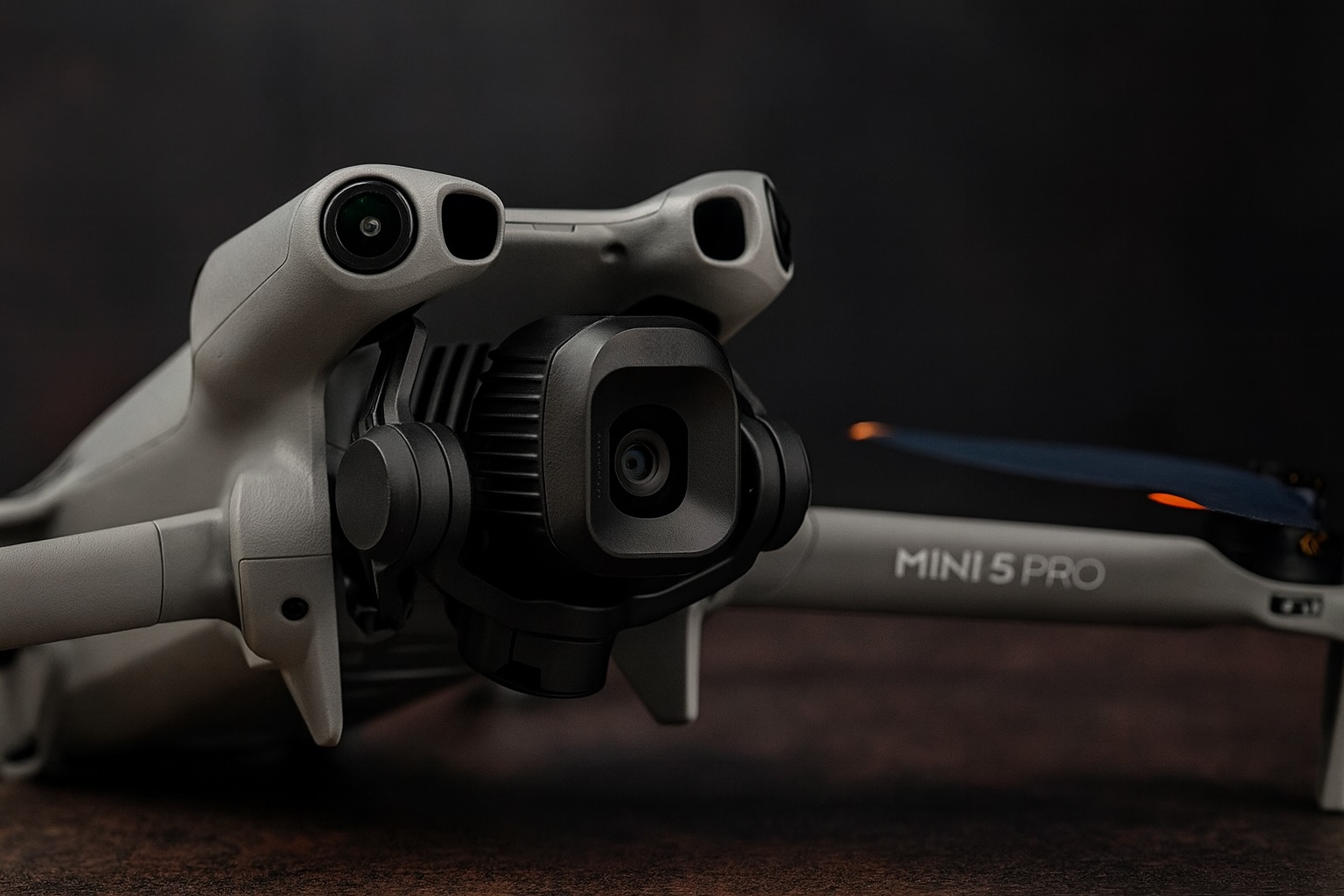
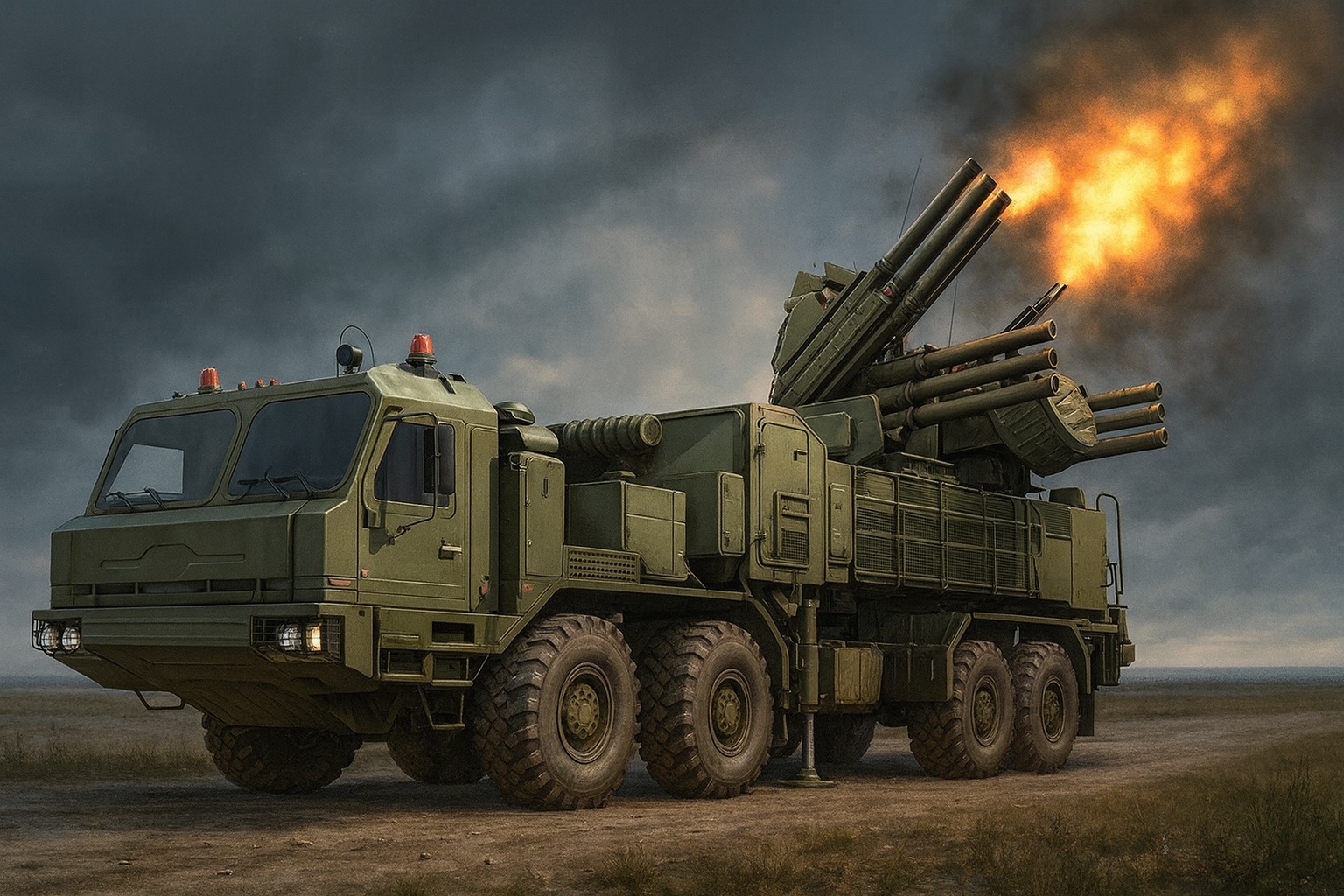
  • No Signal? No Problem – Inside the 2025 Satellite Phone Revolution 🚀

    No Signal? No Problem – Inside the 2025 Satellite Phone Revolution 🚀

    Key Facts

    • Connect Anywhere: Satellite phones communicate directly via orbiting satellites instead of cell towers, enabling coverage in remote mountains, oceans, deserts, and disaster zones where conventional networks fail t-mobile.com. A clear view of the sky is essential – dense forests, canyons, or tall buildings can block the signalt-mobile.com.
    • LEO vs. GEO Networks: Two main systems power sat phones. Low-Earth orbit (LEO) constellations (e.g. Iridium, Globalstar) use dozens of fast-moving satellites a few hundred miles up, offering true global coverage (including poles) and lower latency spire.com investor.iridium.com. Geostationary (GEO) satellites (e.g. Inmarsat, Thuraya) sit ~22,000 miles up over the equator, each covering a third of the globe. GEO networks have broader regional beams but do not reach extreme polar latitudes and introduce ~0.5 second voice delay due to distance gearjunkie.comt-mobile.com.
    • How Calls Are Routed: When you dial on a satellite phone, your handset’s signal goes up to a satellite, which relays it down to a ground gateway. The call then enters the regular phone network to reach the other party (or hops satellite-to-satellite, then to a gateway, in some systems)t-mobile.com en.wikipedia.org. Iridium’s 66-satellite mesh is unique – satellites have cross-links to route calls in space, enabling truly global coverage with no gaps investor.iridium.com. By contrast, Globalstar satellites act as “bent pipe” repeaters that require a nearby gateway on the ground, resulting in coverage gaps where no gateway is in view en.wikipedia.org.
    • Rugged & Reliable: Satellite handsets are built tough for harsh environments. Many are water/dust resistant (e.g. Iridium Extreme is IP65 rated iridium.com; Thuraya’s new “Skyphone” is IP67 satelliteevolution.com) and work in extreme temperatures. Battery life ranges from ~4–6 hours of talk time and days of standby on a full charge ts2.store gearjunkie.com. For example, Inmarsat’s IsatPhone 2 provides ~8 hours talk/160 hours standby gearjunkie.com, while smaller phones like the Globalstar GSP-1700 last ~4 hours talk/36 hours standby satellitephonestore.com. Satellite phones typically include GPS receivers and some form of emergency SOS capability – either a dedicated distress button (e.g. Iridium Extreme 9575’s SOS sends GPS coordinates to a response center) or at least the ability to transmit your location to rescuers via text gearjunkie.com.
    • Costs and Usage: Expect to pay a premium for off-grid connectivity. Handsets cost roughly $500 to $1,500 depending on ruggedness and features t-mobile.com. Service plans start around $30–$50 per month for minimal airtime, with per-minute call rates often $1 or more t-mobile.com. Unlimited or global plans can run several hundred dollars monthly. Prepaid SIM options exist for short-term expeditions. In emergencies, many providers offer free SOS messaging (e.g. Garmin’s SOS) or government-subsidized use. Because sat phones use special country codes (e.g. +8816 for Iridium), calling one can be very expensive for the caller; users often rely on text or email to coordinate incoming calls.
    • Coverage Differences: Iridium is the only network with 100% planet-wide coverage, from pole to pole investor.iridium.com. Inmarsat and Thuraya (geostationary networks) cover most populated regions but exclude polar areas (generally above ~±75° latitude) gearjunkie.com satelliteevolution.com. Globalstar covers roughly ~80% of Earth (primarily North America, Europe, parts of Asia/Africa, and coastal oceans), but has gaps in mid-ocean and polar zones due to its reliance on regional ground stations en.wikipedia.org en.wikipedia.org. Always check a provider’s coverage map: for instance, Thuraya’s two satellites serve ~160 countries across Europe, Africa, the Middle East, Asia and Australia, but not the Americas satelliteevolution.com.
    • Advantages: Satellite phones are lifesavers in disasters – they continue working when hurricanes or earthquakes wipe out terrestrial networks. “Satellite phones have increasingly become the primary or backup communications tools during a disaster when cellular infrastructure and radio towers are down,” notes Iridium’s CEO Matt Desch investor.iridium.com. They are used by first responders, search-and-rescue teams, mariners, pilots, and remote field workers to coordinate relief and maintain communication. Calls are generally encrypted and highly secure, which is why military and government agencies rely on satcom for sensitive operations t-mobile.com. (Iridium and Thuraya employ proprietary encryption on voice traffic, making interception difficult for all but the most sophisticated adversaries crateclub.com.)
    • Limitations: Using a sat phone isn’t as simple as a normal phone. You need a clear line-of-sight to the satellite – stepping indoors, under heavy tree cover, or even under a dense storm cloud can drop the callt-mobile.com. GEO satphones require pointing the antenna toward a specific part of the sky (where the satellite sits), and holding still for best signal; LEO phones require an extended antenna but can tolerate some movement (“walk-and-talk”). There is often a noticeable voice delay on geostationary networks (~0.5 second each way) which can make conversations feel laggy gearjunkie.com. LEO networks have minimal delay (Iridium’s satellites at ~780 km altitude incur only ~50–100 ms one-way latency) so calls feel more natural spire.com. Bandwidth is limited – most handheld sat phones support only voice, SMS, and very slow data (2.4 kbps or up to 9.6 kbps). Don’t expect to stream videos; at best, you can fetch basic emails or weather reports. Finally, regulations can be a hurdle: a few countries ban or restrict satellite phones, requiring permits due to security concerns (e.g. India forbids unauthorised satphones – travelers have been jailed for bringing Thuraya/Iridium phones without permission apollosat.com). Always verify local laws before carrying a satellite device abroad.

    How Satellite Voice Communication Works

    Satellites as Cell Towers in the Sky: A satellite phone (or “satphone”) works by bypassing terrestrial towers entirely. Instead, your handset’s radio signals travel tens of thousands of miles into space. Depending on the system design, those signals either: (a) hop gateway-to-gateway between multiple satellites then down to an earth station, or (b) go directly to a single satellite which immediately downlinks to the nearest ground station. In both cases, the end result is that your call or message enters the traditional telecom network on Earth and can connect to any telephone subscriber. The whole process happens in a few hundred millisecondst-mobile.com. From the user’s perspective, dialing a satphone isn’t much different than any international call – you’ll often dial a “+” or “00” prefix, then a country code (satellite networks have their own country codes like +881 for Iridium or +870 for Inmarsat) and the number.

    Constellations and Orbits: The infrastructure behind a satphone is an impressive feat of aerospace engineering. LEO constellations like Iridium, Globalstar, and the forthcoming AST SpaceMobile system operate swarms of satellites in low-Earth orbit a few hundred miles up. Because each LEO satellite has a limited footprint, dozens of them are needed to blanket the Earth. For example, Iridium’s 66 active satellites whiz around in 6 polar orbital planes, handing off calls as one satellite sets and another rises on your horizon investor.iridium.com. The advantage of LEO is global coverage including polar areas, lower power requirements, and much lower latency – the distance is ~20–50× closer than GEO sats, so there’s little voice delay and even small handhelds can reach orbit spire.com spire.com. However, each satellite is only in view for a few minutes. Networks like Iridium solved this by flying satellites in overlapping orbits and using inter-satellite laser links: your call can be relayed from one satellite to the next until it reaches one currently above an appropriate ground gateway or even directly to a satellite above your call recipient. This cross-link architecture is why Iridium can truly cover the entire globe with just a few earth stations – a call from the middle of Antarctica can route space-to-space and pop out in, say, Arizona to reach the public network en.wikipedia.org.

    GEO systems take a different approach. Geostationary satellites owned by Inmarsat, Thuraya, and others park in high orbits 22,236 miles above the equator, matching Earth’s rotation so they appear fixed in the sky. Each GEO satellite casts a footprint covering a huge portion of the Earth (for example, Inmarsat’s three GX satellites each cover ~1/3 of the planet). A single satellite can serve an entire region, which simplifies the system – only a few satellites and ground stations are needed for near-global reach. The trade-offs: GEO satphones must transmit over 35,000 km, so signals are weaker and delays longer (roughly 0.25 seconds up plus 0.25 seconds down)t-mobile.com. Voice quality is usually good, but users have to account for a slight pause before the person responds. And because GEO birds sit above the equator, their angle gets very low at high latitudes – beyond about 75–80° north or south, you likely won’t catch the beam at all gearjunkie.com. Inmarsat, for instance, specifies coverage up to ~82° latitude for IsatPhone service gearjunkie.com. This is why polar expeditions carry Iridium phones – it’s the only choice for the Arctic/Antarctic extremes.

    Gateways and Ground Infrastructure: No matter the orbit, nearly all satphone calls eventually go through a ground station that links the satellite network to terrestrial telecom networks. These gateways are massive antenna facilities strategically placed around the world (often in remote areas with clear sky view and good fiber links). When you use a Globalstar phone, your signal must reach one of Globalstar’s ~24 gateways on six continents en.wikipedia.org; if none is in range of the satellite covering you, you’ll have no service (this led to past coverage gaps over oceans and polar regions). Thuraya and Inmarsat have a handful of gateway teleports (e.g. Thuraya’s main station in UAE covers its whole satellite footprint). Iridium’s cross-linked LEO network is a special case – Iridium satellites can route traffic peer-to-peer in space and downlink at any of several gateways (in Alaska, Canada, Arizona, etc.), meaning an Iridium caller can be virtually anywhere and still get connected via a distant gateway en.wikipedia.org. This design gives Iridium unique resilience (and is why Iridium phones worked at the poles and in remote war zones from day one). However, it was very costly to implement. Other constellations opted to omit cross-links to keep satellites simple and cheap, trading off some coverage flexibility.

    Once a call reaches a gateway, it’s handed off to the public switched telephone network (PSTN) or internet. From there it behaves like a normal call. For example, if you call a landline, the gateway will interface with local telecom exchanges to ring that number. If two satphones call each other on the same network, the call may be routed entirely within that satellite system (some networks can directly connect two sat phones via the satellite without entering terrestrial lines, especially if managed by the same gateway or satellite).

    Performance and Call Quality: Modern satellite phones use digital voice codecs optimized for low bandwidth (typically 2.4 kbps voice codecs). Don’t expect HD voice – audio is roughly on par with an early 2000s cell phone call or slightly scratchy VoIP. Reviewers note that quality can vary: “Like every other satellite phone on the market, voice call quality ranges from pretty dang good to a bit rough, but that’s the going rate,” one tester wrote after trying multiple devices on Denali gearjunkie.com. In practice, as long as you have a steady signal (no obstruction or movement causing fades), the conversation will be intelligible and generally static-free. Latency is the bigger hurdle on GEO networks: that half-second delay can cause people to talk over each other if they’re not used to it. Seasoned satphone users learn to say “over” or verbally indicate turn-taking, almost like using a walkie-talkie, to avoid confusion. On LEO networks (Iridium/Globalstar), latency is low enough not to require this.

    Data speeds on handheld satphones remain very slow. For instance, the Iridium 9555 and 9575 can do data at 2.4 kbps (basically 1990s dial-up speed) unless you use specialized compression or accessories. Inmarsat’s phones support a service called 2.4 kbps “Mini-M” data or a 20 kbps compressed email mode – enough for text emails or GRIB weather files but not web browsing. Newer satellite hotspots (like the Iridium GO! or Inmarsat IsatHub) offer slightly faster data (Iridium GO! can reach ~15 kbps for very basic internet access or social media text, while Inmarsat’s larger BGAN terminals offer broadband of 100s of kbps but those aren’t pocket-sized phones). In short, sat phones are primarily for voice and SMS. Anything more data-heavy is a stretch for handhelds – though this may change with next-gen satellites and networks (as we’ll see in the news section below).

    Line-of-Sight Limitations: Because satphones communicate with orbiting satellites, visibility to the sky is critical. Even a great satellite network can’t help if you’re deep inside a building, underground, or in a cave. L-band satellite signals (around 1.5 GHz frequency) can penetrate some materials (e.g. a glass window or thin tent fabric) but will be blocked by metal, concrete, mountains, etc. Users in cities need to find an open area or rooftop; even tall skyscrapers can block GEO satellite sightlines if you’re on the wrong side of the building. Weather can have a minor effect – heavy rain or tropical thunderstorms can weaken the signal (rain fade is more an issue at higher frequencies like Ka-band; traditional sat phones use L-band which is fairly weather-resistant, but extremely dense storm clouds or electrical activity might introduce static). The bottom line: whenever possible, use a sat phone outdoors with a clear 360° view of sky. If in a canyon or forest, find the largest clearing and be prepared for potential signal drops as satellites move or the blockage attenuates the signalt-mobile.com. GEO phones often include a pointing assist: e.g. the handset will beep when oriented toward the satellite, helping you find the sweet spot.

    Power and Antenna: Satphones use external antennas – usually a stubby but thick retractable antenna that must be extended upright during use. This is non-negotiable; if you leave the antenna stowed, it won’t connect. The phones output around 0.5 to 1.5 watts of RF power, much higher than a typical cell phone, to reach the satellite. This contributes to battery drain. As mentioned, talk time is typically a few hours. It’s wise to charge your sat phone fully before any critical use and carry spare batteries on expeditions. Newer satphones support USB-C charging or have portable docking kits to charge from solar panels in the field.

    Comparing 2025’s Top Satellite Phones 📱🛰️

    Today’s sat phones range from robust “brick” handsets to hybrid smartphone-like devices. Below is a comparison of major models from leading providers – Iridium, Inmarsat, Globalstar, and Thuraya – highlighting their key features and differences:

    Phone & NetworkCoverage AreaBattery Life (Talk/Standby)DurabilitySpecial FeaturesVoice/DataApprox. Cost
    Iridium Extreme 9575 (Iridium)Global (100% worldwide including poles) investor.iridium.com. LEO constellation with seamless handoffs.~4 hours talk, 30 hours standby gearjunkie.com globalsatellite.gi.Mil-Spec 810F, IP65 dust/water-resistant iridium.com (rain-proof; not submersible). Shock-proof casing for harsh use.SOS button (programmable emergency distress, sends GPS coordinates). Built-in GPS navigation and location tracking. Supports SMS and short emails.Voice/SMS, limited data (~2.4 kbps dial-up) for email/weather.~$1,200 (high-end). Airtime ~$1/min or $50+/mo plan t-mobile.com t-mobile.com.
    Inmarsat IsatPhone 2 (Inmarsat)Global (except extreme polar latitudes – coverage ~±82°) gearjunkie.com. Uses 3 GEO satellites (I-4).~8 hours talk, 160 hours standby (excellent) gearjunkie.com.IP65 rated (water spray & dust resistant). Rugged build, operational in -20°C to +55°C.GPS built-in (can send location by SMS). Emergency Assistance button (dials preset number – user must subscribe to rescue service). Reliable voice quality once connected (no dropouts due to fixed GEO satellite) gearjunkie.com.Voice/SMS. Data is very slow (2.4 kbps); no high-speed internet.~$700–$900. Airtime plans ~$1/min or monthly bundles ts2.store t-mobile.com.
    Globalstar GSP-1700 (Globalstar)Regional (approx. 80% of globe; strong in N. America, Europe, parts of Asia; no service in Central/South Africa, mid-oceans, polar) en.wikipedia.org en.wikipedia.org. 48 LEO satellites + 24 ground gateways.~4 hours talk, 36 hours standby satellitephonestore.com.No official IP rating (consumer-grade durability; needs care to keep dry). Operating range -20°C to +55°C. Lightweight (7 oz/198 g).Compact flip-phone style design. Voice clarity is very good in coverage zones (uses CDMA technology, “landline-like” audio). No GPS in handset – can’t transmit coordinates. No SOS button on this model.Voice/SMS. Data up to 9.6 kbps (with compression software). Service can be unreliable if no gateway in view (calls may drop when satellite goes out of range of a ground station) en.wikipedia.org en.wikipedia.org.~$500 (often discounted with airtime). Service plans tend to be cheaper than Iridium/Inmarsat – e.g. $40–$100/mo for voice packages – but only useful in covered regions.
    Thuraya X5-Touch (Thuraya)Regional (Thuraya GEO satellites cover ~2/3 of globe: Europe, Africa, Middle East, Asia, Australia) satelliteevolution.com. No Americas or polar coverage.~11 hours talk, 100 hours standby (dual mode usage may reduce this).IP67 rugged Android smartphone – fully dustproof and waterproof (submersible 30 min). Gorilla Glass touch-screen. Operates -10°C to +55°C.Android OS with 5.2″ touchscreen – runs apps offline. Dual SIM, dual mode: works as a regular 4G/3G smartphone on GSM networks + switches to satellite mode outside coverage thuraya.com satellitephonestore.com. GPS/Glonass for navigation. No one-touch SOS (user can install apps for emergency messaging).Voice/SMS in satellite mode (uses Thuraya SAT network for calls). Data: up to 60 kbps down/15 kbps up in satellite mode – enough for basic emails or WhatsApp text (Thuraya offers GmPRS service) ts2.store. Full smartphone capabilities on cellular/Wi-Fi.~$1,300 (flagship sat smartphone). Requires Thuraya SIM (or partner roaming SIM) for sat usage + separate GSM SIM for cellular. Satellite airtime ~$1 per minute typical.
    Thuraya XT-LITE (Thuraya)Regional (same Thuraya coverage as above: ~160 countries) ts2.store.~6 hours talk, 80 hours standby ts2.store.IP54 (splash resistant, some dust protection) ts2.store. Simple, robust candybar phone design.“Best value” basic sat phone: no frills, just calling and texting ts2.store. GPS capable: can display coordinates and send location by SMS ts2.store. No dedicated SOS button (user must call emergency number manually) ts2.store.Voice/SMS only. No data or email capabilities on this model ts2.store. (Focus is on core reliability.)~$500 (most affordable satphone) ts2.store. Lower operating costs – Thuraya airtime often ~$0.80/min or discounted regional plans ts2.store.

    Table Notes: “Coverage Area” refers to satellite footprint – service requires line-of-sight to those satellites and may be restricted by local regulations. “Durability” includes water/dust resistance per IP rating and any military standard compliance. “Special Features” highlights SOS (distress) functions, navigation tools, or unique capabilities. Costs are approximate retail for device; service pricing varies by provider and region.

    As shown, Iridium’s phone offers true global reach and robustness at a high price, whereas Inmarsat’s IsatPhone 2 is a value leader for broad coverage (minus the poles) with excellent battery life gearjunkie.com gearjunkie.com. Globalstar’s unit is lightweight and affordable to operate, but only useful in certain regions and lacks advanced features. Thuraya’s phones shine for users in its Eastern Hemisphere footprint – especially the Android-powered X5-Touch, which merges satellite and GSM into one device for seamless use in developed areas and off-grid locales satelliteevolution.com thuraya.com. Meanwhile, Thuraya’s XT-LITE caters to budget-conscious users who need basic voice/text backup off the grid ts2.store.

    Expert Tip: When choosing a satellite phone, consider where you’ll use it most. If your adventures take you literally anywhere – including polar tundra or mid-ocean – Iridium is the safe bet for coverage investor.iridium.com. If you primarily need comms in, say, Africa or Asia, a Thuraya phone might offer a much lower total cost. For North American explorers who stick to that continent, Globalstar can provide clear voice service with less latency (LEO satellites) and cheaper plans – but if you stray beyond its coverage, the phone becomes a paperweight. Always match the network to your geographic needs en.wikipedia.org.

    Voices from the Field

    To illustrate the real-world use of these devices, here are a few quotes and insights from industry experts and veteran users:

    • “Iridium’s constellation of 66 LEO satellites, positioned only ~1,200 miles above, provides crystal-clear coverage… above all, we appreciate the reliable reception quality,” writes one GearJunkie reviewer who used an Iridium 9555 phone to call a doctor from a remote Alaskan glacier gearjunkie.com gearjunkie.com. The Iridium network’s ability to maintain calls in extreme locales has made it a favorite for mountaineers and polar expeditions.
    • “Today’s satellite phones offer encrypted and highly secure communication, making them useful for military, government, and sensitive business operations,” notes a T-Mobile Wireless report t-mobile.com. In fact, satphone networks like Iridium were originally designed with security in mind – signals are difficult to intercept without specialized equipment, and there is no dependence on any one country’s ground infrastructure (a big plus for journalists or NGOs operating in unstable regions). That said, no wireless tech is 100% spy-proof: well-funded agencies can attempt to monitor satellite feeds, so for truly critical secrets, additional encryption might be layered on top of calls.
    • Yahsat CEO Ali Al Hashemi, in launching Thuraya’s next-gen SatSleeve and Skyphone, highlighted how the technology is reaching everyday users: “It has the form factor and features of a conventional smartphone, but with the added capability of universal satellite connectivity. Users need only carry [this device] to remain connected anywhere, anytime… opening new markets for adventure travel or crisis-hit regions” satelliteevolution.com. This underlines a trend in 2024–2025: hybrid sat/cellular phones aiming to bring satellite messaging and calls to mainstream consumers.
    • Emergency responders stress preparedness. As former FEMA director James Lee Witt remarked during a satphone testing initiative, “Too often, emergency workers turn on their satellite phone for the first time after disaster strikes to find they do not know how to use it properly… or the phone won’t connect” investor.iridium.com. Regular training and testing of satellite gear is essential. Red Cross officials add that simply knowing how to deploy a satphone (extending antenna, acquiring signal, dialing sequence) can save precious minutes in a crisis investor.iridium.com investor.iridium.com.
    • On the flip side, satellite phones have occasionally made headlines in less positive ways – from being smuggled by narco traffickers to use outside law enforcement’s reach, to being misunderstood by authorities. A Spire Global report noted satphones’ reliability has “made them valuable for many new scenarios and applications” – including nefarious uses, leading some governments to strictly regulate them spire.com spire.com. Always be mindful that carrying a satellite phone into certain countries can raise suspicions (e.g., in India or China, where militants and spies have abused satcom in the past). Legality is usually not an issue for standard expeditions, but it’s best to carry documentation for the device and be ready to explain its use (see FAQ on legality below).

    Recent Developments & News (2024–2025)

    The satellite communications landscape is evolving faster than ever. Here are some of the latest trends, news, and breakthroughs shaping satellite phones and voice connectivity:

    • Smartphones Tap Satellite Networks: In late 2022, Apple introduced Emergency SOS via Satellite on the iPhone 14, leveraging Globalstar’s satellites for off-grid text messaging and distress calls en.wikipedia.org. This partnership deepened in 2024 as Apple announced a $1.1 billion investment and plans to take a 20% stake in Globalstar to bolster its satellite capabilities capacitymedia.com. By iOS 17, iPhones could also send short check-in texts (“I’m OK”) via satellite and share location in the Find My app. Not to be outdone, Android handset makers jumped in: Qualcomm’s Snapdragon Satellite (using Iridium’s network) debuted at CES 2023 and is now integrated in phones like the Motorola Defy 2 and CAT S75, enabling two-way SMS and SOS on Android devices t-mobile.com t-mobile.com. Google’s Pixel 9 series likewise launched with satellite SOS support built-in t-mobile.com. In short, satellite messaging is becoming a standard feature on new flagship smartphones, though currently limited to emergency use. Voice calls via direct-to-phone are not yet offered on these devices – the services are text-oriented due to bandwidth constraints.
    • T-Mobile + SpaceX “Direct-to-Cell” Service: A major leap arrived in 2025 with the rollout of T-Mobile’s satellite-to-phone service in collaboration with SpaceX Starlink. Branded “T-Satellite”, it went live in beta in late 2024 and officially launched commercially on July 23, 2025 reuters.com. Using a new generation of Starlink satellites equipped with cellular antennas, T-Satellite allows ordinary mobile phones (no special hardware required) to connect to satellites for messaging. At launch the service supports SMS texting, MMS (picture messages), and even short voice notes, with plans to add voice calling and basic data by late 2025 reuters.com reuters.com. Over 657 Starlink satellites are already in orbit to support this, focusing on eliminating dead zones across the U.S. reuters.com. Notably, more than 1.8 million users signed up during beta, including many AT&T and Verizon customers intrigued by the promise of coverage literally anywhere reuters.com. The service is free on T-Mobile’s top plans and ~$10/month as an add-on for others reuters.com. Industry observers call this a game-changer – it’s the first step toward blending satellite and terrestrial networks into one. While initial capabilities are limited (texting under clear skies), the roadmap includes direct voice calls via satellite to normal phones by ~2024–2025. In fact, SpaceX claims its second-gen Starlink satellites will eventually enable “ubiquitous access to texting, calling, and browsing” from space for standard handsets starlink.com. T-Mobile’s CEO Mike Sievert has touted that “our vision is for you to be connected anywhere you can see the sky”, signaling an era where the line between satphone and cellphone blurs.
    • First Satellite Voice Call on a Stock Phone: In April 2023, a Texas company called AST SpaceMobile made history by completing the first-ever direct two-way voice call from an ordinary unmodified smartphone to a satellite ast-science.com. Using their test satellite BlueWalker 3 – which unfurled a 693-square-foot antenna in LEO – AST placed a call from a Samsung Galaxy S22 in rural Texas to a regular phone in Japan via space ast-science.com. AT&T and Vodafone participated by lending cellular spectrum for the test. This demonstrated that a satellite could function as a “cell tower in space” for voice, not just texting. By September 2023, AST even achieved a space-based 5G call in tests vodafone.com. Their goal (with partners like AT&T, Vodafone, Rakuten) is to launch a constellation called BlueBird that can provide broadband and voice globally to normal phones around 2025–2026. This technology is essentially building a satellite phone network without special phones – instead, satellites mimic cell sites and standard phones register to them when out of range of terrestrial towers. It’s complementary to efforts like Starlink’s and will further erode the distinction between satphone and cell phone in the coming years.
    • New Sat Phone Devices & Services: Traditional satellite providers aren’t standing still. In September 2024, Thuraya (part of UAE’s Yahsat) released the Thuraya SkyPhone, a next-gen Android 14 smartphone with dual-mode satellite and 5G connectivity satelliteevolution.com satelliteevolution.com. It features a large AMOLED touchscreen, dual nano-SIM slots (one for satellite, one for cellular), a retractable antenna that stows away when not in use, and high-end cameras – all in a sleek IP67 smartphone form factor satelliteevolution.com satelliteevolution.com. This is marketed as the first satphone a regular person wouldn’t mind using day-to-day, bringing satellite calls and texts into a familiar Android interface. Thuraya sees it as “a significant disruptor…with the form factor of a conventional smartphone but the added capability of universal satellite connectivity” satelliteevolution.com. Initial availability is in Thuraya’s coverage regions, and the device is drawing interest from frequent travelers, maritime users, and government agencies in EMEA who want a single device for all purposes. Iridium, meanwhile, launched the Iridium GO! Exec in 2023 – a portable Wi-Fi hotspot that builds on the popularity of the original Iridium GO. The GO! Exec allows smartphone and laptop users to make voice calls, send email, and even do light web browsing by connecting their personal devices to the Iridium satellite link via Wi-Fi. It basically turns any device into a satellite communicator (though at Iridium’s low data speeds). Such accessories show the focus on making satcom more user-friendly and integrated with normal gadgets. Another noteworthy entrant is Garmin, which in 2024 expanded its satellite messenger lineup (inReach series) and announced plans to enable limited voice features via satellite for emergency response. While Garmin’s handhelds like the inReach Mini 2 are not voice phones, they’ve become popular for SMS and SOS, and the company is bridging partnerships with Iridium to possibly add push-to-talk voice or voicemails in future iterations.
    • Regulatory Changes: As satellite and cellular worlds collide, regulators are adapting. In the U.S., the FCC in 2023 proposed and then adopted rules for “Supplemental Coverage from Space” (SCS) that encourage satellite providers and mobile network operators to collaborate on direct-to-device services fcc.gov. These rules streamline licensing so companies like SpaceX+T-Mobile or AST+AT&T can share spectrum between ground and space networks. Importantly, the FCC also set interim 911 rules: any satellite messaging service that connects regular phones must be able to contact 911 emergency services and route those messages appropriately fcc.gov. This was highlighted after Apple’s SOS feature saved several lives – regulators want to ensure satellite 911 calls/texts get through to emergency call centers seamlessly. Globally, other agencies are following suit, updating frameworks to integrate Non-Terrestrial Networks (NTN) into mainstream telecom. On the flip side, some governments have reiterated bans on unauthorized satphones due to security concerns. In late 2024, the UK Foreign Office even issued travel advisories reminding travelers that satellite phones are illegal in countries like India without a license and can lead to confiscation or arrest ts2.tech. Similar warnings apply for places like Nigeria, Chad, and Russia where permits are needed. So while technology is making satphones more common, geopolitics still loom large in certain regions.
    • Real-world Emergency Use: Recent disasters underscored the importance of satcom. During the 2023 Turkey-Syria earthquakes, local search-and-rescue teams relied on satellite phones to coordinate when power and cell networks were knocked out across provinces. Reports from the quake zone noted that satphones were among the first communications restored, enabling international aid to direct efforts despite the cellular blackout. In the United States, a devastating wildfire on Maui (August 2023) saw ground infrastructure destroyed; authorities and relief volunteers turned to sat phones and Starlink terminals to organize evacuations and supply chains. Similarly, throughout the 2023 Atlantic hurricane season, agencies like FEMA, the Red Cross, and telecom companies deployed portable satellite units and handed out satphones to community leaders. Verizon’s disaster response team alone provided over 1,000 satellite devices to first responders during hurricanes in 2024 when conventional networks were down firerescue1.com. These incidents reinforce that satellite connectivity is not just for adventurers – it’s a critical lifeline when crisis strikes.

    As we head into 2025, the once “niche” satellite phone industry is converging with mainstream mobile. The trend is toward hybrid solutions: your normal smartphone might use terrestrial 5G most of the time but seamlessly swap to satellite mode when you’re off-grid or when local infrastructure fails. This doesn’t make dedicated satphones obsolete – on the contrary, those purpose-built devices still offer robust antennas, high gain, and reliability that general phones can’t match for heavy-duty use (plus true global coverage that the nascent direct-to-phone services haven’t achieved yet). But it means more people will have at least some satellite capability in their pocket, and public awareness of satcom is growing.

    In the next sections, we tackle some Frequently Asked Questions to help demystify satellite phones and their use.

    FAQ: Satellite Phones & Satellite Communication

    Q: Are satellite phones legal to use worldwide?
    A: Not everywhere. In most countries, owning and using a satphone is perfectly legal – or at worst requires you to register the device. But a handful of nations ban or tightly restrict satellite phones due to security concerns. For example, India prohibits foreign tourists from bringing satphones (especially Thuraya and Iridium devices) into the country without government permission. Indian authorities have confiscated satphones and even jailed travelers for unauthorized use, as the U.S. embassy warns trak.in. The only exception there is Inmarsat service with a license, since those calls can be monitored by Indian authorities reddit.com. Other places with restrictions include China, North Korea, Cuba, Myanmar, Chad, and Russia – in some of these, it’s not an outright ban but you must obtain a permit or use state-sanctioned networks. The reasoning is usually to prevent clandestine communication (terrorist groups and smugglers have been caught with satphones). If your expedition goes to a country with such rules, research beforehand. Check embassy advisories and consider renting a satphone at your destination if there’s a legal provider. In conflict zones or on international waters, of course, all bets are off – using a satphone in war-torn areas might attract attention (either positive, as a lifeline, or negative, if factions suspect you of espionage). Always weigh the necessity and be transparent if questioned – e.g. show that it’s for safety and offer to let officials inspect it.

    Q: Do I need a special SIM card or service plan? Can I use my regular cell SIM in a satphone?
    A: You need a satellite service plan – a standard cellular SIM (Verizon, AT&T, etc.) will not work in a standalone satphone. Each satellite network has its own SIM cards and subscriptions. For instance, an Iridium phone uses an Iridium SIM; Inmarsat phones use Inmarsat SIMs, etc. These SIMs authenticate you to the satellite network and are billed by specialized satellite providers. However, some satphones and accessories support dual-mode or GSM roaming. Thuraya models are known for this: the Thuraya X5-Touch and some older Thuraya handsets have two SIM slots – one for a Thuraya SIM and one for a standard GSM SIM thuraya.com cdn.satmodo.com. In those devices, you can pop in your local cell SIM and use the phone like an ordinary GSM mobile when in range of terrestrial networks, then switch to satellite mode (with the Thuraya SIM) off-grid. Similarly, the Thuraya SatSleeve is a gadget that clips to your smartphone and lets it use Thuraya’s satellite channel while still having your regular SIM active for cell service. Apart from Thuraya, the new breed of satellite smartphone services (Apple’s Emergency SOS, etc.) also doesn’t use a different SIM – instead, Apple baked Globalstar satellite connectivity into the iPhone’s hardware and underwrites it behind the scenes (the user just hits “Emergency SOS” and Apple handles the satellite network fees, at least for now).

    In summary, for dedicated satphones: plan to purchase a satellite airtime plan. These can be prepaid vouchers (e.g. 100 minutes valid for 6 months) or monthly contracts. Some providers offer rental SIMs if you only need it briefly. You generally cannot stick your Verizon SIM into an Iridium phone and expect it to work – the phone won’t even recognize it. One exception: a few cell carriers in Africa and the Middle East partner with Thuraya to allow limited roaming onto the Thuraya network (so your cell SIM gets charged for satellite usage through an agreement). Check with your carrier if they offer such a service – it’s rare and usually expensive. With the emergence of direct-to-cell by SpaceX and others, in the future your normal SIM will get you satellite service, but via your normal phone’s built-in capability, not via a separate satphone.

    Q: How good is the call quality and speed? Will it sound like a normal phone call?
    A: Call quality on modern satellite phones is generally good, but slightly lower fidelity than a typical cell call. Providers use compression to conserve bandwidth, so audio can sound a bit compressed or “tinny.” That said, voice is usually clear enough to understand easily. Many users are surprised that satphone calls don’t have static or fuzz – when you have a strong signal, it’s a digital link, so it’s either clear or (if signal drops) the audio may garble or cut out. In terms of voice delay, if you’re on a geostationary system (Inmarsat/Thuraya), expect about half a second delay each way. This can make conversations a little awkward until you adapt; it’s like talking on a half-duplex radio at times. On Iridium or Globalstar (LEO systems), latency is much lower – often around 50–150 ms, similar to a Zoom call, so it feels closer to real-time spire.com.

    As for data speed, handheld satphones are slow. They are designed primarily for voice. If you connect a laptop to, say, an Iridium 9555 via USB for data, you get 2.4 kilobits per second – that’s kilobits, not megabits. In practical terms, that can maybe transmit an email with no attachments in ~30 seconds. Newer devices or add-ons can improve this: the Iridium GO! uses a slightly better modem and compression to achieve maybe 15–20 kbps for brief internet access. Inmarsat’s older IsatPhone Pro had a mode to send a short email via a special app. But don’t expect to browse the web on a handheld satphone – images and media are a no-go. If internet is needed, consider a larger terminal (like a BGAN hotspot or Starlink dish). For messaging, though, this is fine. SMS texts over satphone go through a special email-to-SMS gateway and usually take 20–60 seconds to send or receive. Many satphones also let you check voicemail or send short free messages from the provider’s website to the phone (a useful way for family to reach you without incurring costs). In summary: voice = decent (slightly less quality than cell, maybe some delay), data = minimal (mostly for texts or GPS coordinates).

    Q: What about security – can satellite calls be intercepted? Are they encrypted?
    A: Satellite phone networks do use encryption and scrambling on voice and data traffic, making them more secure than CB radios or analog communication, but they are not invulnerable. Iridium, for instance, uses a proprietary encryption cipher on its links – this prevented casual eavesdropping. In 2012, some researchers partially cracked the Iridium cipher, but it still required sophisticated equipment and wasn’t a real-time threat for average users. Inmarsat’s services also use digital encryption for most handheld calls. So, for a typical user, a satphone call is reasonably private – it can’t be picked up by scanning a frequency on a ham radio, for example. That said, satellites broadcast from space, and a government with a large antenna or a malicious actor with advanced gear could intercept the downlink. If they have the decryption keys or can break the cipher, they might listen in. This is highly unlikely for run-of-the-mill calls. It tends to be a concern only in high-stakes situations (e.g. militaries use additional end-to-end encryption devices on top of satphones for classified talks).

    Another security aspect: location tracking. When you use a satphone, your general location can be inferred by the system because it knows which satellite and beam your phone is in contact with. Governments can request this info from providers (for law enforcement or rescue). Also, anyone who knows your satphone number could potentially get an approximate fix by measuring signal timing – though this is not easy without cooperation from the provider. Bottom line: for normal use, satellite phones are secure enough. As one security-focused review put it, “calls made from satellite phones are generally more difficult to intercept than those made from traditional cell phones” crateclub.com. Just remember that no wireless tech is 100% foolproof. If you’re a journalist in a hostile region, assume adversaries might be trying to monitor everything, including satcom. Use the same precautions you’d use on any phone – don’t discuss extremely sensitive info without additional encryption (like a secure app or code words). For most travelers and professionals, the encryption built into the sat network is plenty – certainly, your communications are far more secure than on an unencrypted VHF radio or public Wi-Fi.

    Q: Do satellite phones work indoors? In cars? On boats?
    A: Indoors: Generally no – at least not deep indoors. Satellite phones need to “see” the satellite. They’ll work by a large window or in a wood-frame cabin sometimes, but not in a concrete bunker or metal building. If you’re inside a ship or vehicle, the metal will block signals. The solution in those cases is to use an external antenna. Many satphones have docking kits or antenna ports. For example, truckers or boaters might install a small external antenna outside (on a roof or mast) and connect it via cable to a docking station that their satphone sits in. This effectively lets you use the phone indoors by relaying the signal outside. There are also satellite Wi-Fi hotspots (like the Iridium GO or Thuraya MarineStar, etc.) that are designed to mount externally and then let you connect your regular phone via Wi-Fi from inside. In a pinch, simply stepping outside is the quick fix – even going out of a tent or out of a vehicle to make a call, then going back in.

    Q: What is the international phone number for a satphone? Can people call me from a regular phone?
    A: Every satphone is assigned a special international number. Different networks have different country codes: e.g. Inmarsat phones use +870, Iridium uses +8816 or +8817, Globalstar often uses country codes of their gateway (some have US-based numbers). You can absolutely receive calls from regular phones – but the caller will typically pay high international rates (several dollars a minute) unless they have a plan. Because of this, many satphone users prefer to do the calling out, or use methods like having a VoIP number that forwards to the satphone. Some providers offer an alternate local number service: for instance, Iridium has a service where your satphone can also be reached via a US-based number (which forwards to your satphone) to make it cheaper for colleagues or family to call. But that often costs extra. Text messages can be sent to a satphone via email gateways (for example, to text an Iridium phone you can send an email to <number>@msg.iridium.com for free, and it’ll deliver as SMS to the satphone). Bottom line: you will have a unique number, and people can reach you, but due to cost it’s often used sparingly. Also, callers from some cellular carriers might need to have international dialing enabled to reach the satellite country codes.

    Q: Can I use a satellite phone during disasters or outages? How do they help?
    A: Yes – that’s when they shine. During a disaster that knocks out power and cell towers, satellite phones can be the only means to get word out. They were famously used in the aftermath of Hurricane Katrina, the 2010 Haiti earthquake, and countless other events where local infrastructure was crippled. Relief coordinators keep satphones as backup; for instance, FEMA teams have mobile satellite units and satphones ready to deploy so they can communicate even if an entire region’s comms go dark investor.iridium.com investor.iridium.com. One real example: after a hurricane in Puerto Rico, a satphone at a damaged dam allowed engineers to call in a warning to authorities about the dam’s condition, prompting evacuations that saved lives sia.org.

    Important tips in disasters: If you have a satphone for emergency, keep it charged (or have solar/hand-crank chargers). Test it periodically – don’t wait until a crisis to figure out how it works investor.iridium.com investor.iridium.com. In an emergency, go outside to use it – buildings may have structural damage that impedes signal. Also, be aware that everyone might try to use sat networks at once during a big event; capacity is limited, so keep calls short and use SMS if possible (SMS uses less network resources and may get through easier when voice circuits are busy). Some governments and NGOs coordinate to prioritize satphone traffic for first responders during disasters. But as an individual, your satphone is still an invaluable link – many stories have emerged of hikers calling for rescue via satphone, or isolated communities coordinating relief with them.

    Q: What emergency features do satellite phones have?
    A: Many satphones include an SOS or emergency button that you can press in a life-threatening situation. This usually sends an alert message with your GPS coordinates to a preset emergency service. For example, Garmin’s inReach devices and some newer satphones connect to the GEOS International Emergency Response Coordination Center, which then notifies local search-and-rescue on your behalf. The Iridium Extreme 9575’s SOS can be programmed to contact GEOS or a specific number t-mobile.com gearjunkie.com. Inmarsat’s phones can send GPS location and have an assistance button (though it might just dial a number you set, like a friend or SAR hotline). If your device lacks a dedicated SOS function (like older or budget models), you can still call emergency services. Note that 911 (or 112, etc.) on a satphone may not work the same as on a cell. Some satellite networks attempt to route 911 calls to an appropriate call center, but it might end up in a generic center that has trouble locating you. It’s often better to have the direct number of a rescue coordination center or to use an SOS service bundled with your sat plan. For mariners, satphones are a supplement to required emergency gear; they’re not a substitute for DSC radio or EPIRB, but they allow two-way communication which can greatly aid rescue (you can describe your situation to rescuers). Also, some satphones like the Iridium Extreme and Thuraya models allow tracking – you can send periodic breadcrumb location updates to a website or contact. This can help others monitor your progress and know if you divert or stop moving.

    Q: How much does it cost to use a satellite phone?
    A: We touched on costs in the comparison, but to summarize: the device itself ranges from a few hundred dollars (for older models or deals with contract) up to $1,500 or more for the fanciest models. Airtime is the bigger cost long-term. Plans vary: you might pay $50 per month for a small bundle of minutes (e.g. 10–30 minutes) and then $1 to $2 for each additional minute of calling. Prepaid plans might be $100 for 50 units (with 1 unit = 1 minute, typically) valid for 1 year. Data usage (if any) is also per minute or per megabyte and tends to be expensive (several dollars per MB on some networks). SMS messages usually cost less (e.g. $0.50 each on Iridium). There are also unlimited plans – Iridium has offered “unlimited” calling plans for around $150/month in the past, intended for government or enterprise. Globalstar’s competitive advantage is cost: they have had plans like $65/month for unlimited minutes but only within certain regions (and fair use limits). Thuraya often has cheaper per-minute rates (if used within their primary region, like Middle East). Also consider shipping and activation fees, and if you only need a phone for a short time, look into rentals: many companies rent satphones for $8–$15 per day plus airtime, which can be economical for a one-off expedition. Finally, keep in mind the intangible cost: you must invest time to learn the device and maintain it (keep it charged, updated, etc.). It’s not like a regular phone that you use daily; a satphone might sit in your go-bag for months, so you need to ensure it’s ready when needed.


    Whether for adventure, business, or emergency preparedness, satellite phones and emerging satellite-cell services are opening up a world with no more dead zones. As technology marches on – with companies like SpaceX and AST launching satellites that talk directly to ordinary phones – we may soon take for granted that we can call or text from literally anywhere on Earth. Until then, a trusty satellite phone remains a critical tool to stay connected when it counts investor.iridium.com investor.iridium.com.

  • Sky’s the Limit: Best Drones of 2025 – Top Picks from Consumer to Commercial

    Sky’s the Limit: Best Drones of 2025 – Top Picks from Consumer to Commercial

    • DJI dominates consumer drones: The DJI Mini 4 Pro and new Mavic 4 Pro pack pro-grade features like 360° obstacle avoidance and up to 6K video in compact frames techradar.com dronelife.com. The Mavic 4 Pro’s groundbreaking 100MP Hasselblad camera and 51-minute flight time are “turning heads across the industry,” according to experts dronelife.com dronelife.com.
    • Cinematic quality goes airborne: Filmmakers are embracing drones like the DJI Inspire 3, a $16,500 Hollywood-ready craft that shoots 8K RAW video on a full-frame sensor theverge.com. It’s a “flying movie-making camera” that’s redefining aerial cinematography with its pro-grade imaging and dual-operator controls.
    • FPV racing made easy: First-person-view drones are faster and more accessible than ever. DJI’s new Avata 2 delivers the “most immersive FPV experience available” with HD goggles and beginner-friendly controls techradar.com. Meanwhile, custom racing quads push 100+ MPH speeds, aided by ultra-low latency HD feeds and lightweight frames dronehundred.com dronehundred.com.
    • Industrial drones hit new heights: Commercial UAVs in 2025 carry heavier loads and smarter sensors. The DJI Agras T50 can haul 40 kg of crop spray with advanced obstacle sensing for precision agriculture uavcoach.com. And the American-made Skydio X10 touts multiple high-resolution cameras (48 MP zoom, thermal, etc.) plus AI autopilot, setting a new standard for inspections and public safety missions thedronegirl.com thedronegirl.com.
    • Beginner drones get smarter: DJI’s Flip and Neo mini-drones (launched 2025) let anyone fly with palm takeoff, enclosed propellers, and AI subject-tracking – all for under $450 uavcoach.com uavcoach.com. These sub-250g drones are essentially “restriction-free” for hobbyists (no registration needed) techradar.com, yet still capture 4K video and automate tricky maneuvers so novices can pilot with confidence.
    • Tech trends in 2025: Drones now boast smarter autonomy and longer flights. Improved obstacle avoidance (even LiDAR for night vision) means safer flying in complex environments techradar.com. Battery life keeps climbing – some models top 45 minutes aloft on one charge techradar.com – and AI-powered tracking, swarming, and data processing are becoming standard dronefly.com dronefly.com. Official rumors even hint at a DJI Mini 5 Pro coming late 2025 with a 1-inch sensor and more AI features techradar.com.

    The Drone Landscape in 2025

    Drones have come a long way from niche gadgets to indispensable tools and toys across many domains. In 2025, the market offers an incredibly broad range of unmanned aerial vehicles (UAVs) – whether you’re a first-time flyer on a budget, a professional filmmaker, a high-speed racer, or an industrial user with specialized needs. Below, we dive into the best drones of 2025 in every major category, comparing top models and what makes them stand out. From tiny beginner drones that practically fly themselves to enterprise workhorses that survey fields or inspect infrastructure, there’s never been a more exciting (or overwhelming) time to take to the skies. Let’s explore the top picks, new releases, and trends defining drones this year.

    Consumer Camera Drones (Entry-Level & Mid-Range)

    Consumer drones in 2025 are packed with advanced cameras and flight tech, yet come in portable, user-friendly packages. Entry-level and mid-range models now offer high-resolution cameras, intelligent flight modes, and robust safety features at prices far below professional rigs. Here are the leading picks for hobbyists and content creators:

    • DJI Mini 4 Pro – Best All-Around for Most Users: Topping many lists as the best overall drone, the Mini 4 Pro exemplifies DJI’s dominance in the consumer segment techradar.com. Weighing under 250g, it skirts registration rules while not skimping on capability. It features a 1/1.3″ CMOS sensor (48 MP stills, 4K 60fps video) and omnidirectional obstacle avoidance, meaning it can sense and brake in all directions techradar.com. In testing, reviewers found image quality improved in low light thanks to updated processing, and noted the addition of DJI’s D-Log M color profile for more editing flexibility techradar.com techradar.com. The Mini 4 Pro also introduced full 360° collision sensors – a first for the ultra-light Mini series – making it exceptionally safe and beginner-friendly to fly techradar.com. Pros: Ultra-portable; no FAA registration needed; advanced safety and tracking modes. Cons: Pricier than other Minis (around $759 base); small sensor can’t rival larger drones at night.
    • DJI Mini 4K – Best Budget 4K Drone: For those on a tighter budget, DJI quietly launched the “Mini 4K” in late 2024 as a stripped-down sibling to the Mini 4 Pro techradar.com. Priced around $299 (often on sale for even less dronedj.com), the Mini 4K offers 4K Ultra HD video and a decent 1/2.3″ camera sensor in the same palm-sized form. It omits the obstacle sensors and some pro features, but retains stable hovering, one-tap takeoff/landing, and GPS Return-to-Home – making it an ideal first drone for beginners who want high-quality video without breaking the bank store.dji.com. With around 30 minutes of flight time and 10 km video transmission range, the Mini 4K is unmatched at its price point for basic aerial photography. Pros: Extremely affordable; easy to fly; under 249g. Cons: No collision avoidance; camera lacks the dynamic range of larger sensors.
    • DJI Air 3S – Sweet Spot for Enthusiasts: Stepping up in size and price, the Air 3S hits a Goldilocks sweet spot between portability and performance. Released in late 2024 as an upgrade to the Air 3 techradar.com techradar.com, the Air 3S carries a dual-camera system: a wide-angle 24 mm 1-inch sensor (capable of 4K 60fps and 48 MP photos) paired with a 70 mm medium telephoto lens techradar.com techradar.com. In practice, this gives pilots versatile shooting options – from expansive landscapes to lossless 3× zoom shots – without swapping drones. Reviewers praised the Air 3S’s improved image quality in low light, courtesy of that larger main sensor, and its upgraded omnidirectional obstacle sensing techradar.com. Notably, the front obstacle sensors now incorporate LiDAR for better night navigation, a feature previously found only on higher-end models techradar.com. The Air 3S also uses DJI’s latest O4 video transmission for a rock-solid 20 km range and delivers an impressive 45-minute max flight time in still air techradar.com. DJI markets the Air 3S as “a travel-ready powerhouse,” ideal for aerial photographers who need more than a Mini can offer but in a more compact form than the flagship Mavic. Pros: Dual cameras for flexibility; long 45 min flights; obstacle avoidance works even in low light techradar.com. Cons: Heavier 724 g weight means stricter regulations (users must register and, in some regions, get licensing to fly it legally) techradar.com; only a moderate upgrade over the earlier Air 3.
    • Autel EVO Lite+ – A Capable DJI Alternative: While DJI leads the pack, Autel Robotics offers a compelling mid-range contender in the Evo Lite+. This drone features a 1-inch 20 MP CMOS camera (developed with Sony) that can shoot 6K video, rivaling the Air 3S in imaging specs. The Lite+ is praised for its slightly wider dynamic range and lack of geofencing (Autel doesn’t impose the no-fly zone locks that DJI does). With ~40 minutes of flight, 12 km range, and adjustable f/2.8–f/11 aperture, the Evo Lite+ remains one of the best non-DJI consumer drones on the market bhphotovideo.com. However, it lacks the dual-camera setup and obstacle sensing of the Air 3S. Many enthusiasts choose Autel for the freedom and comparable camera quality – but note that DJI’s latest mid-range models still edge it out in focus tracking and autonomous flight modes thedronegirl.com thedronegirl.com. Pros: Excellent camera with 6K/30 and large sensor; no forced flight restrictions; slightly cheaper. Cons: No omnidirectional obstacle avoidance; a bit slower and less polished in software features than DJI’s equivalent droneblog.com.

    Why DJI Reigns Supreme (for Now): It’s worth noting that DJI’s consumer drone lineup in 2025 is unusually comprehensive, leaving competitors little room. From the $299 Mini 4K up to the $2,000+ Mavic series, DJI covers every niche with class-leading tech. As UAV Coach’s 2025 industry guide points out, DJI has become the “default choice” for most hobbyists and prosumer pilots uavcoach.com. That said, concerns over data privacy and import restrictions (especially in the U.S.) have motivated some to seek alternatives uavcoach.com uavcoach.com. Brands like Autel, Skydio, and Parrot are attracting interest, but on pure performance and value, DJI’s drones remain hard to beat in the consumer space.

    Professional Drones for Photography & Videography

    When it comes to professional aerial photography and filmmaking, the stakes – and specs – get higher. These drones carry larger sensors (Micro 4/3 or full-frame), support interchangeable lenses or multiple cameras, and boast the stability and control needed for cinema-quality shots. They also come with premium price tags. Here are the top professional drones of 2025 and what makes them excel:

    • DJI Mavic 4 Pro – Prosumer Powerhouse: Launched in May 2025, the Mavic 4 Pro immediately set a new benchmark for prosumer drones. It retains the convenient folding design of the Mavic line but introduces major upgrades: a triple-camera system with 100 MP Hasselblad main camera (Micro 4/3 sensor) and two telephoto cameras at 70 mm and 168 mm dronelife.com dronelife.com. This gives aerial creators an unparalleled range of focal lengths – from wide aerial vistas to close-up shots – all in one drone. The main camera captures up to 6K/60fps HDR video with 10-bit color, and features an adjustable aperture f/2.0–f/11 for excellent low-light performance dronelife.com dronelife.com. Early reviews have been glowing: Tom’s Guide dubbed the Mavic 4 Pro “the most powerful consumer drone yet,” praising its 6K video, 100 MP stills and the bright new RC Pro 2 controller dronelife.com. PetaPixel’s reviewer was especially impressed with the collision avoidance – six fisheye sensors plus a front LiDAR scanner – noting the Mavic 4 “can fly safely in tight spaces and near darkness,” delivering video quality “the best I’ve seen from any drone short of the Inspire 3” dronelife.com. Indeed, DJI’s omnidirectional obstacle sensing on the Mavic 4 Pro is state-of-the-art, leveraging advanced algorithms (and that LiDAR) to avoid collisions even when light is poor dronelife.com. Other standout features include the new Infinity Gimbal, which offers full 360° camera rotation for creative shots previously impossible on a compact drone dronelife.com, and an extended 51-minute flight time per battery dronelife.com – a huge leap, allowing professionals more time to get the perfect shot. Use case: High-end real estate videos, travel cinematography, survey-grade mapping with its high-res cameras, or even light commercial film work. Pros: Incredible camera versatility in one platform; best-in-class image quality for a foldable drone; long flight time and video range (30 km) dronelife.com. Cons: Very expensive (approx. $2,300 base); at ~1 kg it falls into regulatory heavy categories; notably, not sold in the U.S. at launch due to import tariffs and compliance issues dronelife.com dronelife.com – U.S. pilots face hurdles obtaining it. (This U.S. availability snag illustrates the geopolitical pressures in the drone industry, as even the top drone can be kept out of a major market by trade restrictions dronelife.com.)
    • DJI Inspire 3 – Hollywood’s Flying Camera: After a seven-year wait since the Inspire 2, DJI’s Inspire 3 arrived to fanfare in 2023 and remains the drone for serious filmmakers in 2025. This is a large, transformable dual-operator drone – the landing gear raises on takeoff to allow an unobstructed 360° pan for its camera gimbal. And what a camera it carries: the Inspire 3 uses the Zenmuse X9 full-frame gimbal camera, which can capture up to 8K/75fps video in Apple ProRes RAW or 8K/25fps CinemaDNG RAW store.dji.com theverge.com. With 45 MP stills and compatibility with DJI’s DL-mount lenses (18 mm to 50 mm), the X9 camera on Inspire 3 essentially puts a cinema-grade sensor in the sky. As The Verge put it, “DJI’s new Inspire 3 is a flying 8K movie-making camera” aimed squarely at the Hollywood crowd theverge.com. The drone itself has impressive credentials: 28 minute flight time, dual redundancy in sensors and IMUs for safety, the O3 Pro transmission system for robust control up to 15 km with low latency, and the ability for one pilot to fly while a second person independently controls the camera (important for professional film sets) theverge.com theverge.com. The Inspire 3’s RC Plus controller features a 7-inch FPV screen and supports the complex flight modes cinematographers need – for instance, waypoint-based repeatable routes and 3D Dolly movements (programmed flight paths that can be repeated exactly to allow layered shots or VFX) petapixel.com petapixel.com. The drone also introduced NightView FPV cameras and RTK positioning for centimeter-precise navigation, reflecting its enterprise pedigree theverge.com petapixel.com. All of this comes at a cost: around $16,500 for the full kit theverge.com. But for production studios, the Inspire 3 still undercuts the cost of using heavy-lift drones or helicopters for aerial shots. It has quickly become the go-to for high-end drone cinematography, used in everything from Netflix shows to big-budget commercials. Pros: Unparalleled image quality (full-frame 8K RAW) short of custom rigs; dual-operator control; top-tier safety and precision for pro use. Cons: Extremely high cost; bulky travel case; requires skill (and likely licensure) to operate – this isn’t a point-and-shoot drone.
    • Others in the Pro Toolkit: While DJI’s flagships garner most attention, there are other notable drones in the professional segment:
      • Autel EVO II Pro V3: A robust alternative for mapping and 6K videography, with a 1-inch sensor and optional RTK module. The EVO II Pro (V3 hardware revision in 2023) offers 6K/30 video and 20 MP stills, plus swappable payloads like a dual thermal camera option ebay.com autelrobotics.com. It’s a favorite for some surveyors and public safety teams who prefer non-DJI gear, though its obstacle avoidance and image processing aren’t as refined as DJI’s latest.
      • Sony Airpeak S1: Targeted at professional photographers, Sony’s Airpeak (launched 2021, with updates through 2024) is a high-end quadcopter that carries Sony Alpha mirrorless cameras. It’s essentially an aerial platform for a full-frame mirrorless (like an A7S III or FX3), giving creators the unique option to use interchangeable lenses in flight. The Airpeak is pricey (around $9,000 without camera) and has a shorter flight time (~12–15 minutes with payload), but in 2025 it remains the choice for studios deeply invested in the Sony ecosystem, ensuring identical footage to their ground cameras.
      • Parrot Anafi USA & AI: European manufacturer Parrot pivoted to professional and defense drones. The Anafi USA (and newer Anafi AI) are ultra-compact quadcopters with NDAA-compliance (approved for government use). They carry 32x zoom cameras and thermal sensors in a small package. While not suited for cinematic work, they are used for inspections and tactical operations requiring a secure, made-in-USA device. They signal the industry’s recognition that “secure drone” alternatives are needed for certain clients uavcoach.com uavcoach.com.

    In summary, 2025’s pro drone market is a split between do-it-all prosumer drones and specialized cinematic or enterprise models. The Mavic 4 Pro exemplifies the former – a single pilot can now capture broadcast-quality footage with a backpack-sized unit dronelife.com dronelife.com. At the extreme high end, the Inspire 3 shows that drones can take the place of crane shots and even some helicopter aerials in film production, with experts calling it a “game-changer” for its capabilities. Whether you’re an indie filmmaker, a videographer, or a mapping professional, there’s a drone tailored to your needs – and likely a DJI model at the top of the list.

    Racing and FPV Drones

    Not all drones are about capturing pretty pictures – some are built purely for speed and adrenaline. Racing drones and FPV (first-person-view) freestyle drones form a vibrant subculture of the drone world. In 2025, this niche has grown more mainstream, thanks to easier-to-fly models and tech innovations that make high-speed flying more accessible.

    The FPV Boom: What began as an underground hobby a decade ago – where pilots soldered together custom “quads” and donned analog goggles – has exploded into the mainstream. As TechRadar notes, FPV flight is now “available to more people than ever before – thanks in no small part to DJI” and others lowering the entry barriers techradar.com. Modern FPV drones come ready-to-fly with stabilized HD video feeds, so newcomers no longer need an electrical engineering degree to start flying. Racing leagues like the Drone Racing League (DRL) are broadcast on sports channels, and freestyle FPV videos on YouTube garner millions of views. Here are the top picks and trends in FPV for 2025:

    • DJI Avata 2 – Best “Ready to Fly” FPV Experience: DJI made waves by entering the FPV arena in 2021 with its original FPV drone, and followed up with the mini cinewhoop-style Avata in 2022. Now the Avata 2 (launched April 2024) builds on that foundation as arguably the best FPV drone for beginners and casual fliers techradar.com techradar.com. It’s a small (≈ 377 g) quadcopter with built-in propeller guards and a high-quality 1/1.3″ camera sensor capable of 4K/60fps video techradar.com techradar.com. The Avata 2 comes bundled with DJI’s Goggles 3 headset and the option of two controllers: the intuitive Motion Controller (gesture-based joystick) or a conventional FPV remote for acro mode techradar.com techradar.com. In practice, it lets even a novice enjoy the thrill of nimble FPV flying with minimal risk. TechRadar’s review said the Avata 2 “will delight existing DJI users while converting many others to FPV”, calling its image transmission and immersive experience unparalleled at the time techradar.com. With up to 23 minutes per battery, greatly improved over its predecessor, and new safety features like “Easy ACRO” mode (a gentle introduction to manual flight), the Avata 2 strikes a balance between high-octane fun and DJI’s signature safety nets techradar.com techradar.com. In a nutshell: If you want to rip around in first-person view, recording adrenaline-pumping footage, but you’re not ready to custom-build a drone, the Avata 2 is the go-to choice. It’s also useful for cinewhooping – filming action scenes in tight spaces – where its ducted prop design and rock-steady 4K video shine. Pros: Out-of-the-box FPV convenience; stabilized 4K footage with excellent dynamic range techradar.com; plenty of automated safeguards (RTH, altitude limiters) for learning. Cons: Not as fast or agile as true racing drones; experienced acro pilots might find DJI’s tuning and motion controller limiting techradar.com techradar.com. It’s also a sizable investment (~$999 combo).
    • DIY and Custom Racing Drones – For the Pros: Serious FPV racers typically fly custom-built drones or kits from specialized brands. In 2025, the standard “race quad” is a 5-inch propeller quadcopter, often home-built with components chosen for maximal thrust-to-weight. These drones can easily top 90–120 MPH in straight lines. They forego frills like GPS or fancy cameras – durability and low latency control are king. Many racers still use analog video feeds (lower fidelity but ~25 ms latency), though digital HD systems like DJI O3 Air Unit or Walksnail Avatar are gaining ground by offering near-HD video to goggles with latency under 50 ms dronehundred.com. Top racing frames in 2024–25 include the iFlight Nazgul Evoque F5 V2 (an FPV freestyle quad with a DJI O3 unit pre-installed) and the EMAX Hawk series. These require significantly more skill – and frequent repairs – but deliver unmatched agility. An expert FPV pilot can flip and roll through complex obstacles at highway speeds, a feat beyond any GPS-stabilized camera drone. The Drone Racing League (DRL) even sells a variant of its Racer4 drones to the public, but most pilots opt to build or buy from hobby retailers. Pros: Unrivaled speed and maneuverability; highly customizable. Cons: Steep learning curve – crashing is common and there’s no autopilot to save you; not really suited for photography (though GoPros or action cameras are often mounted for recording).
    • Freestyle and Cinematic FPV: Not all FPV is about racing around gates – many pilots focus on freestyle aerobatics or cinematic one-take shots (like flying through buildings or landscapes in dramatic fashion). Drones for these purposes prioritize smooth footage and acrobatic capability. GoPro-toting 5″ quads or the newer class of 3″ cinewhoops (like the Avata) are typical. 2025 trends include lighter builds with HD video transmitters (to see clearly while flying) and features like GPS Rescue (to help locate a downed drone or bail you out if signal is lost). There’s also a push toward long-range FPV, with some rigs carrying larger batteries and even winged designs to fly miles out for epic mountain surfing shots dronehundred.com dronehundred.com. Regulations like required Remote ID transmitters have started to affect the FPV community, but many pilots comply by adding modules to their self-built drones.

    Expert Insight: An article on DroneHundred summed up top FPV tech trends for 2024/25: ultra-low latency digital feeds, lightweight carbon frames, advanced flight controllers, and modular designs are making drones faster and more precise dronehundred.com dronehundred.com. For instance, new flight controllers with faster processors (like BetaFlight running on F7/F8 chips) enable tighter, more stable flight even at extreme speeds dronehundred.com. And digital FPV systems pioneered by DJI have “revolutionized FPV by offering crystal-clear HD visuals with ultra-low latency,” letting pilots fly with confidence and precision dronehundred.com. The result is that FPV racing and freestyle are more competitive and thrilling than ever, with pilots pushing the envelope of what’s physically possible.

    Whether you’re looking to compete in races or create jaw-dropping FPV videos, 2025 offers a spectrum of options – from turn-key kits like the Avata 2 to custom speed demons. Just be prepared: FPV flying, while hugely rewarding, requires practice. As one reviewer quipped, if you fully disable the flight assists on a drone like the Avata, “you’re without doubt going to crash… which is not built to withstand multiple heavy collisions” techradar.com techradar.com. In FPV, with great speed comes great responsibility (and the occasional broken propeller!).

    Commercial and Industrial Drones (Enterprise UAVs)

    Beyond fun and cameras, drones have become essential tools in industries like agriculture, construction, surveying, public safety, and infrastructure inspection. These commercial/industrial drones are engineered for tasks like mapping large areas, spraying crops, inspecting powerlines, or delivering packages. In 2025, the industrial UAV sector is booming, with specialized drones that can fly longer, carry heavier payloads, and operate with a high degree of autonomy. Let’s look at the leading drones and developments in this arena:

    • DJI Matrice Series – The All-Purpose Workhorse: DJI’s enterprise Matrice line (notably the Matrice 300 RTK and newer Matrice 350) continues to be a top choice for businesses. These large quadcopters (over 6 kg) are modular, allowing different payloads to be attached – from 30× optical zoom cameras to thermal sensors or multispectral cameras for crop analysis. A Matrice can carry multiple gimbals simultaneously (for example, a zoom camera alongside a thermal camera and laser rangefinder) and has redundancy in flight systems for reliability. With up to ~55 minutes of flight time empty (less with payload) and IP45 weather sealing, a Matrice is built to handle tough jobs. Common use cases in 2025: inspecting cell towers and wind turbines (using high-res zoom to spot defects from a safe distance), police and fire departments using thermal cameras to find suspects or hotspots, and surveying/mapping with RTK precision. DJI’s ecosystem advantage is strong here – the Matrice drones integrate with DJI’s FlightHub software for fleet management and support waypoint automation, meaning they can run routine inspection routes or map grid flights with minimal pilot input. Notable model: The Matrice 350 RTK (released mid-2023) enhanced durability and introduced a hot-swappable battery system so the drone can stay powered on during battery changes, boosting operational efficiency.
    • Heavy-Lift Drones & Delivery: A subset of industrial drones are those capable of carrying very heavy payloads or performing deliveries. DJI’s Agras series exemplifies heavy lifters in agriculture. The latest DJI Agras T50 is a massive octocopter designed for crop spraying, capable of carrying up to 40 kg of liquid fertilizer/pesticide in its tank uavcoach.com. It uses dual atomizing spray nozzles and can treat up to dozens of acres per hour, following pre-planned routes via RTK GPS uavcoach.com. The T50 has sophisticated obstacle avoidance (dual radar and binocular vision) to fly low over crops safely uavcoach.com. Similarly, smaller models like the Agras T25 serve medium-sized farms with a 20 kg tank uavcoach.com. These drones dramatically improve efficiency for farmers and reduce chemical exposure risks. In delivery, companies like Zipline and Wing (Alphabet) have continued trials of drone delivery networks. While not open to consumers in most places yet, medical supply drone deliveries are expanding in 2025. We’re seeing increased lift capacities across many platforms – one trend report noted that “next-generation drones will feature improved motors and lighter materials, expanding how much they can carry” dronefly.com. This opens up possibilities from delivering e-commerce packages to using drones for disaster relief payload drops.
    • Surveying and Mapping Drones: For mapping large areas or conducting precision surveys, fixed-wing drones and long-endurance UAVs are popular. The senseFly eBee (now under AgEagle) is a legendary fixed-wing mapping drone, and the latest eBee X remains a top pick for 2D/3D mapping in 2025. It can cover hundreds of acres per flight, capturing high-resolution aerial imagery that’s later stitched into maps or 3D models t-drones.com. It’s also NDAA-compliant, making it usable for government projects uavcoach.com uavcoach.com. Another leader is WingtraOne, a VTOL fixed-wing that takes off vertically then transitions to efficient forward flight – ideal for large surveys (e.g., mining sites or forests). On the quadcopter side, DJI’s Phantom 4 RTK is an aging but gold-standard mapping drone, equipped with a precise GPS module to achieve centimeter-level accuracy for cadastral work. Interestingly, DJI also released the Mavic 3 Enterprise series (including a Mavic 3M Multispectral for crop monitoring) – these look like consumer drones but have specialized sensors (e.g., multispectral cameras to generate NDVI crop health maps) uavcoach.com uavcoach.com. With ~40 min flight and compatibility with mapping software, they offer farms an affordable data collection tool. As one enterprise dealer noted, the Mavic 3 Multispectral “is one of the best drones for agricultural mapping, combining an RGB camera with multispectral sensors” in a portable frame floridadronesupply.com.
    • Inspection and Public Safety Drones: Many industrial drones are used to inspect infrastructure or assist in emergencies, reducing risk to humans. We’ve already mentioned the Matrice with zoom/thermal payloads – that’s a mainstay for utilities inspecting power lines, solar farms, pipelines, and more. In 2025, autonomy is the big story here. Skydio, a U.S. company known for AI, has the new Skydio X10 which is purpose-built for autonomous inspection. Skydio X10, announced in late 2023 and shipping in 2024–25, is an all-weather quadcopter with a unique multi-camera array: a 48 MP telephoto that can read license plates from 800 ft, a 50 MP wide camera that can detect tiny cracks in structures, and a FLIR Boson+ thermal camera for heat imaging thedronegirl.com. Critically, the X10 uses Skydio’s unmatched computer vision to fly itself in complex environments. It can navigate around structures, avoid obstacles (even wires or branches) using six fisheye navigation cameras, and even perform NightSense autonomous flight in pitch darkness using AI-driven low-light navigation thedronegirl.com thedronegirl.com. This allows tasks like bridge inspections or search-and-rescue in forests to be done with minimal pilot workload – the drone’s AI handles the tricky flying. Skydio’s CEO described the X10 as designed for “first responders and infrastructure operators” and a “turning point” that has now put Skydio at the forefront of military and enterprise programs in the U.S. thedronegirl.com thedronegirl.com. Likewise, Autel has an enterprise offering: the Autel EVO Max 4T, a foldable drone with obstacle avoidance and a triple camera (including thermal) that competes with DJI’s Matrice 30 series.
    • Regulation and Compliance: A major consideration for government and enterprise drone use is compliance with security requirements. U.S. agencies, for instance, often require NDAA-compliant drones (no Chinese components). This spurred a wave of “Blue UAS” platforms. We mentioned Parrot and Skydio (American-made) and senseFly’s eBee (Swiss, NDAA-compliant). Another is the Teal 2, a rugged military-grade quad made in the USA, notable for being equipped with a night-vision sensor (the first drone with a FLIR Hadron low-light camera, aimed at nighttime reconnaissance) thedronegirl.com. According to DroneLife, the demand for DJI alternatives has “surged – especially among government agencies” due to these concerns uavcoach.com uavcoach.com. In response, we see companies emphasizing data encryption, secure data links, and domestic manufacturing. For most private enterprises, DJI’s reliability still wins out, but the landscape is shifting in sensitive sectors.

    Big Picture: Industrial drones are all about efficiency, safety, and data. They are reducing the need for workers to climb towers or traverse fields on foot. For example, in agriculture, drones equipped with multispectral sensors can survey hundreds of acres and pinpoint crop issues in minutes – enabling “precision farming” that saves resources dronefly.com dronefly.com. In construction, drones with LiDAR or photogrammetry quickly generate 3D site maps, tracking progress and stockpiles dronefly.com dronefly.com. Inspection drones prevent dangerous manned checks of roofs, smokestacks, or powerlines dronefly.com dronefly.com. And in emergencies, drones are deployed to survey disaster areas, locate victims with thermal cams, and even deliver medical supplies beyond obstacles dronefly.com dronefly.com. The market growth reflects this utility: the global agricultural drone market, for instance, is expected to grow to $10 billion by 2030 uavcoach.com. Trends like improved battery tech, 5G connectivity, and AI-driven analytics (drones that not only collect data but process it on-board) are driving the next wave. As DroneFly’s 2025 outlook noted, automation and fleet coordination are on the rise – soon we may see “drone fleets handling repeated tasks… freeing employees for strategic work” dronefly.com dronefly.com.

    In 2025, the industrial drone segment is diverse. From giant octocopters spraying orchards to compact quadcopters scanning a building for cracks, there’s a specialized UAV for virtually every task. The best drones in this category combine robust hardware with intelligence – leveraging AI and advanced sensors to perform jobs faster, safer, and often better than traditional methods.

    Beginner-Friendly Drones

    If you’re completely new to drones, the good news is that flying has never been easier. A crop of beginner-friendly drones in 2025 are designed to help you learn the ropes with minimal risk and at a low cost, while still providing a fun (and even photo-worthy) experience. These drones emphasize ease of use, safety features, and value. Here are the top options and what to look for as a new pilot:

    • DJI Neo and DJI Flip – High-Tech Starter Drones: DJI surprised the market in early 2025 by releasing not one but two entry-level drones aimed at novices and content creators uavcoach.com uavcoach.com. The DJI Neo and DJI Flip share a similar philosophy: they are ultra-compact (both under 250g), include full propeller guards (for safe indoor flight and close-quarters use), and can even launch from your palm. The Neo is the smaller and more basic of the two – weighing only 135 g, it foregoes a gimbal and has a 1/2″ 12 MP camera limited to 4K 30fps uavcoach.com uavcoach.com. The Flip is a bit larger (just under 249g) with a 1/1.3″ camera capable of 4K 60fps and even 48 MP stills, plus it has a proper 3-axis gimbal for stabilized footage uavcoach.com uavcoach.com. Both drones come with built-in tutorials in the app, one-tap takeoff/landing, and Return-to-Home. They also sport some nifty AI: the Flip, for instance, has AI subject tracking modes and even doubles as a vlog camera that can hover in place and film you livescience.com livescience.com. The Neo can literally be flown without a controller – you can use just a smartphone or even gesture controls to make it follow you, thanks to its AI vision system techradar.com. These drones are essentially an antidote to any fear a beginner might have. As UAV Coach highlights in their comparison, “Both are attractive for beginners, with automated flight features and propeller guards… making them easy to use and protecting them in case they crash.” uavcoach.com. The price is beginner-friendly too: Neo starts at $289 (even $199 if you opt out of the physical controller) and the more advanced Flip at $439 (controller included) uavcoach.com. Which to choose? If you literally just want a safe toy to explore flying and take casual ultra-wide videos (think social media clips), the Neo’s smaller form and no required registration is great uavcoach.com uavcoach.com. But if you want higher-quality footage and more features to grow into, the Flip gives you a much better camera and still keeps things simple. Both are miles ahead of the toy drones of yesteryear, essentially hovering tripod cameras that you can fly without worry.
    • Ryze Tello – The $99 Trainer Drone: The Ryze Tello (developed with DJI and Intel) remains a perennial recommendation for absolute beginners or even kids. It’s a tiny 80 g microdrone that costs about $99, yet it’s remarkably capable for learning basic controls. The Tello has a 5 MP camera (shoots 720p video) and sensors that help it hold position indoors. It can do throw-and-go launching, simple flips, and is programmable via Scratch, which is why you’ll find it used in STEM classes. With a 13 min flight time, it’s short-lived but plenty for practice laps around the living room. Importantly, it’s very durable – most crashes with the Tello result in zero damage due to its light weight. As TechRadar notes, it’s “a fun drone for first-time flyers” that despite the low price “offers plenty” in terms of flight experience techradar.com. While it won’t handle wind or produce cinematic footage, the Tello is the safest way to get a feel for the sticks and learn how drones behave. Many pilots use it as a stepping stone before investing in pricier drones.
    • Other Beginner Drones: There are a plethora of sub-$500 drones marketed to beginners. A few notable ones in 2025:
      • Potensic Atom 2: An impressive budget alternative, the Atom 2 mimics the DJI Mini formula (it’s under 249g) and even includes GPS and a 4K camera, for around $300. TechRadar actually dubbed it “the best DJI alternative for beginners,” highlighting its excellent build quality, speed, and even subject tracking for a much lower price techradar.com techradar.com. However, it lacks the refined software and obstacle sensing of DJI, so it’s a trade-off of cost vs. polish.
      • BetaFPV Cetus Pro Kit: For a beginner curious about FPV, tinywhoop kits like this provide a gentle introduction. The Cetus Pro includes a small ducted drone, FPV goggles, and a controller – everything needed to try first-person flying for around $250. It has altitude hold and a “turtle mode” (flip itself upright after a crash), catering to newbies. It’s not nearly as powerful or high-def as an Avata, but a good classroom for FPV basics.
      • Syma/Xiaomi/Holy Stone drones: These are popular on Amazon as inexpensive beginner drones (often $50–$150). They typically offer basic 1080p cameras and maybe 8–10 minutes flight. While okay for a quick outdoor spin, be aware they usually lack GPS or stabilization, meaning they can drift and are very susceptible to wind. They’re best for learning orientation and basic flight in calm conditions – but if possible, spending a bit more on something like a Mini 4K or Tello will provide a far less frustrating beginner experience.

    Tips for First-Time Pilots: When starting out, look for drones with features like altitude hold, headless mode (simplifies controls relative to pilot), and automated one-button takeoff/landing. Obstacle avoidance is a huge plus if you can afford a drone that has it, as it might save you from accidental crashes. Also, lighter drones (<250g) are not just easier legally, they also tend to survive crashes better (less kinetic energy on impact). Many beginners choose a model like the Mini or Neo precisely because “ultra-lightweight… means it’s essentially restriction-free and ideal for beginners” techradar.com techradar.com.

    Finally, even with a super smart beginner drone, it pays to learn the rules and basic piloting skills. Start in an open area, fly low and slow until you’re comfortable, and take advantage of the training modes. Within a few sessions you’ll likely be zipping around confidently. And if something does go wrong? Modern drones have panic buttons – e.g., hit Return-to-Home and most will come back and land near takeoff on their own.

    Notable Trends and What’s Next

    We’d be remiss not to highlight the broader trends shaping the drone world in 2025, beyond just the individual models:

    • Smarter Autonomy: Artificial intelligence is increasingly woven into drones. We see it in consumer drones (for subject recognition, like the Flip’s face tracking livescience.com), in FPV (DJI’s new “Easy ACRO” mode helps newbies learn manual flight techradar.com), and especially in enterprise (Skydio’s AI for obstacle avoidance and night flight thedronegirl.com). Drones are doing more of the piloting and even decision-making. Follow-me modes, automatic shot framing, and obstacle navigation have become standard. According to DroneDesk’s tech trends, many operators are implementing “gradual autonomy,” first using AI for safety (collision avoidance) and eventually for fully automated missions blog.dronedesk.io blog.dronedesk.io. Expect drones that can conduct entire tasks – like security patrols or crop analysis – with minimal human input.
    • Longer, Stronger Flights: Battery and propulsion improvements continue to push flight times higher. The average consumer drone now flies 30+ minutes, and flagships are breaking the 45–50 minute mark dronelife.com techradar.com. Meanwhile, materials like carbon fiber and better motors allow drones to fight wind and carry more. We’re also seeing the first practical hydrogen fuel cell drones (offering significantly longer endurance for industrial use, albeit at high cost) and experiments with solar-powered high-altitude drones for all-day flight. As one industry outlook noted, “improvements in battery life, obstacle avoidance, AI-driven automation, and data processing” are all converging to make drones more capable and self-sufficient dslrpros.com marketreportanalytics.com.
    • Specialization & New Categories: Drone types are diversifying. In 2025, we have 360° camera drones like the upcoming Insta360 Antigravity A1, which carries an array of cameras to capture every angle for VR or reframing shots techradar.com. We have waterproof drones such as the HoverAir Aqua (a drone that can actually take off from and land on water) coming to market techradar.com. There are bi-copter drones (with two tilting rotors) like the V-Copter Falcon, aiming for efficiency and unique maneuverability techradar.com techradar.com. And even selfie drones like the HoverAir X1 and DJI Neo/Flip are carving out a niche for personal content capture that traditional cameras or bigger drones can’t easily fulfill techradar.com techradar.com. This specialization means whatever your use case, there’s likely a drone purpose-built for it – a trend that will only continue.
    • Regulatory Environment: Many regions have firmed up drone regulations by 2025. Rules requiring Remote ID (drones broadcasting an ID signal) have come into effect in the US and are being adopted elsewhere, aimed at integrating drones safely into airspace. Authorities worldwide have standardized rules like 120 m (400 ft) altitude limits, line-of-sight requirements, and pilot certifications for advanced operations. Interesting shifts include countries like the UK now requiring even sub-250g drones with cameras to be registered (closing a loophole) techradar.com techradar.com. However, the sub-250g class is still generally favored for fewer restrictions – one reason DJI keeps many models at 249g. Also, BVLOS (Beyond Visual Line of Sight) operations are slowly being permitted for industrial use (e.g., pipeline inspections with waivers), which will really open up drone applications once routine. In summary, the legal landscape is maturing: clearer rules are enabling more drone usage, but also enforcing accountability (pilot exams, drone IDs) to address safety and privacy.
    • Coming Soon – Rumors & Announcements: The drone industry loves its leaks, and 2025 is no different. The DJI Mini 5 Pro is the big one on the horizon – rumors suggest an October 2025 release, bringing a bump to a 1-inch sensor, improved motors and even LiDAR on a Mini drone techradar.com. If true, that miniaturization of high-end tech will be remarkable (imagine a sub-250g drone with near Mavic-quality imaging). DJI has also hinted at an Inspire 3 firmware update to enable higher framerates and new gimbal modes, showing even flagships get mid-life boosts. On the enterprise side, we anticipate Skydio expanding its X10 platform (perhaps a smaller X8 for commercial markets) and maybe Autel revealing an Evo III to catch up to DJI’s camera advances. And certainly, as AI and sensor tech progress, we might see features like integrated lidar scanners on smaller drones, swarm capabilities (one pilot controlling multiple drones for shows or large surveys), and even more creative designs (foldable wings, morphing drones, who knows!).

    All told, 2025 is an exciting year to be into drones. Whether you’re a casual flyer or a professional, the options for flying robots in the sky are richer and more capable than ever. From the key categories we’ve examined – consumer camera drones, pro photography drones, FPV racers, enterprise workhorses, and beginner minis – the common thread is rapid advancement. Drones are getting smarter, safer, and more specialized. As one drone journalist aptly summarized: “continuous improvements in computing power, battery life, and sensors will further accelerate the adoption of autonomous drones” dronefly.com. It’s a skyward trajectory for the technology, and the best drones of 2025 show just how far we’ve come. Whether you’re looking to buy your first drone or upgrade to a cutting-edge model, there’s never been a better time to take flight. Happy flying, and stay safe in the skies!

    Sources

  • Night Vision Tech 2025 Revolution: Top Goggles, Scopes & Game‑Changing Trends Unveiled

    Night Vision Tech 2025 Revolution: Top Goggles, Scopes & Game‑Changing Trends Unveiled

    • Night Vision vs Thermal: Modern night vision comes in two flavors – light-amplifying image intensifiers and heat-sensing thermal imagers – each with distinct strengths mku.com mku.com. Intensifiers multiply ambient light ~20,000× to produce a green or white image but need some starlight or IR illumination mku.com mku.com. Thermal optics detect infrared heat emissions to see in total darkness or through light fog/smoke sierraolympia.com sierraolympia.com, excelling at long-range detection (over 600+ yards) sierraolympia.com.
    • Best of 2025: The top devices span analog Gen3+ goggles and cutting-edge digital/thermal gear. For example, ATN’s PS31 dual-tube goggles offer a wide 50° field-of-view with Gen3 white-phosphor clarity targettamers.com, while Pulsar’s latest Thermion 2 scopes deliver high-resolution (640×480) thermal imaging with built-in laser rangefinders for hunters accio.com. Even consumer-friendly options like the ATN Binox 4K binoculars pack ultra-HD sensors, video recording, and app connectivity targettamers.com targettamers.com.
    • Consumer vs Military: Night vision has “democratized” beyond military–today civilians can buy digital or Gen2/3 devices for a few hundred to a few thousand dollars hardheadveterans.com. But true military-grade kit remains pricey (dual-tube Gen3 goggles run $10k+ hardheadveterans.com, panoramic SOF goggles ~$40k hardheadveterans.com) and restricted for export taskandpurpose.com. Military NVGs feature rugged metal housings, auto-gated tubes and the highest clarity in extreme darkness hardheadveterans.com, whereas consumer models often use cheaper Gen1/2 intensifiers or CMOS sensors suited for casual use hardheadveterans.com hardheadveterans.com.
    • Major Players: The night vision market is dominated by defense tech giants and specialized optics firms. Industry leaders include L3Harris, Elbit Systems, Teledyne FLIR, BAE Systems, and ATN Corp, among others strategicmarketresearch.com strategicmarketresearch.com. European firms like Thales and Photonis are innovating as well – e.g. France’s new Bi-NYX binocular NVGs use Photonis 4G intensifier tubes for superior low-light performance defensemirror.com. Even consumer brands like Bushnell have skin in the game with digital night vision products strategicmarketresearch.com.
    • Recent Breakthroughs: Panoramic goggles hit the scene – in 2025 Thales unveiled a four-tube NVG giving an unparalleled 97° field of view for special forces hardheadveterans.com thalesgroup.com. Aviation NVGs are also lighter than ever: ASU’s E3 goggles (launched 2024) cut weight by 30%, using titanium/aluminum housings to reduce pilot neck strain verticalmag.com. The US Army is fielding fused night vision (ENVG-B) that overlays thermal imaging onto intensifier tubes, letting soldiers spot warm targets in darkness with “Terminator-like” clarity hardheadveterans.com army.mil. As one Army program manager put it, “When you integrate those technologies you’re going to increase situational awareness and also lethality at night.” army.mil
    • Future Trends: Expect further blending of night vision with high-tech tools. AI-enabled optics are emerging to auto-recognize targets on thermal scopes accio.com. Researchers are developing ultrathin uncooled IR sensors (e.g. 10 nm films) that boast 100× sensitivity gains without cryocooling accio.com, promising smaller, battery-friendly thermal devices. The Army’s IVAS headset project foreshadows augmented-reality night vision with digital maps and squad tracking in the visor – essentially military “smart goggles” for the battlefield. And as prices drop, night vision is expanding into civilian life: luxury cars with night assist cameras, wildlife drones with thermal imagers, and full-color digital night cameras (like SiOnyx Aurora) bringing “see-in-the-dark” ability to everyone strategicmarketresearch.com sionyx.com.

    Overview of Night Vision Technology

    Night vision devices (NVDs) give humans the power to see in darkness by using two fundamentally different technologies: image intensification and thermal imaging. Both serve the same goal – revealing what lurks in the night – but they do so in very different ways:

    • Image Intensifiers (Low-Light Amplification): These are the classic “green night vision” goggles and scopes. They use an electro-optical image intensifier tube to amplify ambient light tens of thousands of times mku.com. Even faint starlight or sky glow is boosted into a visible image. Photons enter the tube, hit a photocathode and get converted to electrons, which are multiplied and then hit a phosphor screen that glows with a visible image sierraolympia.com. Traditional intensifiers produce a green-tinted view because the phosphor is optimized for green (the human eye distinguishes more shades of green than other colors) sierraolympia.com. Modern tubes also come in white phosphor, giving a black-and-white image that many users find provides better contrast and detail. Importantly, intensifiers require at least a little ambient light – on a moonless night or inside a pitch-black building, they may fail unless an IR illuminator (an invisible infrared flashlight) is used as an active light source mku.com mku.com. When ambient light is available, a good Gen3 intensifier delivers excellent detail and true-to-life scenes (minus the color), which helps with identifying what you’re looking at mku.com. For example, you can recognize whether a figure is a person and even discern friendly vs. enemy uniforms more easily with an intensifier than with thermal. However, intensifiers can be blinded by bright light (e.g. a flashlight or headlights) and usually max out detection range at a few hundred meters sierraolympia.com.
    • Thermal Imaging (Infrared Detection): Thermal devices don’t rely on light at all – they detect heat radiation (long-wave infrared) emitted by objects. Everything above absolute zero emits some infrared; thermal sensors capture those temperature differences and display them as a false-color or grayscale image mku.com. A warm body glows bright against a cooler background. The huge advantage is that thermal vision works in total darkness (or broad daylight) regardless of ambient light mku.com. It also penetrates moderate fog, smoke, and vegetation better than visible light – useful for navigation or seeing obscured targets sierraolympia.com. Thermal scopes excel at detection: a human or animal can be spotted from far away just by body heat, often well beyond 600+ meters where standard night vision can no longer pick up detail sierraolympia.com. High-end thermal cameras used by border security or aircraft can even detect vehicles miles away sierraolympia.com. The trade-off is that thermal images lack the fine detail and identification capability of intensifiers – you get a silhouette or blob of heat. It’s great for spotting living things or recently operated machines, but you might not tell exactly who someone is or read signage. Thermal also can’t see through glass (windows appear opaque) and can be fooled by insulating materials. In summary: intensifiers show you a familiar-looking night scene if some light is present, whereas thermals show an abstract heat-map that highlights warm targets even in absolute darkness. Often, the two technologies are complementary – that’s why the latest military systems fuse them together (overlaying a thermal glow onto an intensifier view) for the best of both worlds hardheadveterans.com.
    • Digital Night Vision: A third category, often used in consumer devices, is low-light digital sensors. These are basically sensitive video cameras (CMOS or CCD sensors) that can amplify light electronically and usually include an infrared LED illuminator for pitch-dark conditions. Digital night vision produces a live black-and-white (or sometimes color) video feed of the scene, which can be viewed on an LCD screen or through an eyepiece. Many “night vision cameras,” budget-friendly binoculars, and day/night rifle scopes use this approach. The advantage is cost and flexibility – digital sensors are mass-produced (from phones, etc.), and they allow features like photo/video recording, zoom, or overlay graphics. They also aren’t harmed by bright light (whereas analog intensifier tubes can be permanently damaged by sunlight or lasers). However, digital night vision typically requires active IR lighting in very dark environments and usually doesn’t have the same range or light amplification performance as a Gen3 analog tube sierraolympia.com mku.com. In essence, digital night vision sits between intensifiers and thermal: it does need some infrared light (often supplied by an on-board IR lamp), and its performance in truly starlight-only conditions is modest unless one uses very expensive sensors. A good example is the SiOnyx Aurora, a handheld/color digital NV camera. It uses a specialized CMOS sensor to achieve color images under starlight and is marketed to boaters and law enforcement for surveillance. While it can’t match a military tube for clarity in zero moonlight, the Aurora’s ability to show full-color night video (e.g. you can discern the color of a person’s clothes at night) is impressive sionyx.com. Digital devices are rapidly improving as sensor technology advances – and they often cost a fraction of Gen3 optics – making them popular for consumer night vision needs.

    In practice, the choice of technology depends on the use case. Military and law enforcement often prefer image-intensifier devices for tasks requiring identification and navigation (patrolling, driving, threat discrimination) – there’s a reason the classic green NVG is still standard issue. Thermal is used when detection is the priority (finding hidden people/animals, scanning large areas, spotting camouflaged targets by heat). Increasingly, hybrid systems try to give users both: e.g. the U.S. Army’s ENVG-B goggles combine a high-resolution white phosphor tube with a thermal overlay. A soldier testing this system noted that in low ambient light he can “crank the thermal up and really see anything that puts off heat,” while still having the normal night vision view for detail army.mil. Such fusion ensures that “you’re going to increase situational awareness and also lethality at night,” as Maj. Bryan Kelso (ENVG-B program manager) explained army.mil. In the civilian world, digital night vision is bridging the gap – for example, many security cameras and car night-assist systems use a combination of low-light sensors and IR illumination to provide 24/7 imaging strategicmarketresearch.com strategicmarketresearch.com. No matter the approach, the result is a huge tactical and practical advantage: as the saying goes, “We own the night” – a phrase coined in the Gulf War era when U.S. forces leveraged night vision to devastating effect taskandpurpose.com.

    Categories of Night Vision Devices

    Night vision devices come in a variety of form factors tailored to different applications. The main categories include monoculars, goggles, scopes, cameras, and binoculars. Each type has its niche, and often uses one (or a mix) of the technologies described above. Below, we break down each category, with examples of notable models on the market in 2025, along with their typical uses, pros/cons, and specifications.

    Night Vision Monoculars

    A monocular is a single-eye night vision device. Monoculars are typically handheld or helmet-mountable and often resemble a small telescope or camcorder. They usually provide 1× magnification (no zoom) and a fairly wide field of view, since they are meant for mobility and general observation. Monoculars are prized for their versatility – the user can switch the device between eyes or flip it up when not needed, and keep one eye in the dark-adapted “naked eye” mode. They can also be weapon-mounted behind a daytime sight or used hand-held as a spotting scope.

    • The most famous example is the AN/PVS-14. This legacy U.S. military monocular has been a workhorse for decades and remains one of the best all-around night vision devices hardheadveterans.com. A PVS-14 (and similar Gen3 monoculars by various manufacturers) gives ~40° field of view, uses a Gen III image intensifier tube, and runs ~50 hours on a single AA battery pewpewtactical.com pewpewtactical.com. It’s rugged (waterproof and shockproof for combat environments) and can be handheld or mounted to a helmet or weapon rail. PVS-14s with top-tier Gen3 tubes are pricey (typically $3,000–$4,500 depending on tube specs) hardheadveterans.com, but they offer military-grade performance to civilians and police as well. Many companies (Elbit, L3Harris, AGM, Armasight, etc.) produce PVS-14 type monoculars or their own variant. For instance, Armasight’s PVS-14 (Gen3, white phosphor) was recently reviewed as “impressive as the unit pulls in and amplifies ambient light… providing a 40° field of view… runs ~50 hours on a single AA” pewpewtactical.com pewpewtactical.com. The major pros of a monocular like the PVS-14 are its light weight (~12 oz), long battery life, and multi-role flexibility. A con is that using one eye for night vision can cause depth perception loss – judging distance or driving with one NV eye and one dark-adjusted eye takes practice hardheadveterans.com hardheadveterans.com. Some users also experience eye fatigue when alternating between the device and unaided vision in the other eye.
    • Civilian Monoculars: Beyond mil-spec Gen3 units, the market has plenty of affordable monoculars aimed at recreational users. These often use Gen1/Gen2 tubes or digital sensors. They are excellent for camping, wildlife viewing, or home security checks. For example, a Gen-1+ monocular might cost only a few hundred dollars. One such device, the NightStar 1×20, provides basic green-tube night vision at 32–36 lp/mm resolution – “still pretty good… far better than no night vision at all, and more reliable than cheap digital alternatives,” as one reviewer noted targettamers.com. Gen1 monoculars have limited range (often clear only within 50–100 yards) and usually require IR illumination on moonless nights targettamers.com. But they offer an entry-level taste of real analog night vision for budget buyers. On the digital side, monoculars like the SiOnyx Aurora PRO (around $1,000) now deliver full-color night vision video. The Aurora’s CMOS sensor is so sensitive that under starlight it can “make out any and all colors” in the scene huntressview.com, something intensifiers cannot do. It also records footage and has GPS and compass features. Thermal monoculars are another subcategory – e.g. the FLIR Scout III or Pulsar Axion series – which are popular with hunters and search-and-rescue teams for scanning terrain. They show a heat-map image and can detect animals or people hundreds of yards away regardless of lighting. Thermal monos tend to cost $1,500 and up for good resolution. All monoculars benefit from being small and one-hand operable; the trade-off, again, is the single-eye view and often no magnification (though some have 2× or 3× lenses or digital zoom). Overall, a monocular is often the first choice for individuals getting into night vision because it’s the most multi-purpose device – adaptable to head mounts, cameras, weapons, or just handheld use.

    Night Vision Goggles (Binocular Goggles)

    When people picture special forces operators with night vision on their helmets, they’re thinking of goggles. Night vision goggles (NVGs) are designed to be worn on the head (via a helmet mount or a head harness), providing hands-free viewing in darkness. Goggles typically have 1× magnification (unity focus, so you can move and navigate naturally) and can have one intensifier tube feeding both eyes (bi-ocular configuration) or two separate tubes, one per eye (binocular configuration). The advantage of dual tubes is true stereoscopic depth perception, which greatly helps in terrain negotiation, flying, driving, and target acquisition. The downside of any NV goggle is weight on the head – wearing even a 500–800 gram device cantilevered in front of your helmet for hours can cause neck strain. Modern designs put a lot of effort into weight reduction and balance (often pairing the goggle with a counterweight on the helmet rear).

    Common Goggles and Advances: Traditional U.S. military goggles, like the older AN/PVS-7, were bi-ocular (one tube, two eyepieces) – essentially a single intensifier splitting to both eyes. These gave an image to both eyes but no depth perception. Newer models like the AN/PVS-14 (as a monocular, sometimes two can be bridged together) or dedicated AN/PVS-15, PVS-31 etc., are binocular dual-tube systems. For instance, the AN/PVS-31 BNVD (Binocular Night Vision Device) is a current issue lightweight goggle with two Gen3 tubes and articulating arms (each eyepiece can pivot upward individually). Users can even flip one tube up to use one eye unaided if needed targettamers.com. A similar concept is the Armasight BNVD-40, which packs high-end Gen3 Pinnacle tubes (64–81 lp/mm resolution, auto-gated) in a dual housing targettamers.com targettamers.com. It can run on either a CR123 or AA battery, yielding ~20–40 hours, and weighs around 1.4 lbs targettamers.com targettamers.com. Like many binocular NVGs, each monocular can be rotated up or even detached to use independently, providing tremendous flexibility. The BNVD and PVS-31 class of goggles typically cost in the $7,000–$12,000 range (depending on tubes and features) – a significant investment, but they represent the state-of-the-art for ground forces night vision. Users report that having dual-tube depth perception greatly enhances their ability to move quietly and quickly under night conditions, compared to using a single-eye device.

    One step beyond is wide field-of-view goggles. Standard NVGs have about a 40° field of view, which can feel like looking through a toilet paper tube – you have to scan your head around a lot. Researchers and industry have worked on panoramic NVGs to address this. A notable example is L3Harris’s GPNVG-18 (Ground Panoramic Night Vision Goggle), which uses four image intensifier tubes in a panoramic arrangement. These goggles, seen in use by elite special forces, provide a ~97° field of view – nearly matching human peripheral vision hardheadveterans.com. Two tubes point forward, and two are angled outward for the sides, all feeding into four eyepieces. The result is a much wider visual coverage, allowing the wearer to perceive periphery without turning their head, a huge tactical advantage in CQB (close quarters battle) or parachute operations. The GPNVG-18 famously appeared in the bin Laden raid depiction and has a bit of a mythical status (along with its astronomical price around $40,000 for a unit) hardheadveterans.com. It’s heavy (over 800 grams) and consumes battery power faster (since four tubes), but offers unmatched capability for those who truly need the edge (e.g. hostage rescue teams). As of 2025, panoramic NVGs remain niche due to cost and weight, but that is slowly changing – Thales in Europe recently unveiled a quad-tube goggle called “PANORAMIC” that weighs only 740 g and is compact enough not to extend wider than a helmet’s profile thalesgroup.com. Debuted in 2025 and funded by France’s defense innovation agency, the Thales PANORAMIC goggle gives special operators an “extra-wide field-of-view” enabling them to react quicker to peripheral threats thalesgroup.com thalesgroup.com. It also features independently articulating outer tubes that flip up (shutting off automatically to save power) and an external battery pack option thalesgroup.com. Thales emphasizes this product is ITAR-free (no U.S. export restrictions) and designed for both French and international units thalesgroup.com – indicating how global competition is bringing new options to the table.

    Another cutting-edge goggle type is the fused thermal/night-vision goggle. The U.S. Army’s AN/PSQ-20 ENVG (Enhanced NVG) and the latest ENVG-B (binocular version) exemplify this. These devices combine a standard image intensifier with a thermal camera in each eye piece, projecting a fused image. The user can toggle between modes: intensifier only (like normal NV), thermal only (white-hot silhouettes), or a thermal overlay where glowing highlights on the intensifier view show heat sources hardheadveterans.com. The ENVG-B in particular gives soldiers an unprecedented ability to see people in cover or hidden by darkness. It also integrates with the Army’s HUD and networking tools (Nett Warrior) to display waypoints, friendlies, and even connect to weapon sights wirelessly army.mil army.mil. Soldiers testing ENVG-Bs reported dramatic improvements: “I wouldn’t have gotten lost if I had these… new guys will be able to see exactly where they’re going,” said one 101st Airborne trooper, and another praised how “the white phosphor fused with thermal overlay helps a lot… you can adjust for more thermal in low-light situations” army.mil army.mil. These are true next-gen goggles, albeit at high cost (roughly $22k per unit for the PSQ-20B model in civilian terms hardheadveterans.com) and currently reserved for front-line military. In the commercial market, fully fused goggles are rare, but some companies offer clip-on thermal fusion attachments that can pair with NVGs, and undoubtedly this will be a growth area in coming years.

    Pros & Cons: Goggles (especially binocular ones) provide the most natural vision in darkness – you can have both eyes with night vision, maintain depth perception, and wear them while walking, running, or driving. Modern NVGs are also getting lighter and more ergonomic (for example, the ASU E3 aviation NVG is 30% lighter than standard, using aluminum/titanium construction to reduce pilot fatigue verticalmag.com). The big cons are cost and weight. Dual-tube NVGs are among the most expensive NVDs. They also require a stable mount and usually a helmet for best use, which is an extra hassle/expense for civilian users (who might opt for a simple head harness or “skullcrusher” mount for occasional use). The field of view limitation is another challenge; even with two tubes, you see ~40° – far narrower than daylight vision. Hence the push for panoramic models. Finally, goggles tend to have no optical magnification (they are 1×); they are meant for navigation and situational awareness, not for long-distance spotting. If you need to observe distant objects, you would pair goggles with a separate magnified scope or use binoculars.

    Use Cases: Military infantry, special forces, and law enforcement (SWAT) are primary goggle users – anytime hands-free operation is needed. Pilots of helicopters (using dedicated aviation NVGs like AN/AVS-6/9) use binocular NVGs to fly at low level on dark nights. Drivers of vehicles can use NVGs, though newer tech often integrates thermal cameras on dashboards instead. Hunters or wildlife observers sometimes use helmet-mounted monocular or goggles when traversing terrain at night (to keep hands free for a rifle or walking sticks). Goggles also see use in boating and search-and-rescue. With the growing civilian night vision community, some enthusiasts do run dual-tube setups for activities like hog hunting or simply for the “cool factor” of owning mil-spec goggles. Law enforcement has also started using more NVGs for special operations and even routine patrolling in low-light areas – as prices slowly come down and grant programs supply gear, it’s increasingly common to see police with helmet-mounted night vision for search operations or riot control in darkness.

    Night Vision Scopes & Sights

    Night vision scopes generally refer to any device mounted on a firearm that enables aiming in the dark. This category can be split into two main types:

    1. Dedicated Night Vision Scopes – optics that include night vision capability built-in (either via an intensifier tube or a digital/thermal sensor), often with some level of magnification and an aiming reticle. These replace your day scope or iron sights.
    2. Clip-on Night Vision Devices – front-mounted units that attach in front of a daytime scope to “add” night vision to your existing sight without changing zero.

    Additionally, there are thermal weapon sights, which are dedicated thermal imaging scopes for firearms, and night vision reflex sights (like red dot optics that are optimized for use behind NVGs). We’ll focus on the major category of NV rifle scopes and thermal scopes.

    Dedicated NV Scopes (Intensifier or Digital): These look like regular telescopic sights but with an image intensifier tube inside or a digital low-light sensor. Classic examples include the older AN/PVS-4 (a Vietnam-era starlight scope) or modern ones like the ATN Mars series. In the civilian market, digital has become very popular: devices like the ATN X-Sight 4K Pro have made waves by offering a day/night capable scope with a ton of features at an affordable price (around $700). The ATN X-Sight 4K, for instance, comes in 3-14× or 5-20× zoom models, works in daytime like a normal optic, and at night switches to IR-illuminated CMOS mode (with 1080p color display). It also packs a ballistic calculator, video recording (1080p), WiFi/Bluetooth connectivity, and even a recoil-activated video capture. However, being digital, it requires use of an IR flashlight in total darkness and its image quality in very low light, while good, won’t match a top-tier analog tube. The benefit is versatility and that it’s “smart”. There are also simpler digital scopes like the Sightmark Wraith series and Pard NV scopes which many hog hunters use – they typically show a monochrome night image with an IR illuminator and allow recognizing a hog or coyote out to a couple hundred yards. For those on a budget, these digital rifle scopes have opened up night hunting without breaking the bank.

    Analog (tube-based) dedicated scopes are still around, especially Gen2+ models used by some police or exported military. They usually have fixed magnification (e.g. 4×), a green or white phosphor image, and simple crosshair. They provide great low-light performance but lack the recording gadgets of digital. One key point: using a magnified NV scope means you lose some field of view and using it for scanning is harder – that’s why many prefer a clip-on or helmet goggle plus red dot combo for shorter range, or thermal for scanning.

    Clip-on NV attachments: A popular solution, especially in the military and high-end civilian use, is a clip-on night vision device that mounts in front of your daytime scope on the rifle’s Picatinny rail. This way, your eye relief, cheek weld, and muscle memory of your daytime optic remain the same, and you add night capability as needed. For example, the Armasight CO-MR (Clip-On Medium Range) attaches in front of a 4× day scope and instantly gives you Gen3 night vision through that scope, without re-zeroing pewpewtactical.com. The advantage is quick transition (no need to swap scopes at night) and high optical quality. Armasight (now part of FLIR) offers clip-ons like CO-Mini, CO-MR, CO-LR for various range bands pewpewtactical.com. These use Gen3 tubes (often white phosphor) and when you look through your scope, the view is intensified. A reviewer of the Armasight clip-on noted it was “a snap” to install and provided a good quality image (blueish tint in their white-phosphor unit) with ~40 hours runtime on one CR123 pewpewtactical.com pewpewtactical.com. The downside is cost (clip-ons can run $5K+) and that they add weight/length to the rifle. But they are favored by many professionals because you can use one optic day or night.

    Thermal Scopes: Increasingly, hunters and tactical shooters are investing in thermal weapon sights for night use. While expensive, prices have come down and performance has gone up in recent years. A thermal scope like the Pulsar Thermion 2 or ATN ThOR 4 allows detection of game (hogs, deer) by heat signature even in thick brush or complete darkness. These scopes typically have a sensor resolution (e.g. 640×480 is high-end, 320×240 mid-range) and a display that shows a false-color or grayscale thermal image. Many have multiple color palettes (white-hot, black-hot, red-hot, etc.), onboard video recording, rangefinding, and ballistic calculation. For instance, Pulsar’s flagship Thermion 2 LRF XP50 Pro has a <25 mK sensitivity 640×480 sensor, 2-16× zoom, integrated laser rangefinder, and can detect a human heat outline nearly 2,000 yards away (though practical identification range is much shorter). These cost around $5,000–$6,000. Notably, at the 2024 IWA expo, Pulsar announced a new Telos LRF XL50 thermal monocular featuring the first HD (1024×768) thermal sensor in a portable device pulsar-nv.com youtube.com. This indicates that 1024-resolution thermal scopes are on the horizon, which will greatly improve image detail (currently thermal images are good, but nowhere near the pixel resolution of even a cheap phone camera).

    Thermal sights can be used in daytime as well (heat contrast isn’t affected by sunlight, though a hot sun-warmed background can reduce contrast). They do have some quirks: looking through glass sights or windows won’t work (since thermal sensors can’t see through glass), and they typically have shorter battery life (2-8 hours) due to active sensors and processors. They also tend to be heavier. But for certain applications – e.g. scouting for hogs across a field, or detecting an adversary hiding in bushes – they’re unparalleled. Many professional predator hunters run a thermal scope for shooting and a helmet-mounted NV goggle for moving around, combining strengths.

    Others: There are also hybrid day/night scopes like the new breed of smart scopes that combine daylight optics with low-light enhancement. Some use a CMOS sensor to overlay an image intensifier or simply amplify the low light electronically and project a virtual reticle. An example is the Sig Sauer Echo3, a thermal reflex sight that acts like a red dot but shows a thermal view of the target.

    For those who prefer traditional glass during day and something else at night, QR mounting systems allow swapping to a dedicated night scope in the field. However, this requires re-zeroing unless you have return-to-zero mounts pre-set.

    In terms of pros/cons: Night vision or thermal scopes are essential if you plan to actively engage targets at night (hunting, pest control, or combat). They put the night vision right in your aiming view. A big plus nowadays is that many models can record video, which is great for hunting videos or evidence collection. Thermal scopes, in particular, have made nighttime hog and coyote hunting incredibly effective – you can detect animals by heat that you’d never spot with visible light. The cons include: high cost for good quality, added weight to your rifle (a thermal scope can weigh 2 lbs or more), and reliance on batteries (always carry spares!). Also, in some regions, use of thermal or NV for hunting is regulated, so users must be mindful of local laws.

    Night Vision Cameras

    This category spans devices that aren’t necessarily meant to be looked through directly by an eye, but rather capture or display night vision imagery to a screen. It includes surveillance cameras, vehicle night vision systems, low-light photography cameras, and even smartphone accessories.

    Security and Surveillance: Arguably the most widespread use of “night vision” by the public is in security cameras and CCTV. Most home security or wildlife trail cameras use infrared LEDs to illuminate an area and a camera sensor that switches to monochrome night mode to record in the dark. If you’ve seen black-and-white security footage with ghostly glowing figures, that’s active IR night vision – completely commonplace and affordable. These cameras typically have a ring of IR LED emitters (often 850 nm wavelength, which glows a faint red if you look directly, or 940 nm which is invisible to humans) that light up the area for the camera only. They are essentially digital night vision systems. Some advanced CCTV cameras use low-light image intensifiers or thermal imaging for perimeter security (e.g. guarding a border or critical facility), but those are specialized. The consumer market trend is also color night vision security cameras, which use very sensitive sensors (and sometimes a low-power white light) to give color images at night (examples include certain models by Hikvision, Arlo, etc., using starlight CMOS sensors).

    Automotive Night Vision: High-end automobiles have begun integrating night vision to help drivers. Typically, these are thermal cameras with dash displays that highlight pedestrians or animals on dark roads. Companies like FLIR supply thermal modules to BMW, Audi, Cadillac, etc. for their night vision assist systems. These systems can detect a human or deer beyond headlight range and flash a warning to the driver. They use machine learning to identify “pedestrian” shapes and often work in tandem with the car’s HUD or dashboard. As prices fall, we might see more mid-range cars with this safety feature, especially for rural or high-wildlife areas.

    Digital Cinematography and Photography: Low-light cameras have improved drastically. Sony’s “α7S” line of mirrorless cameras, for instance, are legendary for being able to film by moonlight thanks to large sensors and high ISO. While not “night vision” per se (they don’t amplify light electronically beyond sensor gain), they enable capturing scenes with minimal lighting in color. There are also scientific-grade devices and some custom solutions that combine image intensifiers with cameras (e.g. Canon made a specialized ME20F-SH camera that can literally see in the dark with a 4 million ISO rating, showing full color in moonless conditions). These are used for documentary filmmaking (e.g. BBC’s planet earth night scenes of animals) or astronomy.

    Helmet Cameras/NVG Recording: Many modern military NVGs have the ability to feed video output or attach a camera. This is useful for training and after-action review. For example, special operators can record their NV perspective for intel gathering. On the civilian side, a niche but growing hobby is recording through night vision devices – either by holding a GoPro/camera up to the eyepiece or using phone adapters to capture what the intensifier sees (astrophotographers do this to film the night sky in ways impossible with normal cameras).

    Smartphone Thermal & Night Vision: A noteworthy innovation is plug-and-play thermal cameras that attach to smartphones (like the FLIR One or Seek Thermal dongles). While primarily thermal, they essentially give anyone the ability to have Predator-like heat vision via an app. For standard night vision, there are apps that claim to enhance low-light (mostly just ISO boosts). Some enthusiasts have even attached miniature image intensifier modules to cameras for true portable NV filming, but that’s not mainstream.

    In short, “cameras” is a broad bucket – but it highlights that night vision tech isn’t just for direct viewing; it’s also about imaging and sharing what’s seen in the dark. Wildlife researchers rely heavily on IR trail cameras to monitor nocturnal animals. Law enforcement uses dash-cams with IR for night patrol vehicles. Home safety devices like baby monitors use IR night vision so parents can see infants in a dark room. Even phones like the Huawei P40 have experimented with including IR sensitive video modes. The trend is toward better low-light performance in all imaging sensors, meaning the line between a “night vision camera” and a normal camera is blurring.

    One specialized example: The Ricoh NV-10A digital binoculars (launched years ago) were designed for marine and law enforcement use, featuring a technology to reduce atmospheric interference and provide clear images at night defensemirror.com. This shows how even traditional camera companies have dabbled in NV tech to cater to professional needs.

    Night Vision Binoculars (Handheld)

    This category refers to binocular devices that you hold up to your eyes (not helmet-mounted) and look through with both eyes. It includes night vision binoculars that have two eyepieces and often two objectives (though sometimes they are pseudo-binoculars with one tube). These are typically used for surveillance, wildlife observation, or navigation.

    Analog Night Vision Binoculars: A true night vision binocular would have two intensifier tubes – one for each eye – and often some magnification (e.g. 2×, 4×, or 5× lenses for longer range viewing). They give stereo vision and better depth perception at night. However, dual-tube binoculars with magnification tend to be heavy and expensive, so a common solution is the bi-ocular design: one intensifier tube feeding two eyepieces. For example, the AGM FoxBat-5 is a Gen 2+ bi-ocular binocular with 5× magnification, intended for mid-range observation targettamers.com. It uses a single tube but splits the view to both eyes. Reviewers note that Gen2+ quality is a major step up from Gen1 – the price is higher, but so is clarity and range targettamers.com. The FoxBat-5 comes with a detachable IR illuminator and tripod mount, acknowledging that at 5× power, a tripod is useful for steady viewing. The downside is it’s heavy/bulky (as noted in one review) targettamers.com – essentially these are not meant to be carried on a long trek, but rather used from a fixed observation post or vehicle.

    Many Gen1 binoculars exist at very low prices – often under $500. These typically have two eyepieces but only one objective lens/tube (so, bi-ocular). For instance, the NightStar 2×42 Gen1 binoculars provide a low-cost way to get “real” (passive) night vision in both eyes targettamers.com. They have a modest 2× zoom and narrow 15° field of view targettamers.com. Performance is limited – you might get identification of targets out to ~80 yards and detection maybe ~250 yards with moonlight targettamers.com. But their big selling point is affordability and the comfort of using both eyes. Gen1 binos also have good battery life (the NightStar runs ~30 hours on one CR123 battery) and often beat similarly priced digital devices in terms of usable range targettamers.com targettamers.com. The cons are the usual Gen1 issues: lower resolution (~30 lp/mm), image distortion at edges, and heavy reliance on IR illuminators in very dark conditions. Still, as one review put it, it’s “incredibly affordable for passive night vision” and “still pretty good… far better than no night vision at all” for a first-time user targettamers.com.

    Digital Night Vision Binoculars: In recent years, a lot of digital binoculars have hit the market. These actually often have a single objective or sensor, but they display to both eyes via an internal screen (sometimes a dual LCD for each eyepiece). They behave more like camcorders with two eyepieces. A prime example is the ATN BinoX 4K 4-16×. This is a feature-packed digital binocular that can be used day or night, with an Ultra HD sensor and tons of tech: integrated laser rangefinder, video recording, wireless streaming, gyroscope, compass, etc. targettamers.com targettamers.com. The BinoX 4K can even pair via ATN’s Ballistic Information Exchange (BIX) to communicate with ATN rifle scopes – meaning if you lase a target with the binos, it can send the distance to your smart scope to adjust the reticle targettamers.com. It basically fuses binoculars, a rangefinder, and some elements of a tactical HUD. The trade-off: it’s bulky and heavy (~2.5 lbs, 9.4″ long) targettamers.com targettamers.com. And being digital, its low-light reach depends on the IR illuminator and sensor capability. Still, reviewers say “It will be hard to find anything better… it’s so smart it has every digital feature you can think of” targettamers.com. The ATN BinoX costs around $900-$1000, which for what it does is considered good value in the NV world. For those who don’t need all the bells and whistles, there are simpler digital binos like the Solomark Night Vision Binoculars (often cited as best under $300). These devices typically have a built-in IR flashlight, a viewing screen (so you don’t actually look through glass optics), and offer maybe 7× optical magnification with digital zoom targettamers.com targettamers.com. They often run on AA batteries (sometimes a lot of them; the Solomark uses 8×AA which some users cite as a downside) targettamers.com. With such a device, one can clearly see maybe out to a few hundred feet in total darkness (with IR on) – enough for spotting wildlife in a backyard or for short-range hunting in a field. There are also ultra-budget units like the Nightfox 100V (a sub-$100 digital NV binocular) which sacrifice some clarity and range but make night vision accessible to almost anyone targettamers.com.

    Thermal Binoculars: We should mention that there are also thermal binoculars, often called bi-oculars if one core is used. These are used by professionals for border patrol or by hunters who want a binocular form factor for scanning. For example, Pulsar’s Accolade series or the newer Merger LRF thermal binoculars provide stereo viewing of a thermal image, often with a built-in rangefinder and recording. They’re high-end (think $5k-$7k) and provide comfort during extended surveillance (both eyes open reduces strain).

    Use Cases: Handheld night vision binoculars are typically used for longer-duration viewing. If you need to observe wildlife or conduct surveillance for extended periods, using both eyes is more comfortable. They’re also used when you need a bit of magnification at night – e.g. a game warden watching for poachers across a valley, or a boat captain scanning for channel markers at night. Marine use is common for bi-oculars (some Gen2/3 bi-oculars are marketed to boaters for spotting hazards). Additionally, some astronomers use night vision bi-oculars to see stars and nebulae (image intensifiers can amplify starlight such that you can see nebula structures in real time through a telescope – a niche use called “Night Vision Astronomy”).

    Pros/Cons: Compared to monoculars, binoculars (or bi-oculars) give you comfort and depth perception. Your brain can often perceive faint details better with two eyes (a phenomenon called binocular summation). They are great for static observation. However, they are generally not head-mounted (too heavy), so they’re for use when stationary or slow moving (you wouldn’t run through a forest holding binoculars to your face!). They also tend to be heavier and bulkier; for example, a 5× NV binocular might weigh 2-3 pounds versus a monocular’s few ounces. Price can vary widely – you have budget digital ones under $300 targettamers.com, and you have Gen3 dual-tubes that can be $10k+. Many consumers actually opt for the digital kind due to cost. One well-regarded mid-tier option is the Creative XP GlassOwl, a digital day/night binocular often cited as good for its $300-$400 price (it advertises 1300 ft viewing distance with IR, and video capture).

    In summary, night vision binoculars are about getting a better view for both eyes, often at some magnification. They suit hunters scanning for animals, nature enthusiasts observing nocturnal critters, security personnel on lookout, or anyone who needs to spend time studying the nocturnal world in detail.

    Table: Comparison of Notable Night Vision Devices (2025)

    To tie everything together, the following table highlights a selection of major night vision devices available as of 2025, across different categories, with key features and use cases:

    Device / ModelCategory & TechKey FeaturesApprox. PriceUse Case
    AN/PVS-14 MonocularMonocular – Gen3 Intensifier hardheadveterans.com40° FOV; 1×; ~50 hrs on 1×AA battery pewpewtactical.com pewpewtactical.com; rugged mil-spec (waterproof); green or white phosphor options.$3,000–$4,500 hardheadveterans.comVersatile all-purpose NV (military, police, hunting). Helmet or weapon-mountable; the benchmark for monocular NV.
    ATN PS31-3 (PS31)Goggles – Dual Gen3 Tubes targettamers.comBinocular NVG with 50° FOV (wider than standard 40°) targettamers.com; auto-gated Gen3 thin-filmed tubes (~64-72 lp/mm resolution); flip-up arms for each monocular targettamers.com targettamers.com; runs ~60 hrs on 1×CR123 (optional pack 300 hrs) targettamers.com.~$8,000–$9,000 (market)High-end binocular goggles for serious users (SWAT, military, dedicated enthusiasts). Lighter and sharper than older PVS-15s targettamers.com. Great depth perception and user ergonomics.
    L3Harris GPNVG-18Goggles – Panoramic Gen3Four-tube panoramic NVG; 97° FOV (extra-wide) hardheadveterans.com; uses 4 Gen3 filmless white-phosphor tubes; auto-gated; comes with external battery pack. Weight ~880 g.~$40,000 hardheadveterans.com (mil/LE only)Elite special-operations goggle for maximum field of view (urban combat, CQB). Expensive and heavy; used by SOCOM units for situational awareness.
    AN/PSQ-20B ENVG (ENVG-B)Goggles – Fused Intensifier + Thermal hardheadveterans.comFusion tech: dual Gen3 white-phosphor tubes overlaid with thermal imaging hardheadveterans.com; multiple modes (I² only, thermal outline, full thermal) hardheadveterans.com; integrated AR HUD compatibility (maps, waypoints) army.mil. Fielded to US Army.~$22,000 hardheadveterans.com (restricted)Advanced military NVG for infantry. Ideal for target detection and identification in zero-light or obscured environments. Enhances navigation and target engagement (wirelessly links to weapon sights) army.mil army.mil.
    ATN X-Sight 4K Pro 5–20×Rifle Scope – Digital Day/Night4K (3864×2218) digital sensor; daytime color, nighttime B&W with IR; 5–20× zoom; records 1080p video; WiFi streaming; ballistics calculator and rangefinder via app. Internal rechargeable battery (~18 hrs).~$800Smart riflescope for hunters. Use in day or night for hogs, varmints. Records hunts, streams to phone. Needs IR illuminator at night (included). Great entry to NV hunting tech for civilians.
    Pulsar Thermion 2 LRF XP50Rifle Scope – Thermal ImagingUncooled microbolometer 640×480 @ <25 mK sensitivity; 2×–16× magnification; laser rangefinder integrated; high-res AMOLED display; video recording and streaming. Detects human heat to ~1800 m.~$5,500High-performance thermal scope for law enforcement or professional hog/predator hunters. Allows spotting and shooting targets in complete darkness or through light cover by heat signature.
    ATN BinoX 4K 4–16×Binocular – Digital NV (CMOS)Dual-eye digital binoculars; Day & night use; Ultra-HD sensor yields sharp image targettamers.com; built-in Laser Rangefinder; records 1080p; WiFi/Bluetooth; BIX tech to sync with ATN scopes targettamers.com; gyroscope for stabilization. Heavy (2.5 lbs).~$900Tech-loaded binoculars for wildlife observation, search and rescue, or surveillance. Ideal for those who want to see and record nighttime activity and range targets (and even coordinate with a smart rifle scope).
    Solomark NV BinocularsBinocular – Digital NV (LCD view)Budget-friendly IR binoculars; 7× optical + 2× digital zoom targettamers.com targettamers.com; uses 850 nm IR LED for up to ~400 m viewing in full dark targettamers.com; built-in 4″ LCD display (converted via convex lens) targettamers.com; runs on 8×AA batteries targettamers.com.~$250Entry-level night vision for camping, backyard wildlife, security. Easy to use for scanning around at night, though battery life and image quality are limited. Good for beginners and casual use.
    SiOnyx Aurora ProHandheld Camera – Digital Color NVUltra-low-light CMOS sensor for full-color night video sionyx.com; roughly 0.001 lux sensitivity (moonless starlight); records 720p video; GPS tagging; helmet-mountable. Waterproof (IP67). ~2-3 hr battery.~$1,000Color night vision camcorder. Used by boaters (navigation at night), law enforcement (surveillance), and outdoor enthusiasts. Lets you see and capture nocturnal scenes in color, which is unique.
    Thales Bi-NYXBinocular – Gen3 IntensifierNew stereoscopic NV binocular for French Army (first delivered late 2024); dual Photonis 4G tubes for true depth perception defensemirror.com; lightweight design (improved over older Monocular O-NYX); integrates with soldier systems.(Military contract)Military ground forces binoculars for navigation and driving defensemirror.com. Improves depth perception and situational awareness for troops, especially vehicle operators and patrol leaders. Shows trend of global modernization (non-US).

    (Sources: Specifications and features above are drawn from manufacturer data and reviews targettamers.com targettamers.com hardheadveterans.com hardheadveterans.com army.mil targettamers.com targettamers.com defensemirror.com.)

    Consumer-Grade vs. Military-Grade Night Vision

    Night vision equipment ranges from $100 toy goggles to $40,000 elite military systems. What exactly differentiates consumer-grade from military-grade night vision?

    Performance: The biggest differences are in the light amplification power and resolution of the sensors. Military NVGs today use Gen3 or better image intensifier tubes that offer superb clarity and sensitivity – they can literally see by starlight on a cloudy night. A Gen3 tube (especially filmless or gated variants from L3Harris or Elbit) has high signal-to-noise, resolution around 64-72 lp/mm, and can function even when sudden light (like muzzle flash or flares) occurs, thanks to autogating. By contrast, many consumer night vision devices use Gen1 or Gen2 tubes or digital sensors, which do work but require more ambient light or IR help and have lower resolution (Gen1 often ~30 lp/mm, Gen2 maybe ~45 lp/mm). The result is that a mil-spec goggle might let you recognize a man at 300 meters on a starlit night, whereas a Gen1 goggle might only show a vague silhouette at that distance, if anything.

    A quote from an industry guide sums it up: “Gen 2 offers basic light amplification, while Gen 3 delivers superior clarity and sensitivity even in extreme darkness.” hardheadveterans.com. In practical terms, Gen3 devices can see detail (like a person crouching) in conditions where Gen2 or digital would see almost nothing without IR illumination.

    Ruggedness: Military devices are built to stringent durability standards (MIL-STD-810 for shock, water immersion, temperature extremes). For example, a PVS-14 is waterproof to at least 1 meter for 30 minutes, can be dropped and keep working, and operates from -40°F to 120°F pewpewtactical.com. Consumer devices may not be as hardy – many digital NV scopes are only water-resistant and can be knocked off-zero by heavy recoil if not robustly built. Military optics also tend to use high-grade optics (glass with special coatings) for maximum light transmission, while cheaper ones might use more plastic lenses.

    Features & Enhancements: Military NVGs often incorporate features like auto-gating (rapidly dims the intensifier during bright flashes to protect the tube and the user’s vision), manual gain control, high light cut-off (to shut down if exposed to daylight to save the tube), and compatibility with other military systems (e.g. IR laser pointers, helmet mounts, HUDs). Consumer night vision might lack these refinements. However, one area where consumer tech sometimes exceeds traditional mil-spec is in digital integration – for instance, an ATN digital scope with video recording and streaming offers functionality that older analog military scopes never had. The military is catching up now by integrating digital tech (ENVG-B with wireless feeds, etc.), but ironically your average Joe with a $700 scope can record video while a soldier with a PVS-14 cannot (unless they jury-rig a recording device).

    Regulations: Truly military-grade NV (especially Gen3 tubes with high Figure of Merit) are subject to export controls (ITAR in the U.S.) taskandpurpose.com. This means a U.S. civilian can buy a Gen3 goggle, but it’s illegal to take it out of the country or sell to foreign nationals. Some top components are restricted from commercial sale altogether (for example, the highest spec “filmless” white phosphor tubes often are sold only to government). In Europe, Photonis developed high-end tubes (Gen2HP/Gen3-like “4G” tubes) that are not ITAR-restricted, so civilians in Europe or elsewhere can obtain very good NV gear – but often at a steep price. Generally, consumer night vision is limited by cost and law to slightly lower performance. That said, the gap has narrowed: civilians in the U.S. can and do own PVS-14s and even binocular Gen3 goggles identical to military issue, as long as they have the budget. The main things civilians cannot easily get are cutting-edge fused systems or certain panoramic goggles (unless older surplus leaks out).

    Price and Availability: Consumer devices span a wide range. On the low end, digital and Gen1 products ($100–$500) target hobbyists and homeowners. Mid-range Gen2+/digital ($600–$2,000) are for serious users like dedicated hunters or amateur search-and-rescue. High-end Gen3 ($3,000–$10,000) are often purchased by law enforcement or very serious enthusiasts (the phrase “buy once, cry once” is common in NV forums – implying you invest a lot up front). Military procurement enjoys economy of scale and sometimes gets better pricing, but also pays a premium for top quality. Also, military devices often come with accessories like secure mounts, battery packs, and warranty/service plans that add to effective cost.

    To illustrate: A “civilian style” monocular using a lower-cost Gen2+ tube might be around $1,000 – described as “well suited for your next camping trip, or for fun home use,” and indeed these are marketed for recreational purposes hardheadveterans.com. In contrast, a military issue monocular with Gen3 tube might be $3k+. For binoculars, you might find a Gen1+ binocular for $600 (good for maybe 50 yards), versus a Gen3 binocular goggle for $8k (good for 300 yards and built for combat). The old saying “you get what you pay for” holds very true in night vision.

    Thermal side: Military thermal imagers often use larger, higher-sensitivity detectors (some are even cooled sensors for long range, which are very expensive and not common in consumer gear). However, the thermal tech trickle-down has been quick – today a hunter can buy a 640×480 uncooled thermal scope that in the early 2000s would have been classified or military-only. One difference is that military thermals might have specialized targeting software, connectivity, or be part of integrated systems (like vehicle-mounted with gyro stabilization). But at the core, a lot of thermal tech is dual-use and widely available now, especially with global manufacturers (some high-end thermal scopes from companies like Trijicon or N-Vision are on par with military units in performance).

    In use: Military personnel undergo training with NVGs to use them effectively (depth perception, focusing, movement techniques). A civilian buying one has to self-teach those skills. This isn’t a hardware difference, but it’s worth noting because having mil-spec gear doesn’t automatically make one as effective as the troops who use it within a larger system (with IR lasers, tactics, etc.).

    Summing up: Military-grade night vision offers maximum performance and robustness – vital for life-and-death operations – at a very high cost. Consumer-grade options offer 90% of the capability at a fraction of the cost for those who don’t need to, say, halo jump with NVGs on or worry about AK fire hitting their unit. A police officer or hunter can do their job with a $3k monocular just fine. An average homeowner might be perfectly satisfied with a $300 digital binoc to see which critter is roaming the backyard at night. The good news is that as tech improves and scales, today’s consumer devices often exceed the military gear of 20–30 years ago. In fact, the U.S. military’s standard PVS-14 Gen3 was first introduced in the late 1990s – by that measure, a lot of current civilian NV is not far behind at all. On the other hand, the bleeding edge (fusion goggles, panoramic NV, augmented reality integration) is still primarily in the military realm for now.

    Key Manufacturers and Competitors

    The night vision industry is a mix of big defense contractors and specialized optics companies. Here are some of the key players and what they’re known for:

    • L3Harris Technologies (USA): A top supplier of image intensifier tubes and complete night vision systems. L3’s lineage goes back to ITT/Excelis in NV optics. They produce the Gen3 filmless white phosphor tubes considered the gold standard and devices like the GPNVG-18 and AN/PVS-31 for U.S. special forces strategicmarketresearch.com. L3Harris also offers fused NVG solutions (they’ve supplied the ENVG-B alongside Elbit). Essentially, they’re the name in high-end NV gear in the US, with a huge share of military contracts.
    • Elbit Systems of America (Israel/USA): Elbit acquired Harris Night Vision in 2019, making it a major rival to L3. Elbit (through its U.S. division) now manufactures Gen3 tubes and goggles for the U.S. Army as well. They offer systems like the F5032 lightweight goggle and are involved in the ENVG program elbitamerica.com. Elbit also produces thermal weapon sights and other optronics. The combination of Elbit and the former Harris unit means they control a large portion of the NV device supply chain (especially for Western militaries).
    • Teledyne FLIR (USA): FLIR (now under Teledyne) is the world leader in thermal imaging systems strategicmarketresearch.com. While known for thermal cameras (from tiny Lepton sensors in phones to big gimbal cameras on aircraft), FLIR also entered the night vision scope market by acquiring companies like Armasight in 2016. FLIR makes products from the Breach (a small thermal monocular popular with police) to the Recon series long-range imagers. They serve military, industrial, and consumer markets, practically synonymous with thermal vision.
    • BAE Systems (UK/USA): BAE produces thermal imaging cores and weapon sights (like the renowned BAE OASYS thermal sights used by SOCOM). They also have research in augmented reality HUDs and sensor fusion. BAE’s name comes up in high-end thermal weapon sight contracts and aviation night vision systems strategicmarketresearch.com.
    • ATN Corp (USA): A prominent consumer night vision and thermal optics company strategicmarketresearch.com. ATN has made night vision scopes, binoculars, and monoculars for decades, but in recent years they became known for digital smart scopes (X-Sight, ThOR thermal series, BinoX binoculars). They target the civilian hunting and shooting market with feature-rich, relatively affordable products, and have a wide distribution. ATN’s offerings often pack in tech (apps, video, etc.) and they produce everything from Gen2 analog NV tubes to advanced thermal scopes. In many “best night vision for the money” lists, ATN products are front and center.
    • Photonis (France): A leader in image intensifier tube technology outside the US. Photonis makes Gen2HP and Gen3 tubes (though true Gen3 tube tech was historically U.S.-controlled, Photonis developed their own “4G” night vision tubes that rival Gen3). Photonis tubes (like the XR5, 4G family) are used by many NATO countries and in systems like Thales goggles defensemirror.com. They are also popular in the high-end civilian market in Europe because they are not ITAR restricted. Photonis has been innovating in areas like intensifier tubes that are sensitive into the near-infrared and in low-light color (they had projects like Kameleon color NV). They tried to merge with an American firm a few years ago but remain an independent key player globally.
    • Thales (France): A major defense contractor, Thales produces complete night vision devices and sights, especially for European forces. Recent examples include the Bi-NYX stereoscopic NV binocular for the French Army defensemirror.com and the new PANORAMIC quad-tube goggle (discussed earlier) thalesgroup.com. Thales Optronics has a history of making NVGs (the Lucie, Castor, etc.) and continues to innovate with wider-field and lighter systems. They emphasize being ITAR-free, integrating Photonis tubes, which positions them well for non-US customers.
    • Steiner eOptics (USA/Germany): Steiner (owned by Beretta) produces some niche NV devices and notably IR illuminators/lasers like the DBAL series. While Steiner is more famous for day optics, their M^2S thermal (fusion) sight and NVS series scopes are used in some law enforcement circles.
    • Pulsar (Belarus/EU): Under Yukon Advanced Optics, Pulsar has taken the civilian thermal market by storm. They produce a wide array of thermal riflescopes (Thermion, Trail, Talion lines), thermal monoculars (Helion, Axion, now Telos with HD sensor), and even digital night vision (Digex scopes, etc.). Pulsar’s products are known for good quality at (relatively) accessible prices and constant innovation (the first to bring affordable <40 mK sensors, first to announce 1024×768 sensor in a handheld). They have become a dominant player for commercial thermal optics globally (and also serve some police/military needs).
    • Agencies and Emerging Players: There are many more – e.g. Collins Aerospace (US, makes aviator NVGs), HENSOLDT (Germany, builds night sights and cameras, e.g. their NSV 80 night sight or fused devices for tanks), Saturnims/Rosoboronexport (Russia, historically strong in Gen2 night vision exports, though the current market is affected by sanctions), Hikmicro (China, an offshoot of Hikvision, pushing aggressively into thermal scopes for export, with high-spec sensors at low prices). Nocturn Industries (USA) is a small innovative company making lightweight modular NV housings and accessories for the civilian tactical market – an example of boutique manufacturers catering to night vision enthusiasts with things like 3D-printed pano housings, bridges, etc. On the thermal sensor side, companies like ULIS/Lynred (France) and Iray Technologies (China, also branded as InfiRay) are important – Iray in particular has led to many Chinese-made thermal sights now entering the global market, often rebranded by Western distributors.

    The competitive landscape in 2025 is such that the big defense firms (L3, Elbit, Thales, BAE) focus on multi-million-dollar military programs (ENVG, vehicle sights, aircraft pilot systems), while smaller companies and cross-over firms (ATN, AGM Global Vision, Pulsar, FLIR) fight in the civilian and law enforcement space for best-value products. Notably, Bushnell (an Vista Outdoor brand known for sport optics) even has digital night vision binoculars like the Equinox Z, showing that mainstream sporting brands see enough consumer interest to offer entry-level NV gear strategicmarketresearch.com. As technology proliferates, we’ll likely see more conventional optics companies dip into digital night vision, and more electronics firms (like those in Silicon Valley or Asia) move into this domain through sensor development.

    Recent News, Innovations & Product Launches (2024–2025)

    The night vision field has seen exciting developments in the past year or two. Here are some highlights of recent news and product launches that underscore the rapid pace of innovation:

    • Thales “PANORAMIC” Quad-Tube NVG (2025): In March 2025, Thales introduced a new panoramic night vision goggle with four intensifier tubes, giving special operators an almost human-level field of view thalesgroup.com thalesgroup.com. The device, simply called PANORAMIC, was first presented at the SOFINS military expo in France. Uniquely, it manages to keep weight to 740 g by a patented architecture and is no wider than a helmet thalesgroup.com. Each outer tube can flip up independently (shutting off to maintain light discipline) thalesgroup.com. This all-French development (with likely Photonis tubes) was funded by France’s defense innovation agency to equip elite units with wider FOV NVGs. It’s being evaluated by the French Army’s tech section now thalesgroup.com. Thales aims to sell it globally as an ITAR-free alternative for special forces that want panoramic night vision. This launch shows the panorama concept, once an exclusive US domain (GPNVG), is spreading to allies and even improving in weight/ergonomics.
    • ASU E3 Ultra-Light Aviation NVG (2024): Aviation Specialties Unlimited (ASU) – a leader in aircraft NV gear – released the “E3” NVG for pilots. Announced in late 2024, the E3 is about 30% lighter than standard helicopter goggles (like the legacy ANVIS-9), reducing head-borne weight by 390 grams verticalmag.com. Made of aluminum and titanium, it addresses pilot fatigue on long missions. It still uses high-performance Gen3 white phosphor tubes (high FOM) verticalmag.com, but in a clever housing with an intuitive focus system. PHI Air Medical (a large air ambulance operator) acquired E3 units, with their VP of supply chain saying it “underscores our dedication to investing in the best technology… superior visibility and situational awareness” for pilots verticalmag.com. The E3 got quick adoption with 200+ units sold by late 2024 verticalmag.com. This trend highlights emphasis on ergonomics – making NVGs lighter and easier to wear – especially in non-combat roles like aviation where neck strain is a safety issue.
    • Armasight Resurgence (2023–24): The brand Armasight, which had been acquired and somewhat subsumed by FLIR, was reborn as an independent entity. In 2023, Armasight announced new lines of night vision devices, notably focusing only on high-end Gen3 products to re-establish itself targettamers.com. For example, the Armasight BNVD and PVS-14 lines with Pinnacle tubes and dual power options (CR123 or AA) came to market targettamers.com targettamers.com. One reviewer pointed out Armasight’s “slew of high-end features” and the wisdom of offering dual-battery flexibility (since AAs are ubiquitous) targettamers.com. They’ve also been teasing novel products like thermal-monocular bridges (their Sidekick 640 thermal can pair with a PVS-14 for a pseudo-fusion setup pewpewtactical.com). The comeback suggests a healthy competition in the civilian mil-spec NV market, giving consumers more choices for quality gear beyond the few big defense OEMs.
    • French Army’s New NV Binoculars (2024): October 2024 saw Thales deliver the first batch of 300 Bi-NYX binocular night vision goggles to the French Army defensemirror.com. The Bi-NYX is significant as a modern stereoscopic NVB – it provides true twin-eye vision (two lenses, two tubes) for depth perception, aimed at vehicle operators and frontline sections defensemirror.com. These are lighter and an upgrade over the older O-NYX monocular goggles. Photonis supplies the intensifier tubes, giving France an in-house strategic source defensemirror.com. The full order is 2,000 units, to be delivered by end of 2024 defensemirror.com. This indicates a trend of major armies upgrading en masse to dual-tube NVGs and supporting domestic tech (Photonis 4G tubes in this case).
    • Pulsar’s HD Thermal & Product Launches (2024): Pulsar has been very active – at IWA 2024 (Germany) they revealed the Telos LRF XL50 thermal monocular, boasting the first 1024×768 uncooled sensor in a commercial device pulsar-nv.com youtube.com. This “HD thermal” leap will trickle into scopes and binoculars in coming years, meaning much sharper thermal images (currently many thermal views look a bit pixelated at high zoom due to 640×480 resolution). They also introduced upgradeable device concept (users can send in hardware for sensor upgrades). Additionally, at SHOT Show 2024, Pulsar launched new Thermion 2 LRF scopes with 1024×768 display (though using 640 sensors) and the Talion XQ38 compact thermal scope, plus updates to their Axion and Merger lines. The key takeaway is thermal tech is advancing quickly – better resolution, integrated rangefinders, smaller form factors.
    • HIKMICRO & Chinese Thermal Gains: Chinese manufacturers like HIKMICRO (Hikvision’s thermal division) and InfiRay have been launching high-spec thermal scopes aggressively in 2024, often at lower prices. HIKMICRO reportedly showcased a “4K thermal scope”, which likely refers to a very high resolution or maybe a marketing term for crisp imaging accio.com. InfiRay’s products (sometimes white-labeled in the West) introduced 1280×1024 resolution cores to the Asian market by late 2024. This East-West competition is driving costs down and performance up. Western companies have to innovate (like Pulsar did with HD core) to keep edge.
    • Integrated Visual Augmentation System (IVAS) updates: The U.S. Army’s ambitious IVAS program – essentially AR goggles that merge NV, thermal, and battlefield networking (built originally on Microsoft HoloLens tech) – had a rocky road, but recent developments suggest a “IVAS 1.2” version is in testing in 2024. Microsoft and partners like Anduril are iterating to fix soldier feedback (weight, fit, display issues) nationaldefensemagazine.org breakingdefense.com. In 2024 the Army signaled an open competition for the next iteration (“IVAS Next”), meaning new players might take over or join (80 companies showed up to an industry day) breakingdefense.com. The takeaway for NV tech: augmented reality night vision is still on the horizon but actively being developed. The idea that a goggle can not only amplify light but also project maps, identify targets, and connect to drones is something that might become reality in the late 2020s. Already, ENVG-B has some of that with wireless weapon sights and HUD symbology army.mil army.mil.
    • Nocturn Industries “Tanto” & Panobridge (2024): On the niche enthusiast front, a small U.S. company Nocturn Industries unveiled a product nicknamed “Tanto”, which is an ANVIS (aviator NVG) compatible monocular housing that they showed at SHOT Show 2024 (featured in The Loadout magazine) nocturnindustries.com. They also have a unique UANVB “Chimera” articulating panoramic goggle in development nocturnindustries.com. These are not mass-market, but they highlight the creativity in the night vision cottage industry – folks are building hybrid panoramic goggles by bridging two monoculars with a special bridge to get partial panoramic view at relatively lower cost, etc. It’s akin to the custom car scene but with NVGs. The fact that one can even discuss DIY panoramic NVGs is a testament to how far the tech has proliferated.
    • Quote from the Frontlines: In a recent Army news piece, a U.S. paratrooper using the new ENVG-B goggles during testing exclaimed how the system dramatically improved navigation: “I wouldn’t have gotten lost if I had these… you can see exactly where everyone’s at… it’s pretty cool” army.mil army.mil. This underscores that these new gadgets aren’t just incremental – they’re a game-changer for those who use them. It’s not just about seeing in green anymore, it’s about a connected battlefield at night.

    In summary, the 2024–2025 period in night vision has been marked by wider views, lighter weight, smarter integration, and better thermal resolution. From France’s wider NVGs to the Army’s fused systems to civilian thermal HD sensors, the trajectory is clear: night vision devices are becoming more panoramic, more digital/connected, and more accessible. And with AI and augmented reality on the scene, the next devices might not only let us see in the dark, but also help interpret what we’re seeing in real-time (identifying targets, navigating terrain via HUD cues, etc.). It’s an exciting time for a field that for decades saw relatively incremental changes.

    Upcoming Models and Trends to Watch

    Looking ahead, several trends and upcoming innovations are poised to shape the night vision market in the late 2020s:

    • Fusion Everywhere: The fusion of image intensification and thermal imaging, proven in devices like the ENVG-B, is likely to trickle down. We anticipate more fused optics both in military and high-end civilian markets – perhaps carbine sights that combine a day scope, thermal overlay, and low-light channel, or civilian binoculars that overlay a thermal outline on a night vision image for wildlife spotting. As computing power in small packages increases, real-time sensor fusion becomes more feasible at lower cost. A U.S. Army solder who used fused ENVG-Bs highlighted how having that thermal overlay on demand is a big advantage, “you can crank the thermal up…and really see anything that puts off a heat signal,” when ambient light is low army.mil. Expect future police and security NV gear to offer similar combined modes (e.g. a goggle that normally amplifies light but can highlight a recently fired gun by its residual heat).
    • Augmented Reality (AR) Integration: The continued development of AR headsets for military (IVAS) suggests that within some years, night vision goggles could incorporate heads-up displays showing maps, friendly positions, or text messages. The Army’s push means that companies like Microsoft, Anduril, etc., are heavily investing in making battle-ready AR goggles that also function as NVGs. If successful, these will eventually influence civilian first-responder and maybe even outdoor recreation goggles. Imagine firefighting helmets with thermal vision and waypoints to exit routes displayed, or an outdoorsman’s NV binocular that can project GPS coordinates or compass direction in your view. The tech exists; it’s about ruggedizing and streamlining it. A major general goal: turn night vision devices into networked nodes – sharing what they see to others. The Army has already networked ENVG-B with rifle sights and soldier radios army.mil army.mil. On the consumer side, one can foresee apps that connect multiple hunters’ thermal scopes so they can coordinate target spotting at night.
    • AI and Smart Detection: Artificial intelligence is entering the optics realm. AI-driven object recognition is already used in some security cameras (to distinguish a person vs. animal). The Accio research summary noted “AI-enhanced devices (e.g., Pulsar’s Thermion scopes) are gaining traction for predictive threat detection” accio.com accio.com. This likely refers to algorithms that could highlight a human shape in a thermal image or flag movement. We expect future NV devices to have features like automatic target highlighting, facial recognition (for authorized users vs intruders, for instance), or ballistic computation integrated with target tracking. Some smart scopes already have profile databases (e.g., TrackingPoint systems for day riflescopes), so applying that to night vision is logical. AI could also help reduce noise in digital night vision (enhancing clarity), or fuse multi-band images (there’s research on SWIR + visible fusion to see camouflaged objects).
    • Sensor Improvements: On the intensifier front, there’s work on Gen IV or filmless/auto-gated tubes with even better sensitivity and longevity. Photonis’s latest 4G tubes already push the envelope, seeing further into the near-IR spectrum and providing very high resolution. Perhaps the next step is “digital intensifiers” – essentially a solid-state low-light sensor that can rival analog tubes. Some companies and research labs are trying to develop CMOS sensors that mimic the light multiplication of tubes. If that succeeds, we could see tube-like performance in a purely electronic sensor, which would revolutionize cost and integration (imagine night vision mode on your smartphone truly working like a NVG). On thermal sensors, as mentioned, the move to higher pixel counts (1024×768 and beyond) is big, as is the development of new materials like PMN-PT thin films that act as very sensitive thermal detectors at room temperature accio.com. A Defense One report in 2023 highlighted that a 10 nm ferroelectric film can detect the full infrared spectrum with 100× sensitivity improvements and no cooling accio.com accio.com. This could yield tiny thermal imagers that fit into goggles and consume little power – something Sierra-Olympia also hinted at with their Tenum 1280 core that could go in a Low-SWaP goggle sierraolympia.com. If such sensors scale to production, by 2030 we might have thermal + night vision in a single small tube form factor, enabling true “every soldier a Predator” capabilities.
    • Wider FOV and Panoramic for All: The push for wider field of view will continue. The traditional 40° has been a limitation; panoramic NVGs show the value of ~90°, but are costly. However, companies might experiment with quad- or triple-lens clip-ons or compound eye setups for consumers. It might even go digital: maybe an array of 4 low-cost cameras stitched computationally to give a wide night vision panorama in a headset. VR and AR tech loves wide FOV, so those advancements (like pancake lenses and wraparound displays) could be repurposed for NV. No one likes tunnel vision, so this is definitely a trend.
    • Color Night Vision: While intensifiers by design output monochrome (except rare two-screen systems that add pseudo-color), digital night vision might achieve actual color imagery in very low light through sensor progress. The SiOnyx is a start – it sees color in dark, though with some moon or starlight. In the lab, there are developments in EBAPS CMOS (Electron Bombarded Active Pixel Sensor) where incoming photons are amplified and then detected, offering a way to get color and gain. Color night vision would be beneficial for certain tasks (e.g. identifying the color of clothing or a car at night for police). Expect to hear more about sensors that can produce color images under darker conditions, whether through new photocathode materials or advanced image processing.
    • Miniaturization & Wearability: Another trend is making night vision less bulky. Technologies like flat lenses (metalenses) might eventually replace traditional glass objectives, making NVGs flatter and lighter. There’s also interest in outright eyewear-style night vision – e.g., building NV into something like an goggles or even contact lenses (far future). The Army has said next-gen goggles “will look more like a pair of ballistic Oakleys” taskandpurpose.com. Achieving that will mean breakthroughs in optics and power, but work is underway. In 2025, the Kelso mention of shrinking displays and adding eye-trackers in IVAS Next hints at more goggle-like and ergonomic designs coming breakingdefense.com breakingdefense.com.
    • Commercial Expansion: We will see night vision creeping into everyday consumer life more. Drones with night vision are already used in search & rescue and filmmaking. That will grow – possibly personal drones that can guide you at night or scout ahead with thermal feeds to AR glasses. Smart home systems might incorporate thermal sensors for advanced burglar detection or to alert if an occupant falls (detecting warm body on floor). Automotive: if autonomous vehicles proliferate, they’ll use lidar and thermal to navigate at night – effectively giving the car “night vision” which indirectly benefits passengers (safety). As one market analysis noted, the biggest growth in NV demand is coming from automotive ADAS and smart security segments strategicmarketresearch.com strategicmarketresearch.com. So, the same tech used in sniper scopes might soon quietly be in your next car or security system, just repackaged.
    • Global Proliferation and Competition: It’s worth noting that advanced night vision was once the guarded domain of a few countries. Now, many nations (and even non-state actors) can acquire reasonably good NV gear. This is forcing militaries to up their game – hence the US striving for fused, AR-equipped NV to regain the edge taskandpurpose.com taskandpurpose.com. On the civilian side, it means more options and lower prices due to competition. We might see more collaboration (or competition) like the US Army opening IVAS development to more companies, or international co-development of new NV standards (for instance, NATO partners working on common solutions).

    In conclusion, the night vision devices of the near future will be lighter, smarter, and more connected. A quote from an Army Night Vision lab leader succinctly put their goal as “buying back the overmatch” in night operations by embracing digital and networking tech taskandpurpose.com taskandpurpose.com. For the civilian enthusiast or professional, this means gear that was once sci-fi is becoming reality. If you thought seeing in the dark was amazing, soon you’ll do that and get information overlays, AI helpers, and multiple spectra all in one view. The darkness of night is steadily losing its cover, as our technology continues to turn nox into lux.

    Sources: Night vision technology comparisons mku.com mku.com; Hard Head Veterans NVG guide hardheadveterans.com hardheadveterans.com; Task & Purpose on military NV trends taskandpurpose.com taskandpurpose.com; Target Tamers 2025 NVB reviews targettamers.com targettamers.com targettamers.com; Vertical Magazine on ASU E3 verticalmag.com; Thales press releases thalesgroup.com thalesgroup.com; Defensemirror on Thales Bi-NYX defensemirror.com defensemirror.com; Army.mil on ENVG-B soldier feedback army.mil army.mil; Accio 2025 NV trend analysis accio.com accio.com; Strategic Market Research report strategicmarketresearch.com strategicmarketresearch.com.

  • Sionyx Nightwave Ultra Low-Light Marine Camera – Night Boating Game Changer?

    Sionyx Nightwave Ultra Low-Light Marine Camera – Night Boating Game Changer?

    Key Facts

    • Ultra Low-Light Vision: The Sionyx Nightwave is a fixed-mount marine camera that delivers full-color night vision in near-total darkness. Its patented Black Silicon CMOS sensor enables imaging under <1 millilux (moonless starlight) conditions, detecting a man-sized object at ~150 meters with no active illumination sionyx.com sionyx.com.
    • High Performance & Specs: It features a 1280×1024 resolution digital sensor with a 44° field of view, capturing 30 Hz video in color even when the human eye sees almost nothing sionyx.com sionyx.com. The lens is a fast f/1.4 aperture, fixed-focus from ~10 m to infinity, allowing clear views of unlit obstacles, buoys, debris and shoreline in very dim conditions sionyx.com sionyx.com.
    • Rugged Marine Design: Built for boating, the Nightwave is IP67-rated (waterproof and dustproof) and nitrogen-purged to prevent fogging sionyx.com. It weighs ~0.9 kg and can be permanently bolted to a deck or temporarily mounted via a standard 1/4″-20 mount, with the option for inverted installation (image can flip if mounted upside-down) sionyx.com.
    • Easy Integration: The camera outputs analog NTSC video for direct hookup to most chartplotter/MFD analog video inputs, and also offers WiFi streaming to mobile devices via the Sionyx app sionyx.com. Power can be 12V DC (for analog+WiFi use) or USB 5V (for WiFi or USB video to a PC) sionyx.com sionyx.com. This flexible connectivity lets boaters view the Nightwave feed on helm displays, tablets, or phones in real time.
    • Affordable Night Vision: Priced around $1,795–$1,995 USD, Nightwave dramatically undercuts thermal night vision cameras. Its sub-$2k price point makes digital night vision accessible to everyday boaters rnmarine.com protoolreviews.com. Competing thermal systems with pan/tilt can cost many times more (even basic FLIR units are ~$3k+, and high-end models reach five figures).
    • Real-World Reviews: Early reviews praise Nightwave as a “game changer” for safe navigation after dark thefisherman.com. Testers reported clear views of unlit shorelines, channel markers, crab pot floats and debris under starlight that were invisible to the naked eye panbo.com protoolreviews.com. Experts note the imagery is easy to interpret since it looks like an amplified color video feed (as opposed to the unfamiliar grayscale heat image of a thermal camera) panbo.com sportsmanboatsmfg.com.
    • Limitations: Because it relies on ambient light, Nightwave’s performance can degrade in absolute darkness or heavy obscurants. Users note that in fog, heavy rain, or completely unlit conditions, a thermal camera might still see heat signatures where Nightwave cannot sportsmanboatsmfg.com sportsmanboatsmfg.com. A few users also reported slight latency or image “blinking” when moving at high speeds in very low light thehulltruth.com, a side effect of the camera’s exposure adjustments. Firmware updates in 2023–2024 have aimed to improve video stability and compatibility with various displays sionyx.com thehulltruth.com.
    • Competition & Upgrades: The Nightwave occupies a unique niche between consumer cameras and expensive thermal optics. Competing marine night-vision options include FLIR’s thermal cameras (e.g. the FLIR M232 pan/tilt thermal) and low-light/day cameras from Raymarine and Garmin. None at this price offer the same long-range starlight color vision. In 2025, Sionyx launched the Nightwave Digital (an upgraded model with PoE network output and extended range) to further bridge the gap with higher-end systems sionyx.com sionyx.com. Major brands are also evolving: Garmin introduced new docking cameras with low-light capability (GC 245/255) in late 2024 yachtingmagazine.com yachtingmagazine.com, and FLIR is integrating AI object detection with their thermal cameras via systems like Raymarine ClearCruise™ marine.flir.com. (See detailed comparisons below.)

    Sionyx Nightwave Overview – Color Night Vision for Boaters

    What is the Nightwave? Sionyx’s Nightwave is a first-of-its-kind ultra–low-light marine camera that lets you see in the dark on the water without thermal imaging or spotlights. Introduced in 2022, it’s a fixed-mount camera (about 5×5×6 inches) that continuously “amplifies” ambient light – from moonlight or starlight – to display a live color video feed of your surroundings sionyx.com sionyx.com. This product was purpose-built for navigation: spotting channel markers, shorelines, floating debris, other vessels, and hazards at night or in predawn/after-dusk conditions. Unlike traditional night-vision scopes that use green phosphor intensifiers, the Nightwave uses a digital CMOS sensor (Sionyx’s proprietary “Black Silicon” technology) to capture color images with extremely high light sensitivity sionyx.com. In practical terms, it can turn an almost pitch-black scene into a clear video image, revealing objects that would otherwise be invisible to the naked eye in darkness.

    Key specifications: The Nightwave’s sensor is a 1.3-megapixel backside-illuminated CMOS, outputting 1280 × 1024 resolution video at up to 30 frames per second sionyx.com sionyx.com. It has a fixed 16mm focal length lens (f/1.4) giving a 44° horizontal field of view, which is fairly wide for a night vision device (by design, to maximize situational awareness) sionyx.com sionyx.com. Focus is fixed from ~10 meters to infinity, meaning anything beyond 10 m is sharp – ideal for navigation distances sionyx.com sionyx.com. Critically, the sensor’s light sensitivity is rated at under 1 millilux, roughly equivalent to a moonless night sky sionyx.com. Sionyx specifies that under 1/4-moon conditions, it can detect a man-sized object at 150 m distance thefisherman.com. In real use, that means spotting something like a person, a small boat, or hazard floating in the water well ahead of your vessel’s path with just star- or moonlight.

    The camera is housed in a sealed dome unit built to survive marine environments. It carries an IP67 rating – waterproof to 1 meter for 30 minutes and fully dust-tight sionyx.com. It’s also shock/vibration tested to marine electronics standards (IEC 60945) sionyx.com. Users report the unit feels rugged yet compact, weighing about 1.9 lbs (870 g) sionyx.com. It comes in three color options (white, gray, or black) so boaters can match their vessel’s aesthetics sionyx.com. Mounting can be permanent (bolt it to a flat surface using the included 4-bolt flange) or temporary (the base has a standard 1/4″-20 tripod-style thread) sionyx.com. Notably, you can install it “ball-up” or “ball-down” (upside down hanging from a T-top, for example) and then flip the image in software. This flexibility allows placement on a hardtop, radar arch, roof, or even a removable pole mount. Once installed, the camera’s angle can be tilted manually to aim at the horizon as needed sionyx.com.

    Integration and outputs: Sionyx designed Nightwave to play nicely with common marine electronics. It has an analog video output (NTSC composite) accessible via an SMA connector (with BNC/RCA adapters included) sionyx.com sionyx.com. This analog feed can plug into many major-brand chartplotters/MFDs that have a camera or video input. For example, many Garmin, Raymarine, Furuno, and Simrad displays can accept an analog NTSC video source and display the live feed in a window or full-screen. In fact, Sionyx publishes a compatibility list confirming integration with popular MFD models sionyx.com.

    In addition, Nightwave offers built-in Wi-Fi and Bluetooth sionyx.com. The Wi-Fi allows streaming the video to the Sionyx mobile app on a smartphone or tablet – effectively turning your iPad into a portable night-vision monitor sionyx.com sionyx.com. This is handy if your helm display lacks an input or if crew members elsewhere on the boat want to see the camera feed. The app also serves to configure the camera (e.g. choose output mode) and update firmware. It’s worth noting the initial Nightwave model does not directly output a network video stream (no Ethernet out); it is either analog out or Wi-Fi. Power can be provided either through a 12V DC hardwire (common on boats) or via USB (it has a USB cable option) sionyx.com sionyx.com. When powered by 12V, you can use analog out + Wi-Fi (this is the typical permanent install scenario) sionyx.com sionyx.com. If powered by USB (say you bring a laptop or portable battery), the analog output is disabled, but you can get a digital video feed via the USB connection to a PC, or use Wi-Fi streaming sionyx.com sionyx.com. This dual-power design means the unit can even be used on smaller boats or kayaks with a USB powerbank for temporary setup.

    In practice on the water: So what does using the Nightwave feel like? Boaters and testers report that it effectively turns night into day for typical navigation purposes. You see a live color video on your screen where the water, sky, and shoreline are visible even if you’re navigating under starry but moonless conditions. Captain John Raguso, reviewing for The Fisherman, noted that Nightwave “allows mariners to safely navigate with a greater degree of confidence by easily spotting hazards and debris in moonless starlight without any additional illumination” thefisherman.com. In his view, it’s “a total game changer in low-light conditions” thefisherman.com.

    The color image does have a certain look – often a slight purple hue on green objects due to the sensor’s extended infrared sensitivity. (Ben Stein of Panbo observed that green foliage may appear purplish on Nightwave’s display panbo.com. This is a common quirk of cameras that see IR light; healthy vegetation reflects IR strongly, which the sensor renders in a violet tint.) But overall, the image is bright and detailed. In side-by-side tests at dusk and night, Nightwave far outperformed normal marine cameras. Standard action cameras (GoPro) or phone cameras quickly succumb to darkness, showing only black or distant lights panbo.com panbo.com. By contrast, Nightwave continues to show the scene clearly well into the night.

    For example, Stein took Nightwave out on a moonless night on a dark river and reported that on the tablet at the helm, “the image from the Nightwave’s camera… was surprisingly clear and easy to interpret. I felt I had plenty of visual information to safely run at my 5-8 knot speed.” panbo.com panbo.com. He could even see distant lightning flashes on the horizon via Nightwave that were not visible to the naked eye panbo.com. This highlights that Nightwave can amplify even the tiniest amounts of ambient light – whether starlight or distant artificial light – to enhance situational awareness.

    However, users must recognize the device’s limits: it needs some light. In absolutely pitch-black conditions (e.g. an underground cave or a heavily overcast, new-moon night with zero ambient lighting), a pure thermal camera would have an advantage since it doesn’t rely on light at all. Nightwave also cannot “see” through obstructions like heavy fog or driving rain very well – again, situations where thermal imagers excel by picking up heat differences sportsmanboatsmfg.com sportsmanboatsmfg.com. But those scenarios are relatively rare for most boaters. In typical night navigation (clear to partly cloudy skies, starlight or distant shore glow), Nightwave greatly extends your vision. It effectively bridges the gap between daytime eyesight and what was traditionally only possible with military-grade image intensifiers. And it does so in full color, which can help in recognizing navigation lights (red/green buoys, other vessels’ lights) in context.

    Unique benefits: One big selling point is that Nightwave is completely passive and non-emitting – it doesn’t use IR illuminators or lasers. So unlike IR spotlight cameras (which shine infrared light and see the reflection, but have limited range), Nightwave doesn’t give away your position or suffer from reflections off haze in front of the boat. It also means lower power draw. The exact power consumption isn’t explicitly stated in the spec sheet, but running on 5V USB implies it’s only a few watts in operation (far less than a thermal pan-tilt unit that requires heaters, servos, etc.). Many small-boat owners appreciate that Nightwave can run off their 12V system without heavily taxing it (important for overnight fishing trips on battery power). Sionyx also engineered the device to be user-friendly: basically plug and play. There are no focus adjustments in normal use (just set it once if needed), no zoom or pan to worry about (it’s a fixed wide view), and the software largely self-adjusts to light levels. In fact, Raguso highlighted that “Nightwave’s technology provides clear color images in near-total darkness and is simple to install and operate.” thefisherman.com This simplicity can be a virtue when you’re busy piloting the boat – you just glance at the screen and see what’s ahead, without fiddling with camera controls.

    Expert Reviews and User Testimonials

    The Sionyx Nightwave has garnered significant attention in the boating community since its debut. Professional reviewers and early adopters have weighed in, often comparing it to the more established thermal night-vision systems. Here we compile some expert insights and real-user feedback:

    • Panbo (Ben Stein)Marine electronics expert and editor at Panbo.com: Ben Stein conducted a thorough hands-on review of Nightwave in 2023 and was impressed. He reported “I’ve had the camera out on some inky dark nights and been pleased with the performance.” panbo.com In his tests, Stein compared Nightwave side-by-side with a high-end FLIR M364C thermal camera (which costs over $30,000) as well as with a GoPro and an iPhone for baseline. A few minutes after sunset, as darkness deepened, the GoPro went nearly black except for bright lights, and even the phone and FLIR’s normal video mode started struggling. Nightwave, however, continued to produce a bright image (with that slight purple cast on greenery) panbo.com panbo.com. As the night went on, Nightwave clearly outperformed the conventional cameras – it maintained a usable view well past the point where even the FLIR’s low-light visible sensor gave mostly noisy, unusable output panbo.com. Stein noted that the FLIR’s thermal view was of course still functional (since thermal is independent of visible light), but when it came to navigating a channel, the Nightwave’s image was actually easier to interpret at a glance. He explains that because “Nightwave’s images are based on light, not heat, they are more familiar and hence should take less adjustment” for a user panbo.com. Essentially, any boater can look at Nightwave’s feed and immediately recognize water, land, sky, obstacles in a natural way, whereas interpreting a thermal image (with its blobs of heat) can require more training. His bottom line was strong: “for $1,500 dollars, Nightwave produces clear, easy-to-understand images that genuinely improve safety at night.” panbo.com He even admitted that he initially expected to miss having pan/tilt control, but “during my testing, I never wanted for that capability” – the fixed wide view was sufficient for his navigation needs panbo.com. Stein concluded that Nightwave is “a significant upgrade and a wise investment if you find yourself on the water at night regularly,” even if you already own the Sionyx Aurora handheld panbo.com.
    • The Fisherman (Capt. John Raguso)Boating writer and charter captain: In an August 2023 review, Capt. Raguso hailed the Nightwave as “a total game changer in low-light conditions” for anglers and boaters who operate pre-dawn or after dark thefisherman.com. He emphasized how it “allows mariners to safely navigate with a greater degree of confidence by easily spotting hazards and debris in moonless starlight without any additional illumination.” thefisherman.com Raguso pointed out that unlike high-end thermal cameras that show heat signatures in a lower-resolution monochrome image, the Nightwave “amplifies available light in a high-res digital format,” providing a clear color picture of what’s out there thefisherman.com. In his view, that translates to very practical benefits: “Nightwave will help you identify a variety of things that go bump in the night,” making those early offshore runs or overnight voyages “significantly safer.” thefisherman.com He also praised the unit’s ease of integration (noting it can connect to most major MFDs via analog and also stream to mobile) and its robust construction for tough marine use thefisherman.com. Coming from an experienced captain, his endorsement that Nightwave is a “must-have addition for any boat that travels… in the dark or stays over in the deep for the night” carries a lot of weight thefisherman.com. It reflects the value of being able to navigate confidently in darkness to find fishing grounds or return to port safely.
    • The Hull Truth forum usersPeer feedback from boaters: On boating forums, discussions about Nightwave have been lively. Many users who installed Nightwave on their vessels report positive experiences, echoing that it vastly improves nighttime visibility for a reasonable cost. One user on The Hull Truth (a popular forum) compared it to his previous low-light and IR cameras and said “Nightwave by Sionyx is by far the best in the industry. I stopped using my $10K+ thermal once I had this.” (This anecdote suggests that in some scenarios, the clarity of Nightwave’s image made a bigger difference for him than the thermal’s capabilities.) However, forum members have also candidly pointed out some drawbacks. For instance, a common remark is that the Nightwave’s image can appear to “lag and blink” if you are moving fast in very dark conditions thehulltruth.com. What does that mean? Likely, as the camera pushes its sensor to the limits, it may drop some frames or adjust exposure causing a flicker when there’s motion. “That’s a major issue at any speed above idle,” one user claimed thehulltruth.com, noting that most of Sionyx’s own demo videos show the boat going slowly. This implies that while Nightwave excels at giving you vision for careful navigation at moderate speeds (and definitely for slow harbor or anchorage maneuvers), it might not keep up with the demands of high-speed boating on a pitch-black night (because fast motion + long exposure = motion blur or jitter). It’s a fair critique, although other owners responded that they were able to cruise on plane (20+ knots) using Nightwave by aiming it further ahead and found it acceptable for spotting hazards in time. In any case, Sionyx has been actively improving the system – firmware updates have addressed certain video artifacts and added compatibility for more displays (e.g., an update in mid-2025 added direct support for Garmin’s newer HDMI/IP display inputs) sionyx.com.
    • Industry experts and boat manufacturers: The broader marine industry has taken note of Sionyx Nightwave’s impact. Sportsman Boats (a US boat builder) published a 2025 guide on marine cameras, highlighting that Sionyx’s digital night vision is a budget-friendly option for recreational boaters, whereas FLIR’s thermal cameras cater to professional needs sportsmanboatsmfg.com. Their technical rep summarized: “Sionyx provides color night vision and is budget friendly but depends on ambient light… FLIR offers thermal imaging for total darkness and harsh weather… but is more expensive.” sportsmanboatsmfg.com This encapsulates the general consensus: Nightwave has opened up a new tier of capability for the average boater. You no longer need to spend $5k+ to get meaningful night vision on your boat. Publications like Marine Technology News also reported on Nightwave’s launch, emphasizing that it “allows mariners to navigate safely by easily spotting hazards and debris in moonless starlight without additional illumination” marinetechnologynews.com.

    To sum up the feedback: Boaters love the visibility Nightwave provides, often describing their first use as almost magical – seeing rocks, markers, or unlit boats that were completely invisible before. The system’s value for money is repeatedly praised, given that for under $2k it delivers functional night navigation aid, whereas past solutions were out-of-reach for many. On the flip side, expectations need to be managed: Nightwave isn’t a thermal imager and won’t penetrate fog, and it isn’t a pan-tilt searchlight – it’s a fixed wide view, and very low-light conditions impose some limits (slower shutter speeds). But within its design envelope, it has met or exceeded expectations, earning trust as an effective safety tool. Many users now consider it essential gear for any overnight boating or early fishing runs.

    Latest News and Developments (2024–2025)

    The marine electronics field is evolving quickly, and Sionyx has been active in refining the Nightwave and rolling out upgrades in response to user feedback and competition. As of 2025, here are the key news and developments related to Nightwave:

    • New Nightwave Digital (2025): Sionyx has launched a next-generation model called the Nightwave Digital, unveiled in mid-2025 youtube.com instagram.com. This is a significant update aimed at more seamless integration on modern boats. The Nightwave Digital camera looks similar externally but adds network connectivity (Ethernet with Power over Ethernet), higher output resolution, and improved range. It’s marketed as “the next generation of ultra-low-light marine imaging” with “enhanced IP (PoE) digital connectivity” alongside the same Black Silicon sensor tech nomadicsupply.com. Notably, the spec sheet for Nightwave Digital boasts detection of a man-sized object out to 300 meters, and even detection of a vessel up to 2.5 miles away under nighttime conditions sionyx.com sionyx.com. The core sensor is still 1280×1024 @ 30 Hz sionyx.com, but by outputting digitally, the feed can be displayed in full quality on high-res screens (whereas the original’s analog NTSC would effectively down-sample it to ~480 lines on many displays). The Nightwave Digital connects via a single PoE cable for both power and data, simplifying installation sionyx.com sionyx.com. It is explicitly designed for “seamless MFD integration” – meaning it should appear as an IP camera source on multi-function displays from the likes of Garmin, Simrad, Raymarine, etc., without needing analog input sionyx.com sionyx.com. This addresses one of the few critiques of the original Nightwave: the lack of a true network video feed. With the new model, you could potentially have multiple displays showing the camera, record the feed on network DVR, or even stream it remotely. The price of Nightwave Digital is around $2,995 sionyx.com – higher than the analog Nightwave, but still relatively low compared to most thermal cameras with networking. Early reactions in the industry see this as Sionyx targeting more high-end installs and larger vessels that demand IP integration (and who may have been considering much pricier thermal systems). Reed Nicol, a yacht electronics consultant, noted in March 2024 (anticipating this release) that adding IP would “significantly enhance [Nightwave’s] capabilities… making it nearly perfect” in his view rnmarine.com rnmarine.com. By April 2025, it appears Sionyx delivered on that: Nightwave Digital offers modern connectivity while doubling the human detection range to 300 m and retaining the clarity advantage of color imaging sionyx.com. This model was introduced at boat shows and via Sionyx’s channels as “welcome to boating’s next chapter”, underlining how bringing networked night vision to more boaters is a new frontier youtube.com westmarine.com.
    • Firmware Updates for Original Nightwave: Sionyx did not abandon the original analog Nightwave after launch. Throughout 2023 and 2024 they released firmware improvements. For example, firmware v2.1.x added better support for certain MFDs (Garmin and others) and addressed video feed stability sionyx.com. They also improved the mobile app experience (early on, the app couldn’t record video – users like Ben Stein had to use the tablet’s screen-record instead panbo.com – but app updates have since added a recording function). These updates are easily applied via the Sionyx app’s Wi-Fi connection. Sionyx’s support knowledge base and customer service have been actively helping users troubleshoot issues like analog feed “rolling” on some displays or optimizing the install to avoid electrical noise thehulltruth.com. Overall, the company is iterating quickly, which is a positive sign for a relatively new entrant in the marine market.
    • Availability and Production: Initially, Nightwave was in very high demand. By early 2023, there were reports of certain color variants being temporarily sold out. Sionyx ramped up distribution – they established dealer networks and international retail partners sionyx.com taylormarine.co.za. The device is now available through major marine electronics retailers (West Marine lists it, as do others) and online marketplaces. Sionyx also partnered with installers; for instance, companies like Boat Gear USA and various marine installers advertise Nightwave as a hot product. By 2024, Sionyx even introduced new color options due to demand – a press note mentioned “new Nightwave colorways” so boaters can get the camera in black or gray in addition to white thefishingwire.com. This is a minor aesthetic update, but it shows Sionyx responding to customer feedback (some didn’t want a stark white dome on a dark-hulled boat).
    • Competitive landscape (late 2024–2025): The success of Sionyx Nightwave has not gone unnoticed by the big players:
      • Teledyne FLIR (Raymarine): FLIR remains the leader in marine thermal cameras, and while they haven’t released a directly competing color starlight camera, they continue to refine thermal offerings. In 2023–2024, FLIR’s focus has been on the M300 series and integrating those cameras with Raymarine’s ecosystem. They have a model called the M300C which is essentially a high-end low-light CMOS camera in a pan/tilt housing (without a thermal core) panbo.com. It offers a 1920×1080 sensor, 30× optical zoom, and gyro stabilization in a robust gimbal panbo.com. However, with a list price around $6,995 panbo.com, the M300C is targeting a very different market (large yachts and commercial vessels). It’s worth mentioning because it shows FLIR recognizes the value of low-light visible cameras: the M300C is basically their answer for customers who want to see lights, colors, and get higher detail than thermal provides (for instance, reading buoy numbers or identifying another boat). But again, that’s a ~$7k system versus Nightwave’s <$2k. For more budget-conscious boaters, FLIR’s mainstay is still the FLIR M232 – a compact thermal camera. FLIR hasn’t slashed prices significantly on that; it still retails around $3,000 marine.flir.com. The M232 is a 320×240 resolution thermal with 360° pan/90° tilt and 4× digital zoom marine.flir.com marine.flir.com. Since it’s thermal-only, it doesn’t show color or lights, but it does work in total darkness and even in fog/smoke. FLIR markets it as helping you see “bridges, docks, buoys, and other vessels in total darkness” marine.flir.com. Importantly, FLIR has been adding features like ClearCruise™ analytics when paired with Raymarine MFDs – this is an AI that can detect “non-water objects” in the thermal image and trigger alerts marine.flir.com. So, by late 2024, a boater who buys an M232 and has a Raymarine Axiom display gets some collision avoidance alerts (e.g., it might highlight a floating object’s heat). That’s something Nightwave itself doesn’t do (no AI in Nightwave, the user must spot things visually), though one can argue the clearer image from Nightwave makes spotting by eye easier. Raymarine has also released augmented reality features that overlay nav aids on a camera feed (typically using their CAM210 or CAM300). In summary, FLIR/Raymarine’s response isn’t a direct Nightwave equivalent, but they’re doubling down on thermal plus software intelligence.
      • Garmin: Garmin did not have a thermal camera line (they often would integrate FLIR if needed). Instead, Garmin introduced the Surround View camera system in 2021 for 360° bird’s-eye docking views (six cameras around the boat). And in September 2024, Garmin launched the GC 245 and GC 255 marine cameras yachtingmagazine.com. These are not night-vision per se, but they are low-light navigation aid cameras aimed at docking and close-range visibility. The GC 245 is a surface-mount dome and the GC 255 a flush through-hull camera; both provide 1080p video with special on-screen guidance overlays (distance markers, etc.) for maneuvering yachtingmagazine.com yachtingmagazine.com. Garmin explicitly compares them to backup cameras in cars – useful for seeing around your boat’s perimeter, especially in low light or at night when docking yachtingmagazine.com. They have built-in IR LEDs for near-field night vision (effective up to ~10–15 m) and can feed up to four camera views to Garmin chartplotters simultaneously yachtingmagazine.com yachtingmagazine.com. Priced at $699 and $999, these Garmin cameras are affordable but serve a different purpose than Nightwave yachtingmagazine.com. They’re about situational awareness in tight quarters rather than spotting far-off obstacles in the dark. Garmin’s strategy for long-range night vision remains to integrate third-party cameras: their newer MFDs support IP camera streams (ONVIF standard) meridianyachtowners.com, so a system like Sionyx Nightwave Digital with an IP output can potentially plug and play. In fact, one of Sionyx’s 2025 firmware updates was specifically to add compatibility with Garmin’s OneHelm system on new GPSMap series sionyx.com.
      • Others: There are smaller players like Iris Innovations (which has offered marine cameras including thermal and low-light models). Iris’s older NightPilot thermal camera (introduced mid-2010s) was a gyro-stabilized thermal unit marketed as a cheaper alternative to FLIR, but it still cost many thousands and had 320×240 resolution southernboating.com. Iris also introduced some dual-sensor systems (thermal + low-light) for mid-range budgets, but they haven’t achieved the same visibility in the market. Another noteworthy development is AI lookout systems such as the Sea.AI (formerly Oscar) camera systems used on some racing yachts – these combine thermal and visible cameras with AI to detect obstacles (like logs or whales) in the water at night. These are specialized and expensive, but indicate a trend of merging sensor types. At the consumer level, though, Sionyx really carved a niche of its own.
    • Upcoming models and expectations: Looking forward through late 2024 and 2025, we expect competition to increase in the marine night vision space. Sionyx’s success may spur others to create similar digital night cameras. So far, no major brand has announced a direct competitor (e.g., Garmin hasn’t suddenly made a color starlight camera, and FLIR’s expertise is still heavily in thermal imagers). However, we might see thermal/night-vision hybrids become more common. FLIR already has dual-payload models (like the M364C that Stein tested, which has both a thermal core and a low-light 4K camera in one gimbal, fusing the images) panbo.com panbo.com. Those high-end units might trickle-down in tech over time. Also, Sionyx itself, having launched the Nightwave Digital, could potentially explore higher-resolution sensors or even modest zoom capability in future iterations, though nothing official has been stated.

    In summary, as of 2025 Sionyx has reinforced its lead by addressing the main feature requests (network video, longer range) with the Nightwave Digital. Competitors in the traditional thermal camp (FLIR) are emphasizing complementary strengths like thermal’s all-weather vision and adding smart detection features. For everyday boaters, the landscape now offers a clearer choice: an affordable color night vision (Nightwave) vs. entry-level thermal (FLIR M232), depending on one’s use case. It’s an exciting time, as night navigation aids are more accessible than ever, and ongoing news (firmware releases, new product teasers) suggests this field will continue evolving rapidly into 2025 and beyond.

    Comparisons: Nightwave vs FLIR, Raymarine, Garmin & Others

    Choosing the right night vision solution means understanding the differences between Sionyx’s approach (digital low-light color camera) and the traditional approach (thermal infrared cameras, plus some lesser-known options). Below we compare Nightwave to its major competitors and alternatives:

    Sionyx Nightwave vs FLIR Thermal Cameras (e.g. FLIR M232 & M300 Series)

    FLIR (now part of Teledyne) is the established leader in thermal imaging for marine use. The FLIR M232 is often brought up as a point of comparison to Nightwave, since the M232 is FLIR’s most affordable fixed-mount thermal camera and falls in a similar general price bracket (about $3,000 MSRP) marine.flir.com. The differences are significant:

    • Technology: FLIR M232 is a thermal infrared camera. It detects heat differences, not light. Its sensor (320×240 VOx microbolometer) creates images based on temperature gradients marine.flir.com marine.flir.com. This means the FLIR can see in absolute darkness, as long as objects are a different temperature from the environment. By contrast, Nightwave is a digital low-light camera gathering reflected light. It will show a real visual scene (in color), but it needs some ambient light (stars, moon, faint glow). In practical terms, if you’re navigating on a new-moon night with thick cloud cover (pitch black), the FLIR thermal will still show the outline of the shoreline (cool land vs warmer sky/water) and any warm objects (engine heat from another boat, people, etc.), whereas the Nightwave in that extreme might struggle or require you to use your spotlight occasionally for assistance. However, those situations are rarer; most nights have at least starlight or some distant light. And on a clear moonless night, Nightwave can work with <0.001 lux – essentially starlight sionyx.com sionyx.com.
    • Image type and detail: Nightwave provides a color image with higher resolution (1280×1024) sionyx.com; FLIR M232 provides a thermal image, 320×240 resolution marine.flir.com marine.flir.com. Even higher FLIR models like the M332/MD625 offer 640×480 thermal resolution – still lower detail than Nightwave’s 1.3 MP. This means Nightwave can show finer details (like the lettering on a buoy if close enough, or the shape of a channel marker, or the color of a navigation light), which thermal cannot. One user succinctly put it: Nightwave shows you what things are, while thermal often only shows that something is there. For navigation, recognizing the type of object (log vs. buoy vs. boat) can be easier with a visual camera. Ben Stein’s review underscored this: he found Sionyx’s image “easier to process at a glance” for navigation, whereas the FLIR’s thermal view, while great for detecting heat sources, is an abstract grayscale that takes getting used to panbo.com.
    • Environmental performance: Thermal cameras have the edge in fog, rain, and haze. A thermal imager can sometimes see through light fog or rain when visible light cameras (like Nightwave) just see glare or a white wall. For example, a person on the water at night in fog might be invisible to Nightwave’s optical sensor but still show up as a warm silhouette on FLIR. As Sportsman Boats’ tech blog noted, “FLIR excels in all weather conditions… allowing it to perform reliably even in the harshest environments,” whereas “Sionyx… struggles in adverse weather like fog or heavy rain” sportsmanboatsmfg.com sportsmanboatsmfg.com. Additionally, if doing man-overboard search and rescue at night, a thermal camera will highlight the heat of a person’s body in the water, which could be lifesaving for quick detection panbo.com. A Nightwave might only spot a person if there’s enough ambient light or if the person has some reflection (like reflective tape) or slight contrast against the water.
    • Field of View and Pan/Tilt: Nightwave has a fixed 44° FOV sionyx.com – which is moderately wide (it covers a good chunk of forward view). The FLIR M232 has a narrower FOV of 24°×18° marine.flir.com, but critically it is on a pan-and-tilt platform that can rotate a full 360° and tilt up/down (+110°/–90°) marine.flir.com. This means with the M232 you can sweep around and look in any direction (manually via a controller or integrated with your MFD controls). With Nightwave, you physically point the camera in a set direction (usually forward) and that’s your view, unless you reposition your boat. There is no remote movement or zoom on Nightwave. For most navigation, you mount Nightwave facing forward and it shows what’s ahead of the boat (some might mount two units for port and starboard coverage on larger vessels). The lack of pan/tilt keeps Nightwave simpler and cheaper, but it’s a difference to note. In practice, users like Stein found 44° wide coverage was sufficient for most navigation and did not sorely miss pan/tilt panbo.com. The wide angle means you see a broad area ahead (almost like a GoPro-ish perspective). The FLIR M232’s narrower view, if pointed straight, is more like a “tunnel vision” but you can rotate it to scan the horizon. FLIR also has an advantage in offering optical zoom in higher models (the M364C’s visible camera had 30× zoom panbo.com, and some thermal models have digital zoom). Nightwave has no zoom at all (to keep maximum light gathering and simplicity).
    • Integration and outputs: The M232 outputs its video over IP (network stream) and can integrate with multiple MFD brands (Raymarine, Garmin, Simrad, etc.) easily marine.flir.com marine.flir.com. Nightwave (original) outputs analog video; some newer chartplotters (like many Garmin units) don’t have analog inputs, requiring an adapter or the new Nightwave Digital with IP output thehulltruth.com. So, originally FLIR had an edge in modern integration. With Nightwave Digital now offering IP streaming, Sionyx has closed this gap for new installations.
    • Power and noise: The FLIR’s pan/tilt has motors and a heater for the lens (to defog/defrost), drawing around 15–18 W typically marine.flir.com marine.flir.com. Nightwave draws much less (likely under 5 W). This is a factor for smaller boats: running a FLIR for hours will eat more into your battery capacity. Also, thermal cameras can have a slight delay when they refresh/calibrate the sensor (a “NUC” shutter event that can freeze the image for a second occasionally); Nightwave’s video is continuous (aside from the possible slight lag in very low light, as discussed).
    • Cost: Nightwave $1.8K thefisherman.com vs FLIR M232 $3.1K marine.flir.com (plus the optional joystick controller if not using an MFD touchscreen). Higher FLIR models: M332 ($5K), M364 ($15K), M364C multi-sensor ~$30K, etc. panbo.com. Clearly, Nightwave is playing in a much more affordable zone. One Panbo commenter quipped that the M364C Stein tested was “22 times as expensive as the Nightwave” panbo.com. While the M364C’s thermal + 4K camera + gyro is a different beast, strictly for “nighttime navigation assistance,” Nightwave gave a comparable or better visual navigation image panbo.com panbo.com.

    Bottom line (Nightwave vs FLIR): If your priority is identifying obstacles and terrain visually in low-light and you’re on a budget, Nightwave offers better detail and a user-friendly image at a fraction of the cost. It shines for avoiding floating debris, reading unlit markers, and generally “seeing as if you had headlights” (without actually using headlights that ruin night vision). On the other hand, if you need to detect living creatures, see through fog, or scan around a lot, a thermal like the FLIR M232 has advantages. Some boaters, especially long-range cruisers or SAR professionals, actually choose to use both: a Nightwave for the detailed view and a thermal camera for complementary detection. It’s noteworthy that thermal and digital night vision can complement each other – one sees heat signatures (e.g., a kayaker’s body heat), the other sees reflective details (the kayak hull, the paddle, any reflectors or light). In fact, high-end systems like FLIR’s M364C try to fuse both sensor types for that reason panbo.com.

    Sionyx Nightwave vs Raymarine & Other Low-Light Cameras

    Raymarine doesn’t produce a direct Nightwave equivalent, but they do sell day/night marine cameras primarily for surveillance and docking. The Raymarine CAM300 is one such camera often mentioned raymarine.com. It’s a mini IP camera with a 3-megapixel sensor and can output 1080p video. It has built-in infrared LEDs for night (illuminating up to ~33 ft / 10 m) raymarine.com. The CAM300 is meant to integrate with Raymarine’s Axiom displays, even enabling augmented reality (overlaying navigation marks on the video). However, the CAM300 (and its sibling CAM210 or CAM220) are short-range, near-field cameras. They are excellent for monitoring the deck, engine room, or as a rear-view while docking. But they are not designed to pick out distant objects in natural starlight. In low-light without its IR LEDs, a CAM300 has limited sensitivity – certainly nowhere near Nightwave’s <1 mlx capability. With IR illumination, it can see clearly, but only within the range of those IR lights (tens of feet). It’s also a fixed wide-angle (often ~120° wide view) themarineking.com to cover a broad area, which means it’s not looking far ahead.

    In essence, comparing Nightwave to a Raymarine CAM300 is like comparing night-vision binoculars to a security CCTV: different purposes. If one tried to use a CAM300 to navigate a dark channel, they’d need the boat’s IR spotlight on constantly and would only see a little way ahead. Nightwave, by amplifying ambient light, can see hundreds of feet ahead without any active light. So Nightwave fills a gap that Raymarine’s camera lineup doesn’t address (Raymarine instead fills that gap by rebranding FLIR thermal cameras).

    Raymarine does ensure their system is friendly with third-party cams too. As noted earlier, some users have hooked up Sionyx cameras to Raymarine MFDs. Raymarine’s video inputs and software can display the Nightwave analog feed. And Raymarine’s newer IP cameras (CAM300, CAM210) coexist with FLIR thermals on their network. It’s possible that in future Raymarine/FLIR could produce a color low-light IP camera (essentially their version of Nightwave, given FLIR has low-light tech from security applications). But as of 2025, none exists from them at Nightwave’s price and form.

    One area Raymarine is pushing is Augmented Reality (AR). For example, with a CAM220 IP camera on the bow, a Raymarine Axiom can overlay labels on the video (for buoys, waypoints, AIS targets). That’s very useful in daytime or twilight. At night, the CAM220 would need some light; theoretically, one could use Nightwave as the video source for AR overlay if the MFD accepted it. That combination could be powerful – clear night vision plus AR cues. This is a possible future direction.

    In summary, Raymarine’s camera offerings either fall into the thermal category (FLIR M-series) or the utility CCTV category (CAM-series). Nightwave doesn’t really compete with the CAM series, because it’s much more capable in low-light distance vision. It more so offers an alternative to entry-level FLIR for those who don’t need thermal’s special abilities.

    Sionyx Nightwave vs Garmin Camera Systems

    Garmin’s approach to cameras has been mostly for monitoring and docking as well. Historically, Garmin had analog cameras like the GC10 (a basic analog CCTV) and later the GC 100/200 (wireless and wired IP cameras for marine use). In late 2024, Garmin introduced the GC 245 and GC 255 specifically to enhance docking and close-range visibility yachtingmagazine.com. These cameras boast full 1080p HD and even have multiple view modes (standard, FishEye wide, overhead) on Garmin displays yachtingmagazine.com. They effectively act like the eyes in Garmin’s “Surround View” lite system, giving the captain more confidence in tight marinas.

    However, Garmin’s cameras are not geared for long-distance night navigation. They do have low-light capability in the sense of using “Starlight” CMOS sensors (a term used in security cameras for sensors that are sensitive in low light) and possibly an IR-cut filter that can be removed in low light. Garmin advertises them as effective in “both normal and low-light conditions” yachtingmagazine.com. But they also mention using multiple units to cover all around and using digital zoom and pan on the display yachtingmagazine.com – again, this is more about situational awareness around the boat rather than seeing far ahead into the darkness.

    One limitation: Garmin’s spec for the older GC 200 camera noted it’s good in low light but likely still needs some light or nearby dock lights, etc. It’s not specified to the level of millilux like Nightwave. Also, Garmin’s cameras have no on-device screen or app; they must be connected to a Garmin chartplotter to view. So if a user has a Garmin system, adding a GC245 makes sense for docking, but it won’t help them spot a channel marker 200m out in a dark inlet. For that, Garmin would likely encourage pairing with a FLIR thermal (Garmin displays can control FLIR cameras too) or now, possibly, a third-party like Sionyx.

    In fact, Garmin’s own documentation often lists third-party camera compatibility. Many Garmin owners have successfully integrated Sionyx Aurora (the handheld, via HDMI out) or Nightwave (via analog or with an HDMI encoder). As of May 2024, a Sionyx firmware added direct support for Garmin OneHelm – suggesting that the Nightwave feed can be brought into Garmin’s system more seamlessly sionyx.com. And with Nightwave Digital offering a standard IP stream, hooking it to a Garmin MFD (which supports up to 4 IP camera streams) should be straightforward.

    Thus, Garmin doesn’t directly compete with Nightwave; rather, Nightwave can be seen as complementary to a Garmin electronics suite. Garmin seems content focusing on daytime/docking cameras and letting companies like FLIR or Sionyx cover the specialty night vision niche.

    One Garmin solution to mention is the Garmin Surround View (launched 2021 for high-end yachts). It’s a 6-camera array giving a bird’s-eye composite around the boat, very useful for close-quarters. Those cameras are low-light capable to some degree (so you can dock at night with it), but they are not long-range. Surround View is also an expensive option (~$20k factory option on large boats). It shows Garmin sees the value in vision systems, but again for a different purpose.

    Sionyx Nightwave vs Other Options (Handhelds, DIY, etc.)

    Aside from the major brands, what other alternatives might a boater consider?

    • Handheld night vision scopes: Sionyx itself sells the Aurora line, which are monocular cameras that also use the Black Silicon sensors. The Aurora Pro, for example, is a couple of thousand dollars and can record color night vision video. However, using a handheld while driving a boat is impractical. It’s more for scanning around or for a crew member to spot something. The Aurora can stream to a phone, but as Ben Stein noted, the WiFi was finicky and the form factor limited its utility as a real-time nav aid panbo.com panbo.com. Nightwave was created precisely to fill this gap – a permanently mounted, always-on solution.
    • DIY low-light cameras: Some tech-savvy boaters might try using a security camera (many “starlight” IP security cameras exist for under $300). While some of those have impressive low-light sensitivity, they are typically not marinized (waterproof for open mounting) and not as sensitive as Nightwave. Also, integrating them to a marine display can require complex conversions (unless one uses a PC or specific NVR). None of the off-the-shelf CCTV units claim <1 mlx performance in color; they often switch to B/W at very low light and/or need IR illumination. So while a few might experiment, none currently match the plug-and-play, long-range performance of Nightwave in the marine context.
    • Other thermal brands: FLIR is the big name, but there are others like HIKVision (HIKMicro) and Guide Sensmart making thermal cameras. Some boaters have adapted those (for example, a HIKMicro thermal scope output to a display). But these are one-off DIY projects. Iris Innovations, as mentioned, offered some competition but often by packaging those OEM thermal cores in a marine housing. The price advantage wasn’t huge and support network smaller.

    In terms of upcoming models, no direct Nightwave competitor has been announced as of 2025, but it wouldn’t be surprising if a company like HIKMicro or even a new startup tries to make a similar marine low-light camera, given the interest Sionyx has validated.

    Pricing and Value

    When evaluating Nightwave and its competitors, cost is a major factor. Here’s a quick rundown of price points (USD) and what you get for it:

    • Sionyx Nightwave (original analog model): MSRP ~$1,595 at launch, generally around $1,795–$1,895 in 2023 panbo.com thefisherman.com. This includes the camera and all needed cabling and adapters. At this price, it’s one of the most affordable marine night vision solutions ever. As RN Marine noted, Nightwave delivers “industry-leading low light imagery at an unbeatable price… sub-$2,000 price point” rnmarine.com rnmarine.com. Truly, previously the only options in this realm were either military-surplus night vision (monoculars often $3k+) or thermal cameras (starting $3k and up). Sionyx deliberately set a price that many serious recreational boaters would see as justified for safety.
    • Sionyx Nightwave Digital (IP/PoE model): MSRP ~$2,995 sionyx.com sionyx.com. It’s roughly $1,000+ more, which pays for the internal encoder hardware, PoE interface, and presumably some sensor or processing enhancements extending range. This model is likely aimed at boaters who have more advanced setups or larger boats (who might have been considering a $5k thermal, so $3k for a color low-light with IP is still attractive).
    • FLIR M232 (thermal pan/tilt): Listed at $3,095 marine.flir.com. Often sold around that $3k mark (not heavily discounted typically). If you need a joystick control pad, that’s an extra few hundred unless you use a compatible MFD. For many mid-sized boat owners, $3k for a camera is already a stretch, which made Nightwave’s ~$1.8k very compelling. On the used market, FLIR cameras sometimes appear for less, but then integration and warranty become concerns.
    • FLIR higher-end cameras:
      • M300C (low-light 1080p with zoom, pan/tilt): ~$6,995 panbo.com.
      • M332 (thermal 320×240, refreshed model of the M324): >$5,000.
      • M364 (thermal 640×480): >$10,000.
      • M364C (thermal + color 4K combo): ~$33,000 as tested with options panbo.com.
      • Clearly these are out of reach for most recreational users and are found on commercial or luxury yachts.
    • Raymarine CAM series: CAM300 mini camera ~$500–$600. Often sold as part of Raymarine AR package (with AR200 sensor) around $1,200 for the kit. These are cheap but again, not a true night-navigation tool by themselves – more like surveillance cams.
    • Garmin cameras:
      • GC 200 (older IP cam): ~$399.
      • New GC 245: $699; GC 255: $999 yachtingmagazine.com.
      • Garmin Surround View 6-cam system: roughly $20k (and typically factory install only on certain models of boats).
    • Others:
      • Iris NightPilot (thermal gyro): historically around $5k-$8k.
      • Handheld Sionyx Aurora Pro: ~$1k. Aurora Sport/Base: ~$600. (But again, not the same use-case as Nightwave).
      • Traditional Gen-2+/Gen-3 Night Vision scopes (ITT, etc.): $2k–$4k for good ones, but these are handheld and green-phosphor (some boaters use them, but they lack recording or easy integration).

    Given this landscape, Sionyx Nightwave’s value proposition stands out. For under $2k, you markedly increase your nighttime safety and cruising capability. As The Fisherman review put it: “relatively affordable, high-res, digital night vision camera that can really get the job done… a must-have if you run offshore at night” thefisherman.com.

    Even adding the costs of installation (if you hire someone to mount it and wire to your system) – which might be a few hundred dollars – the total is still far below a thermal camera install. Many DIY-savvy boaters install Nightwave themselves, thanks to the straightforward 12V and RCA video hookup (or just using the mobile app initially).

    From a value perspective:

    • If you boat frequently at night (whether for fishing, cruising, or emergencies), Nightwave can pay for itself the first time it helps you avoid a submerged object or unlit hazard that would have caused damage.
    • If you only occasionally boat at night, it might seem like a luxury, but it significantly lowers stress when you do venture out before dawn or after dusk. It essentially extends your usable boating hours, which is hard to put a price on for enthusiasts.
    • Compared to spending a similar amount on other upgrades (for instance, a $2k radar or a $2k chartplotter), Nightwave addresses a niche those don’t: close-in obstacle avoidance and confidence in visually tricky conditions.

    Of course, one should ideally have a suite of tools: radar is still important for seeing other boats or large obstacles at longer range and in all weather; AIS for tracking vessels; good floodlights for docking; etc. Nightwave complements these – it doesn’t replace radar or a lookout, but it fills the visual gap between what radar can tell you and what your eyes can confirm.

    In conclusion, Sionyx Nightwave offers a unique combination of capabilities at a price point that brings genuine night vision within reach of the average boater. It has spurred a mini-revolution in marine electronics, pushing others to consider how to integrate low-light imaging. While not a silver bullet for every condition, it excels in the environment most boaters care about: navigating coastal waters on a clear, dark night safely back to the dock or out to the fishing grounds. With the introduction of upgraded models and increasing competition, boaters stand to benefit from continued improvements and possibly more options in late 2024 and 2025. But as of now, the Nightwave sets a high bar – delivering “night into day” vision for under $2k – and it has rightfully earned its praise from experts and users alike as a game-changer for nighttime marine navigation thefisherman.com panbo.com.

    Sources: